



Showing 1 - 8 of 8

Domestic drivers of bilateral conflict
News, Thitinan Pongsudhirak, Published on 19/12/2025
» The latest flare-up and intensification of the armed conflict between Thailand and Cambodia should be understood less as a new crisis and more as a resumption of a bilateral clash that erupted in late July.
Digesting Trump's trip through Asia
Oped, Thitinan Pongsudhirak, Published on 07/11/2025
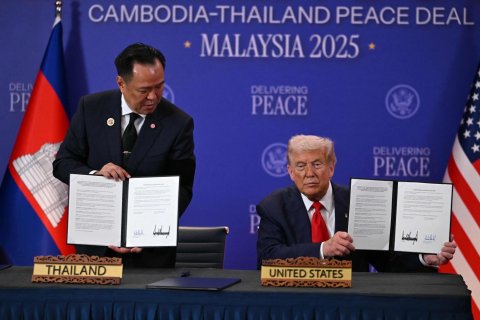
» Storming through Asia last week, US President Donald Trump's first stop in Kuala Lumpur on Oct 26, before moving on to Japan and South Korea over the next four days, capped by his meeting with Chinese President Xi Jinping before returning to Washington, was the most consequential for Southeast Asian economies.

Thailand needs middle power ambition
Oped, Thitinan Pongsudhirak, Published on 18/10/2024
» Having participated in the recent Asean-related summit meetings in Vientiane, Prime Minister Paetongtarn Shinawatra and her team must now work out Thailand's foreign policy priorities and posture. Foreign policy projection peaked around 20 years ago when Thailand was recognised as an emerging regional leader with the potential of a middle power. Since then, foreign policy has been patchy and hostage to polarisation and domestic political volatility. It is time to chart a way forward for Thailand's international standing and role despite ongoing political conflict at home.
RCEP without India poses new hurdles
News, Thitinan Pongsudhirak, Published on 08/11/2019
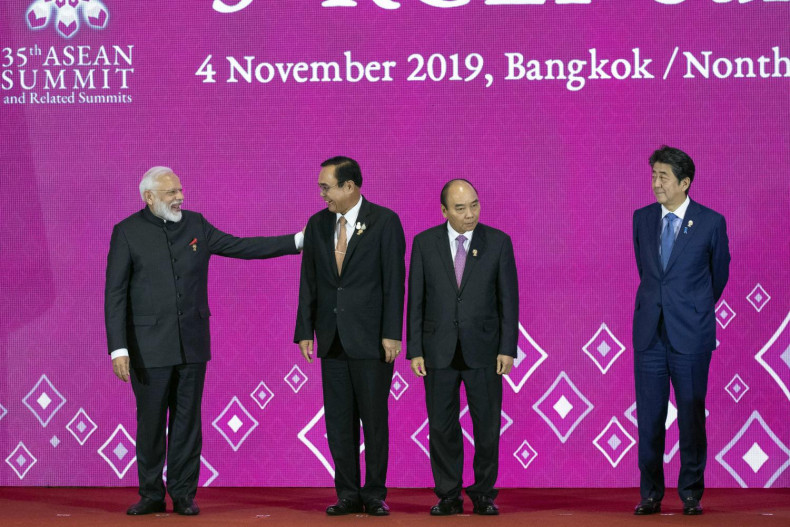
» On the face of it, the Regional Comprehensive Economic Partnership is an Indo-Pacific trade pact that would shore up the stalled world trade liberalisation and stem the rising tide of protectionism in the global economy. India's withdrawal from the RCEP -- whose other 15 members comprise the 10 Asean economies along with China, Japan, South Korea, Australia and New Zealand -- is a major setback, posing new challenges for the Asean-centred trade bloc. Asean should persuade India to return to the RCEP fold, while preparing for a much less promising RCEP15 as second-best outcome.
Politics of regional trade liberalisation
News, Thitinan Pongsudhirak, Published on 20/09/2019
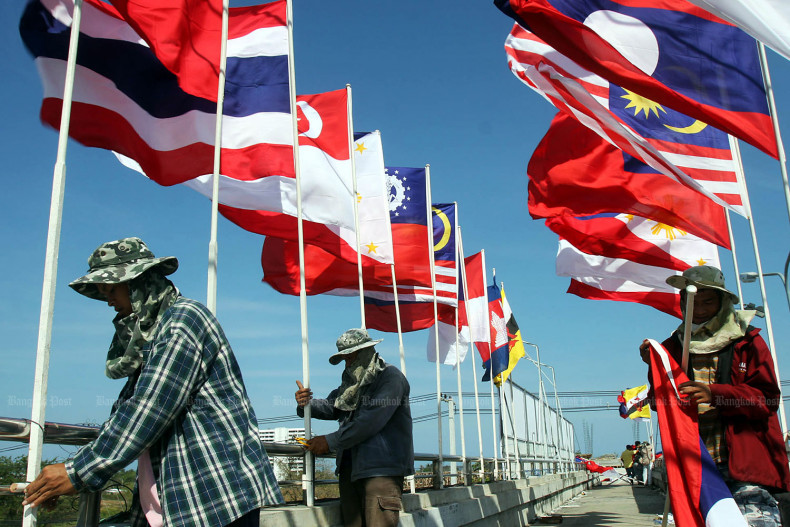
» As multilateral trade negotiations have become unworkable, regional and bilateral alternatives are on the rise. In Thailand's neighbourhood, the most consequential of these trade vehicles is the Regional Comprehensive Economic Partnership (RCEP). As it missed the boat on the Comprehensive and Progressive Trans-Pacific Partnership (CPTPP), Thailand as Asean chair this year should finalise the RCEP expeditiously and find a way to accede to the CPTPP in the near future. Although the Thai political situation remains murky and contentious, there is enough domestic policy consensus on low-hanging fruits, such as regional and bilateral trade liberalisation, that should be reaped without further delay.

Is the Indo-Pacific eclipsing Asia-Pacific?
News, Thitinan Pongsudhirak, Published on 02/08/2019
» Thailand and the smaller states in its neighbourhood will miss the Asia-Pacific era. It is not as if the Asia-Pacific has gone away or disappeared in any sense. But its role as a cradle of prosperity linking larger and small economies around the Pacific Rim may have passed its peak. In its place is the Indo-Pacific, which thus far lacks a trade-liberalisation and economic growth component so integral to the Asia-Pacific.
Asean chairmanship has many limitations
News, Thitinan Pongsudhirak, Published on 16/11/2018
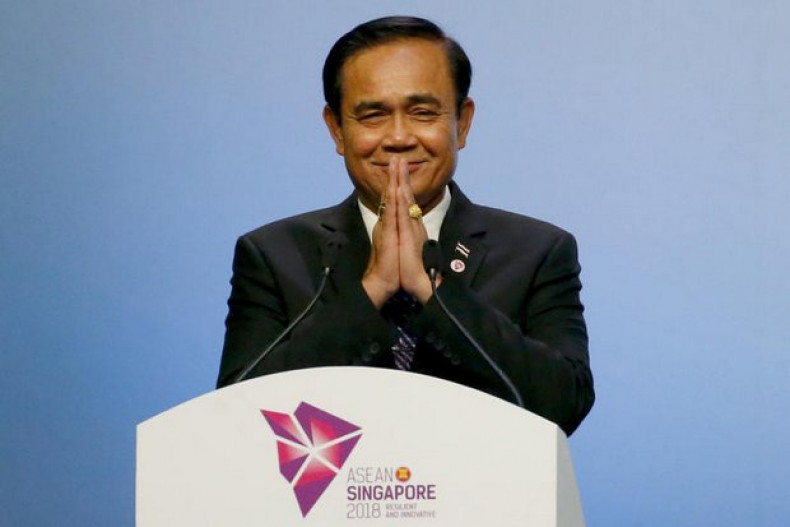
» Just as all politics is ultimately local, all regionalism is mostly domestic. Such is the case with Asean. Whichever of the 10 member states chairs Asean, its role and performance tends to be domestically rooted. To envision and drive Asean forward requires deft leadership, bold ideas and smart diplomacy that must extend beyond and transcend parochial domestic concerns. No Asean member has shown this sort of farsighted regionalist ambition in recent years. Thailand appears on course to be no different when it chairs Asia's most durable organisation next year.
The Indo-Pacific and Asean centrality
News, Thitinan Pongsudhirak, Published on 01/06/2018
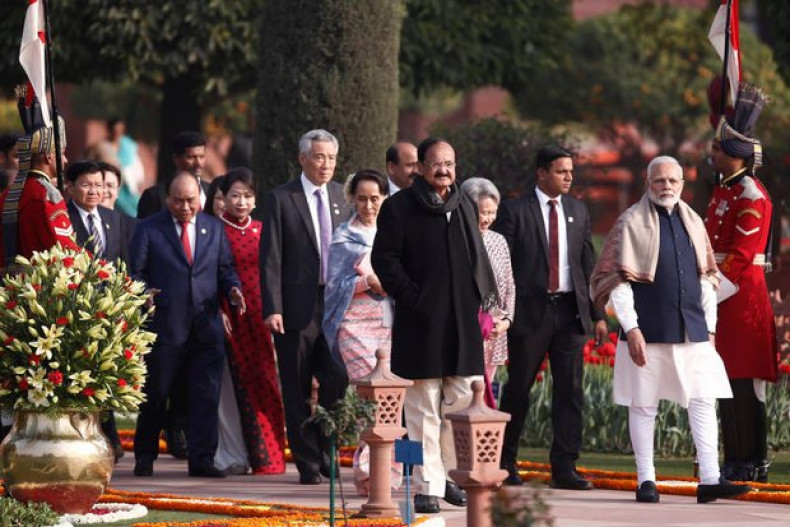
» Even though US President Donald Trump repeatedly alluded to it in his speeches at Asean-led summits in Danang and Manila late last year, and despite its reference in both the United States National Security Strategy and National Defence Strategy, the geographic notion of a "free and open Indo-Pacific" (FOIP) straddling both the vast Pacific and Indian oceans has been given short shrift in many capitals. Chinese Foreign Minister Wang Yi suggested last March that the Indo-Pacific was only an "attention-grabbing idea", akin to "the sea foam in the Pacific and Indian Ocean" that "may get some attention but will soon dissipate". Asean leaders have paid some attention but have not had a collective and cohesive reaction to it. But now everyone in Asian security circles and beyond will take notice.