



Showing 1 - 10 of 30
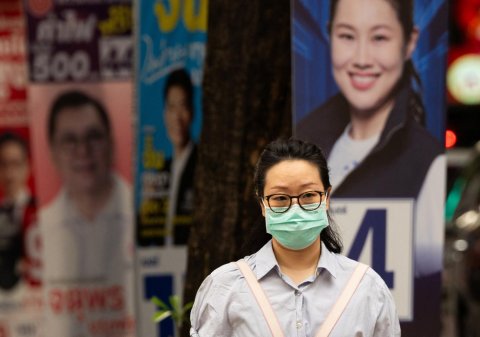
Will poll be breakout or more of same?
Oped, Thitinan Pongsudhirak, Published on 06/02/2026
» As Thais go to the polls this Sunday, the most consequential question is whether Thailand will finally break out of its debilitating cycle of political instability and economic underperformance that has marked the past two decades. The signs and signals suggest otherwise -- at least not yet.
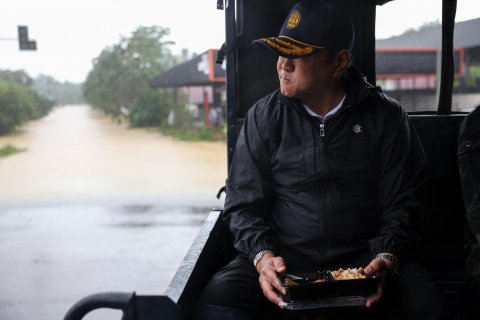
Thailand hit by a confluence of crises
Oped, Thitinan Pongsudhirak, Published on 05/12/2025
» Thailand is currently facing multiple crises of unprecedented proportions in the highest corridors of power that will pose adversity for the economy and political stability next year and beyond.
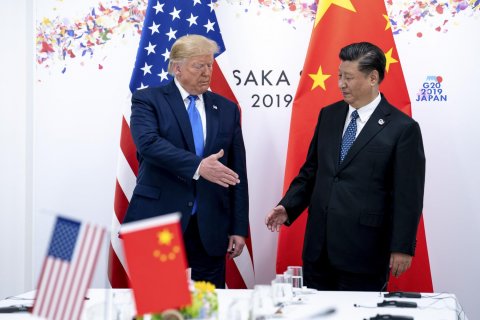
Southeast Asia amid the US-China rift
Oped, Thitinan Pongsudhirak, Published on 03/10/2025
» The rivalry between the United States and China has become the defining contest of the 21st century. Barely two decades ago, Washington and Beijing were partners in prosperity. America's support for China's entry into the World Trade Organization in 2001 epitomised the high-water mark of engagement, reflecting the belief that economic integration would lead to greater political cooperation. Today, that partnership has morphed into suspicion and confrontation. Relations between the United States and China have deteriorated so swiftly that many observers now describe them as locked in a "new Cold War". The more pressing question, however, is not whether this analogy holds, but whether confrontation can be managed short of outright conflict.

Signs and symptoms of Thai stagnation
Oped, Thitinan Pongsudhirak, Published on 18/07/2025
» That Thailand is faring poorly in the world is no longer in dispute. Not so long ago, many were in denial and adamant that Thailand could still bring a good game to engage abroad, that "Teflon" Thailand could bounce back. Now, just about all indicators are pointing south. The causes of this country's decline and stagnation are not singular but multifaceted over a two-decade period. As Thailand's situation is likely to worsen before hopes for a better future can arise, it is instructive to start counting the costs.
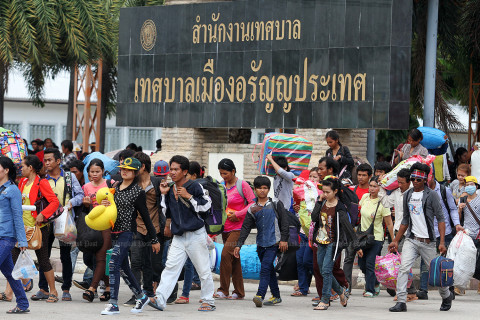
Thailand needs a geostrategic rebalance
Oped, Thitinan Pongsudhirak, Published on 06/06/2025
» With two military coups and multiple judicial interventions that combined to subvert election results and weaken democratic institutions over the past two decades, it is unsurprising that Thailand's geostrategic position has leaned increasingly towards China. Naturally, the more Thailand becomes autocratic, the more it will be estranged from established democracies in Europe and North America, as well as Japan and South Korea, with nowhere to turn but to Beijing. But this China orientation is a geostrategic mistake at this time. Thailand should correct its course until clearer signs emerge as to which side of the superpower struggle will come out on top.

Thai politics has turned upside down
Oped, Thitinan Pongsudhirak, Published on 23/08/2024
» The rise of Prime Minister Paetongtarn Shinawatra and the return -- and re-entry, of her father, Thaksin Shinawatra, have turned Thai politics upside down. On the surface, Mr Thaksin still dominates Thai politics nearly 20 years after he was deposed by a military coup and exiled for most of that period. This time, his political power and influence are being exercised through his daughter Ms Paetongtarn. As the Shinawatra clan has been coopted by its former establishment adversaries, the past two decades of periodic elections, street protests, two military coups, two constitutions, and multiple judicial bans on political parties and elected politicians have entered a new chapter.
Thailand's Brics move is misguided
Oped, Thitinan Pongsudhirak, Published on 21/06/2024
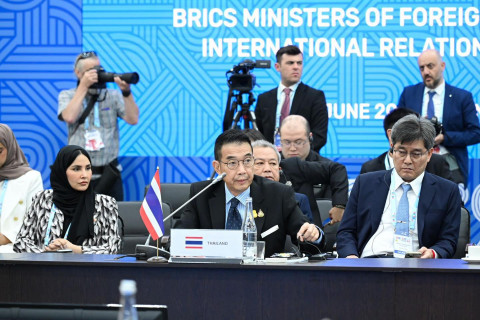
» There are two main explanations behind Thailand's application to join the Brics group, initially comprising Brazil, Russia, India, China, and South Africa.

Move Forward case reveals autocracy
Oped, Thitinan Pongsudhirak, Published on 07/06/2024
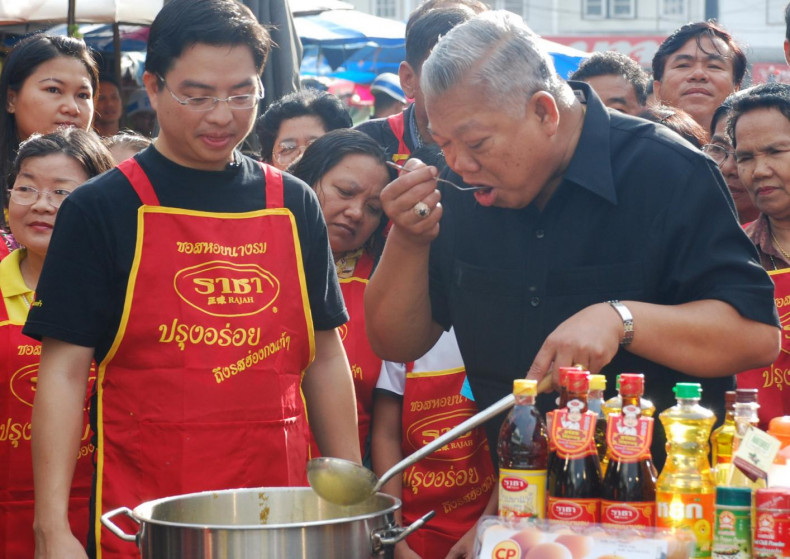
» The Constitutional Court's announcement that it will consider the Move Forward Party's (MFP) written defence in its dissolution case on June 12 appears ominous. After several attempts to make its argument that a campaign pledge to amend the lese majeste law against royal insult is not tantamount to "overthrowing Thailand's democratic regime with the King as head of state", the party's time is up. As the biggest election winner in May 2023, the MFP's dissolution is perceived as a foregone conclusion. Such a revelation might risk Thailand being perceived as an autocratic regime based on legal manoeuvres, and power plays that do not derive from voter preferences.
Deja vu as charter court weighs MFP ban
Oped, Thitinan Pongsudhirak, Published on 12/01/2024
» It is déjà vu in Thai politics this month as Thailand's biggest elected political party and its leader face Constitutional Court verdicts that could lead to a familiar dissolution and ban. At issue is the political future of Pita Limjaroenrat and the fate of the Move Forward Party (MFP), which he led to a stunning victory at the election last May. However the verdicts come out, they might be perceived by pundits as decided by the political winds of the day.
Thailand's semi-democracy faces risks
Oped, Thitinan Pongsudhirak, Published on 15/12/2023
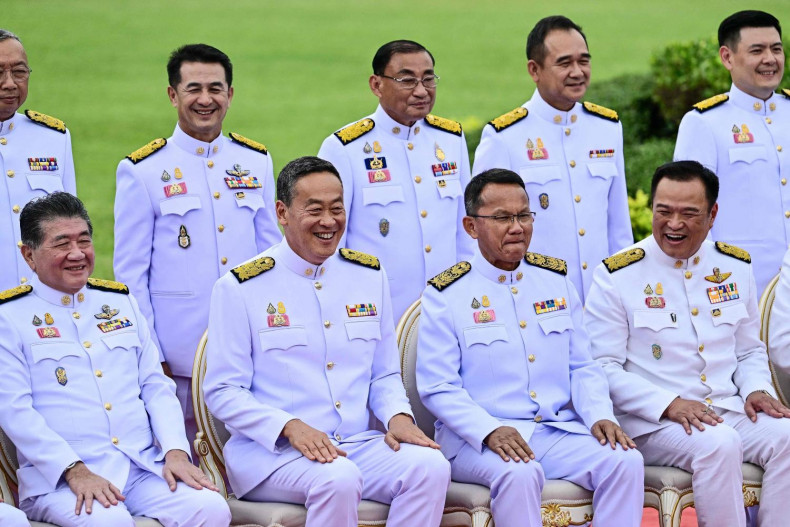
» The government of Prime Minister and Finance Minister Srettha Thavisin has settled into an uneasy balance between the civilian-led majority forces that represent the Thai electorate and the royalist-conservative minority guardians of the established centres anchored around the monarchy, military, judiciary, and bureaucracy.