



Showing 1 - 10 of 41
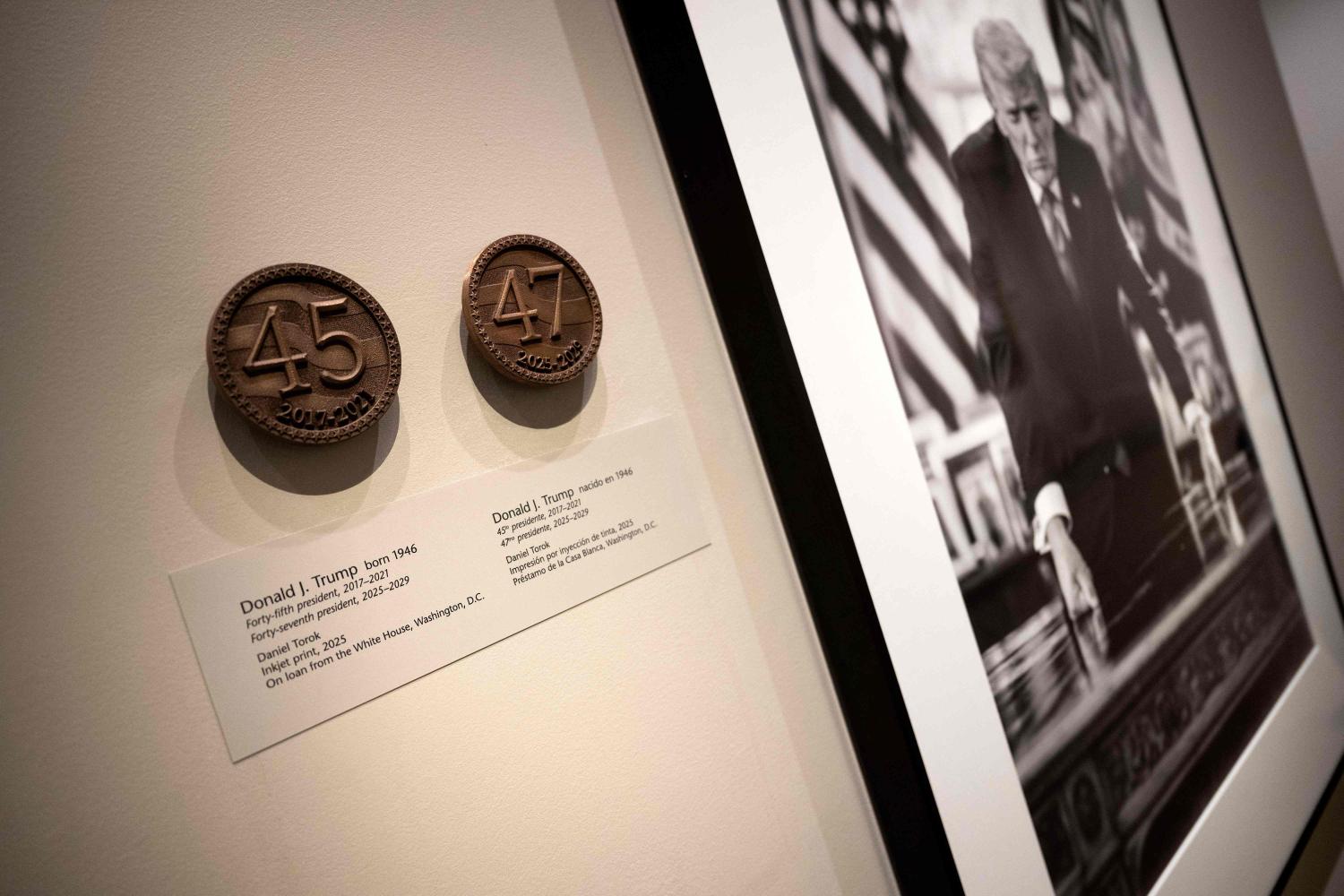
Trump's 'America First' in overdrive
News, Thitinan Pongsudhirak, Published on 23/01/2026
» President Donald Trump's extraterritorial capture of Venezuelan President Nicolas Maduro and his wife on cocaine-trafficking and terrorism-related charges earlier this month and repeated demand to take over Greenland at the World Economic Forum this week are part and parcel of a belligerent and transformative "America First" paradigm that dates back at least four decades.

Domestic drivers of bilateral conflict
News, Thitinan Pongsudhirak, Published on 19/12/2025
» The latest flare-up and intensification of the armed conflict between Thailand and Cambodia should be understood less as a new crisis and more as a resumption of a bilateral clash that erupted in late July.
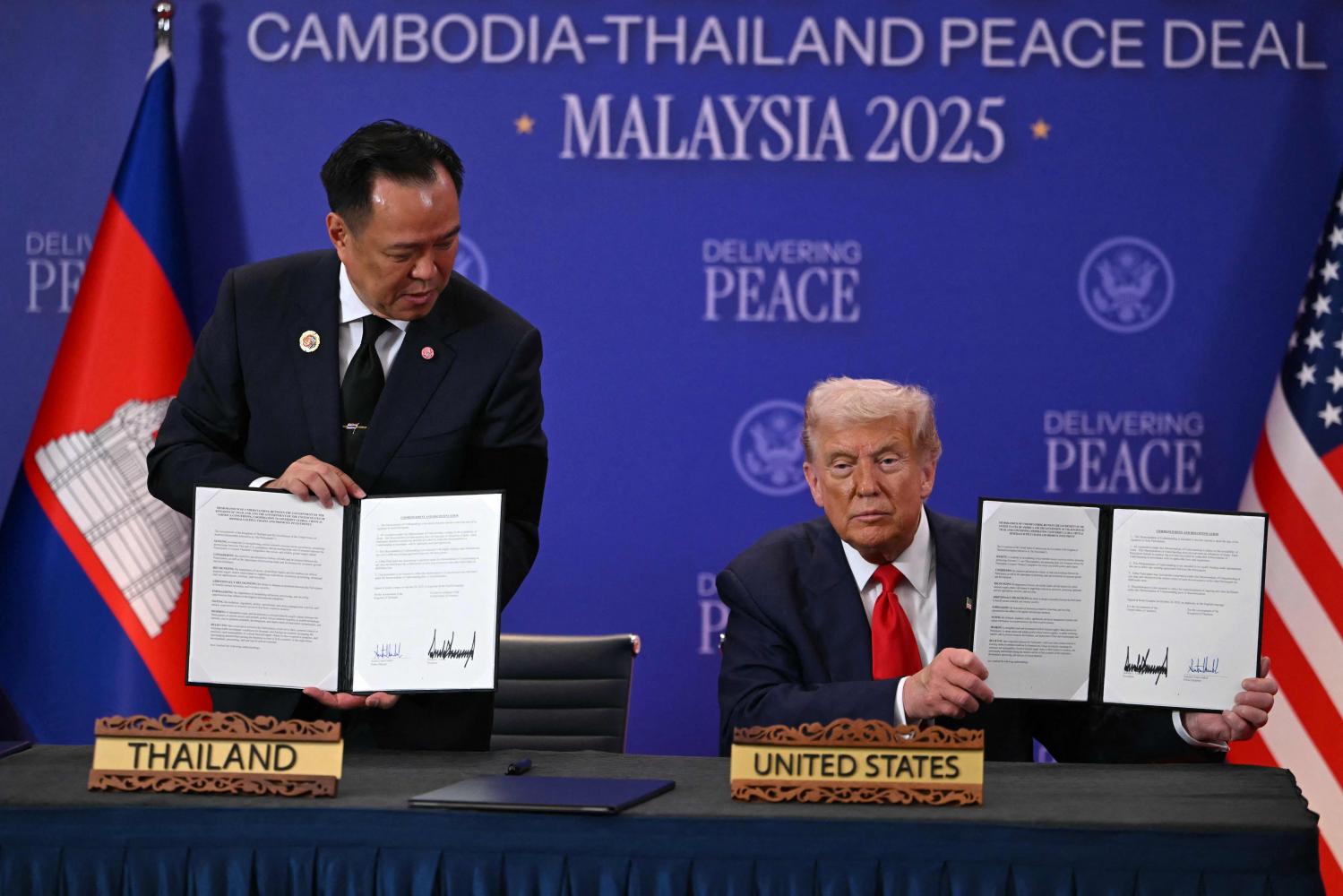
Digesting Trump's trip through Asia
Oped, Thitinan Pongsudhirak, Published on 07/11/2025
» Storming through Asia last week, US President Donald Trump's first stop in Kuala Lumpur on Oct 26, before moving on to Japan and South Korea over the next four days, capped by his meeting with Chinese President Xi Jinping before returning to Washington, was the most consequential for Southeast Asian economies.
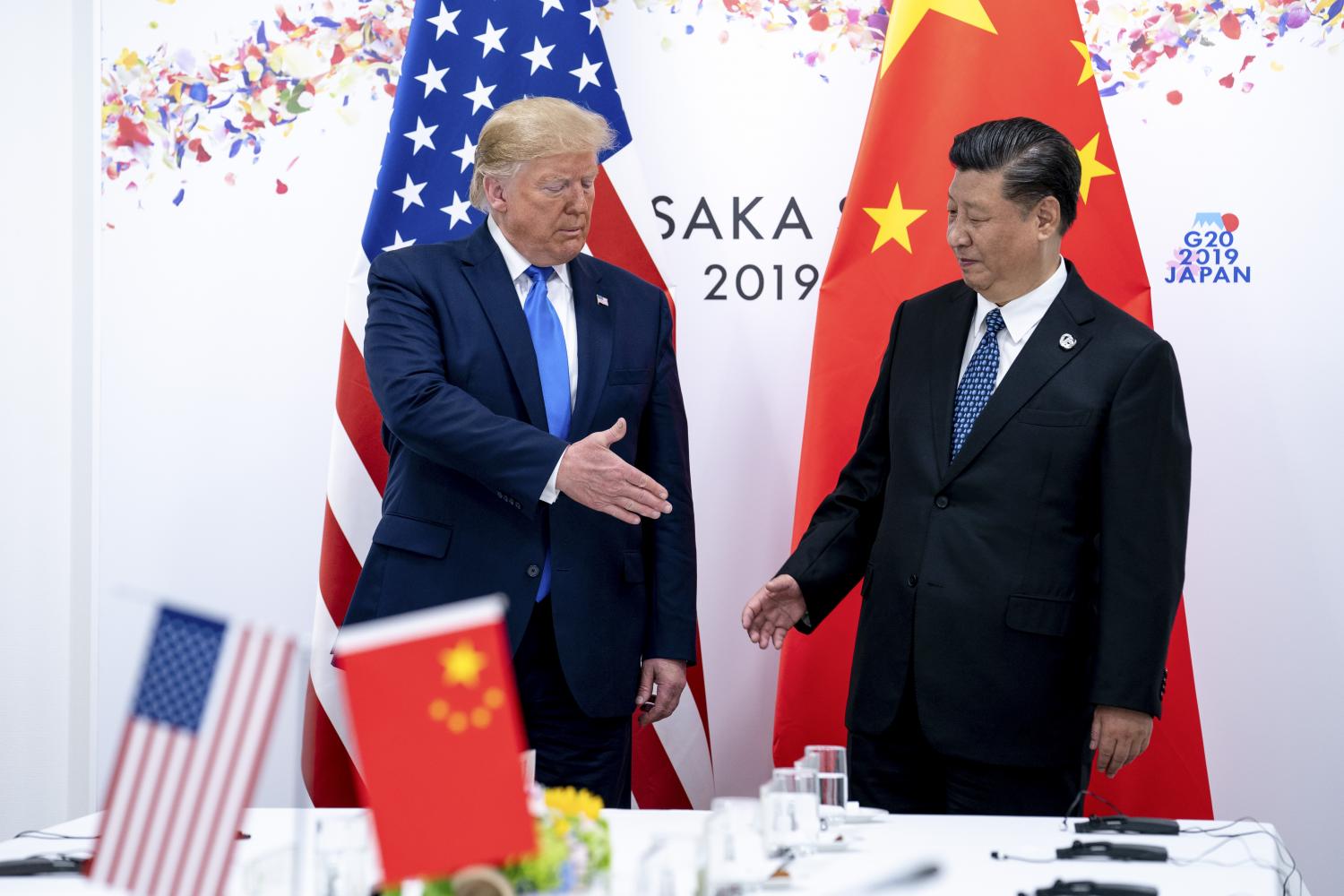
Southeast Asia amid the US-China rift
Oped, Thitinan Pongsudhirak, Published on 03/10/2025
» The rivalry between the United States and China has become the defining contest of the 21st century. Barely two decades ago, Washington and Beijing were partners in prosperity. America's support for China's entry into the World Trade Organization in 2001 epitomised the high-water mark of engagement, reflecting the belief that economic integration would lead to greater political cooperation. Today, that partnership has morphed into suspicion and confrontation. Relations between the United States and China have deteriorated so swiftly that many observers now describe them as locked in a "new Cold War". The more pressing question, however, is not whether this analogy holds, but whether confrontation can be managed short of outright conflict.
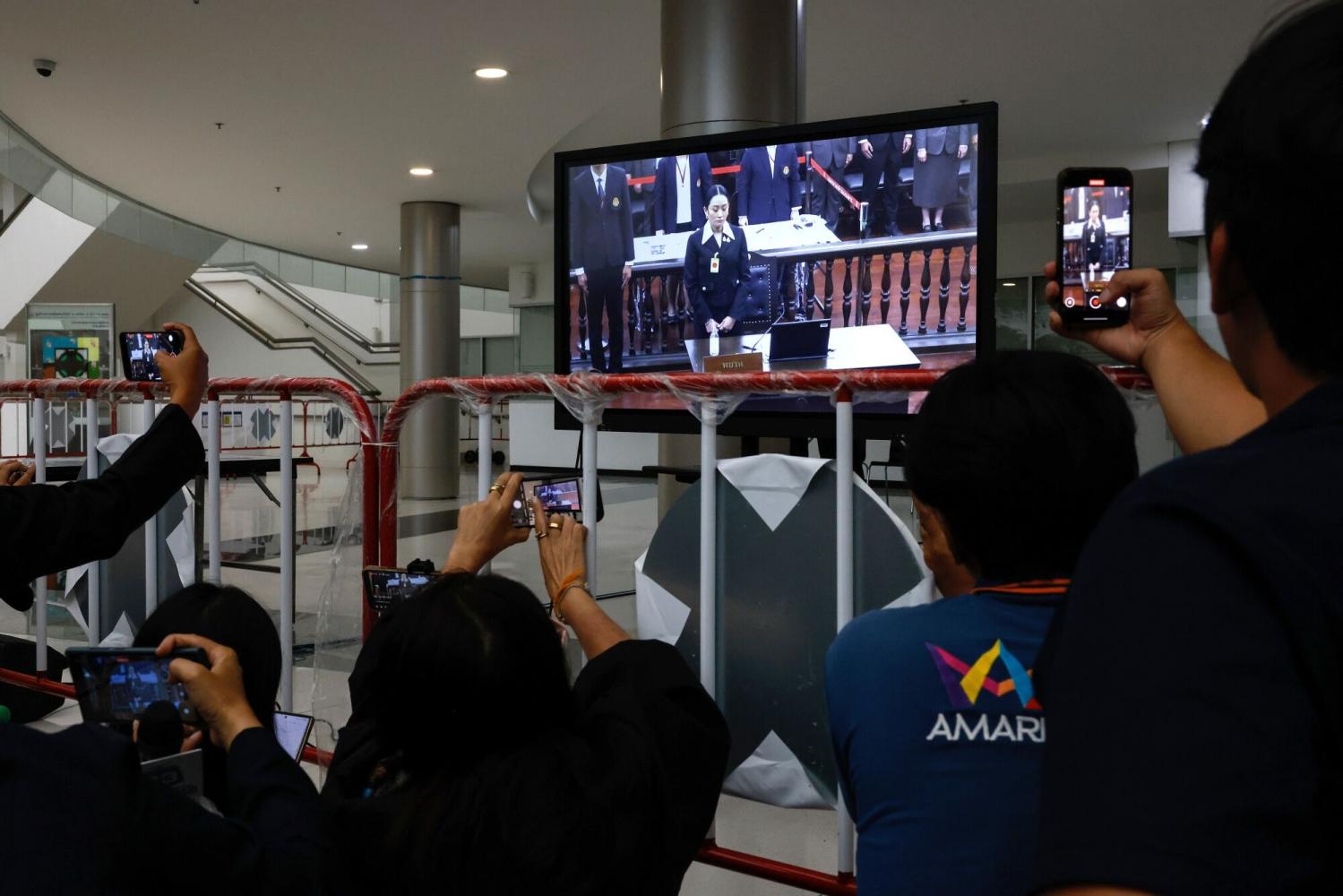
Thailand's costly political shenanigans
Oped, Thitinan Pongsudhirak, Published on 22/08/2025
» In a country of 70 million where a handful of men can remove an elected government time and again, there can be no stability and progress, only tension and regression. This is how Thailand can be characterised over the past two decades. It is now going through yet another cycle of heightened political instability with the potential collapse of the government under suspended Prime Minister Paetongtarn Shinawatra in the footsteps of previous leaders who were similarly ousted by the Constitutional Court.

Thailand's false sense of tariff security
Oped, Thitinan Pongsudhirak, Published on 30/05/2025
» Thailand is in deeper trouble among its peer group in view of United States President Donald Trump's tariff offensive. Yet senior Thai officials appear nonchalant, complacent and smug. They seem to think Thailand will come out of the US tariff war in good shape as the Trump administration will prove unable to go through with its hefty import duties. The domestic political battle between the US executive and judicial branch -- with the Court of International Trade's injunction this week on most of the Trump tariffs -- further adds to the absurd sense of security and false perception of Thailand's importance by Thai officials.

Trump tariffs sow divisions in Asean
Oped, Thitinan Pongsudhirak, Published on 02/05/2025
» President Donald Trump's unilateral imposition of tariffs across the United States' economic chessboard poses a critical test for Asean. As the regional organisation of Southeast Asia, Asean has weathered many geopolitical and geoeconomic storms in its 58-year existence, but no adversity like the Trump tariffs. Unless Asean reorganises and regroups, the ten-member body risks further divisions and increasing irrelevance.

A perilous era of absolute advantage
News, Thitinan Pongsudhirak, Published on 25/04/2025
» If a date had to be pinpointed, the post-Second World War international system came to an unmistakable end on April 2 -- the so-called "Liberation Day" -- when US President Donald Trump announced comprehensive "reciprocal" tariffs to a bewildered global audience. The blatantly protectionist move was equivalent to the United States' abrogation and abandonment of the rules-based international order that it ironically and instrumentally constructed and upheld over nearly eight decades. What comes now is a dangerous era of absolute advantage in global trade, investment, and finance, bent on unilateralism over multilateralism, competition over cooperation, nationalism over interdependence, and the singular quest to dominate and reshape the global pecking order under the rubric of making America "great again".

Smart geopolitics starts on home front
Oped, Thitinan Pongsudhirak, Published on 21/02/2025
» According to a longstanding axiom, all politics is local. If so, then smart and crafty geopolitics must start at home with sufficient domestic political stability and consensus about how the country should navigate what is increasingly a turbulent geostrategic chessboard. Put this way, few countries can appreciate the intersection of geopolitics and domestic politics more than Thailand. Its rocky and volatile home front over the past two decades continues to impede and constrain its geostrategic projection.

What's happened to the Asian Century?
Oped, Thitinan Pongsudhirak, Published on 14/02/2025
» Until recently, the "Asian Century" seemed a compelling narrative but now it is not what it used to be. It was supposed to herald a shift in global economic power from the West to the East, driven by China's rapid rise, India's economic dynamism, and the broader development of Asia. But a quarter of the way into the 21st century, the promise of Asian dominance appears less certain. The enduring technological and economic might of the United States, coupled with its geopolitical backlash against China, has lowered expectations. While Asia remains formidable, the trajectory of global power is open and fluid, with potential dominance shifting not necessarily to any nation or region but perhaps to a non-state entity.