



Showing 1 - 6 of 6
The gist of Thai politics over 20 years
Oped, Thitinan Pongsudhirak, Published on 20/02/2026
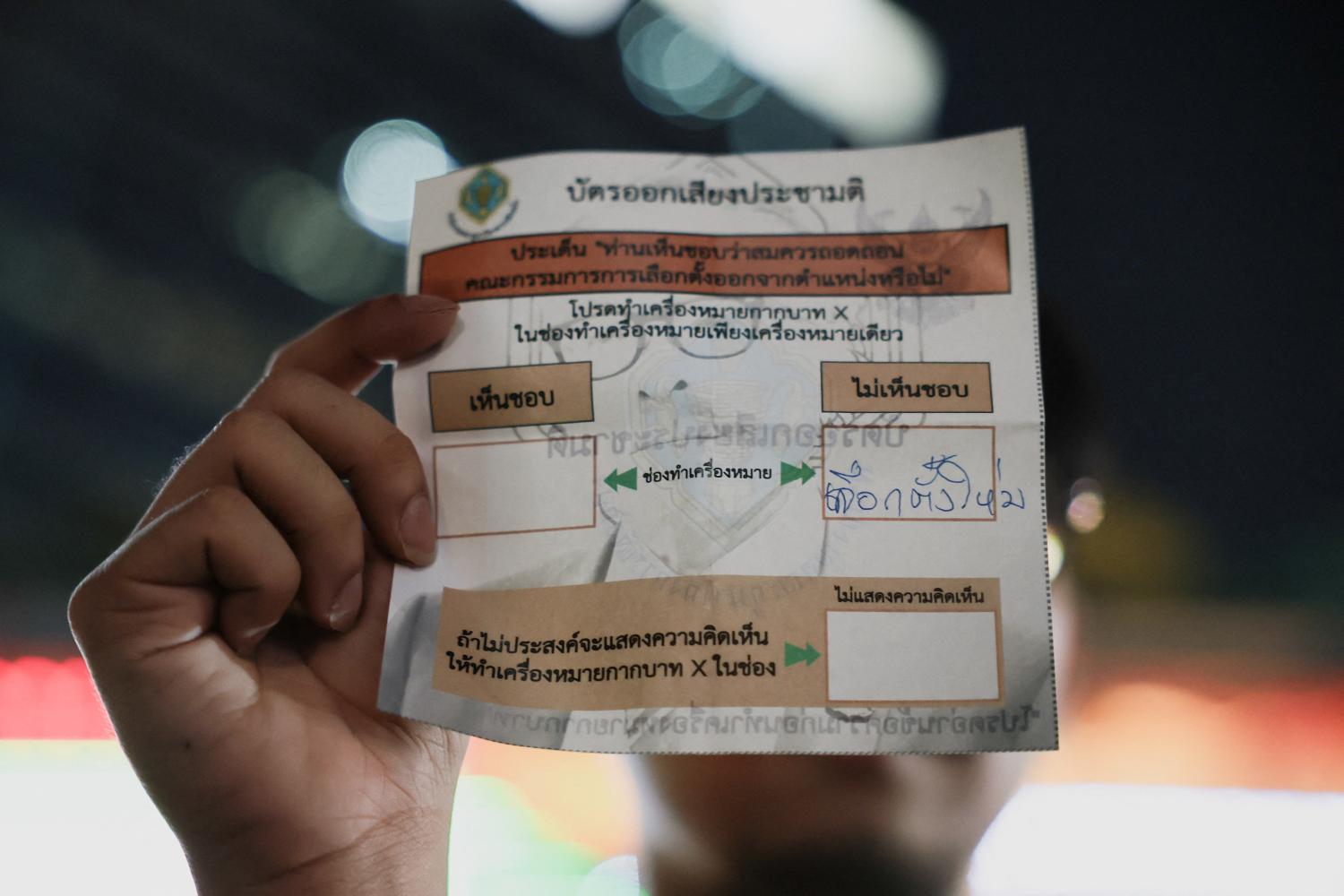
» Thailand's democratic institutions have been repressed and kept weak to the point that confusion still prevails almost two weeks after the Feb 8 election, which purportedly showed a clear victory for the ruling Bhumjaithai (BJT) Party under Prime Minister Anutin Charnvirakul. On the one hand, Mr Anutin and BJT stalwarts are busy forming a coalition government with other parties. On the other hand, fraud allegations from civil society groups and the opposition People's Party have reached a critical mass with the plausibility that the recent vote might be nullified to pave the way for a new poll.

Myanmar revolts against dictatorship
Oped, Thitinan Pongsudhirak, Published on 02/02/2024
» When Myanmar's military coup took place three years ago, few thought it would turn out this way. Never has a military in Southeast Asia staged a successful coup and then failed to consolidate power afterwards. Yet this is precisely what's happening in Myanmar. A fierce and determined coalition of resistance forces is in the process of prevailing over Myanmar's battle-hardened army.

Asean role stuck on Myanmar coup
Oped, Thitinan Pongsudhirak, Published on 25/08/2023
» President Joe Biden's decision to skip Asean-related summits in the Indonesian capital Jakarta on Sept 5-7 in favour of the G-20 leaders' meeting in India just two days later has been greeted with howls of disappointment and criticism around Southeast Asian capitals and elsewhere that are concerned about America's role in the region.

Virus risks versus economic imperatives
Oped, Thitinan Pongsudhirak, Published on 08/05/2020
» The coronavirus pandemic requires responding governments to be agile and quick on their feet, learning by doing and constantly reevaluating their policy mix. What was needed a month or two ago may need to be recalibrated this week for the immediate future in a moving balance of risks and objectives. For Thailand, the balance between public health safety and economic reality has been lost. The Centre for Covid-19 Situation Administration (CCSA) risks becoming a victim of its own success. This means the government of Prime Minister Prayut Chan-o-cha should now be listening to economists and social workers a little more than epidemiologists and medical doctors as Thailand's virus-fighting priorities shift with twists and turns.

What to look for in Thai election results
News, Thitinan Pongsudhirak, Published on 22/03/2019
» Elections are often a referendum on incumbencies. Voters are asked whether they like what they have seen from government and whether they want continuity or change in view of competing alternatives. In the same vein, Thailand's momentous election on March 24, after a nearly eight-year hiatus that includes almost five years under military-authoritarian rule, is an opportunity to see what the governed prefer to have as their government. Here are some of early telltale signs that portend the political directions ahead.

A year of living dangerously in Thailand
News, Thitinan Pongsudhirak, Published on 05/01/2018
» They were supposed to be in power for the royal transition but they have stayed too long and now want to win an unavoidable election.