



Showing 1 - 9 of 9
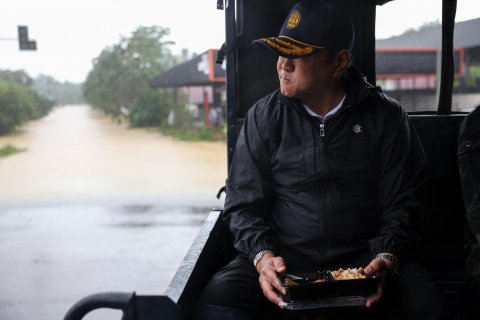
Thailand hit by a confluence of crises
Oped, Thitinan Pongsudhirak, Published on 05/12/2025
» Thailand is currently facing multiple crises of unprecedented proportions in the highest corridors of power that will pose adversity for the economy and political stability next year and beyond.

Singapore turns 60 with much to show
Oped, Thitinan Pongsudhirak, Published on 08/08/2025
» No country turns 60 like Singapore. In a neighbourhood of political dynasties and varying shades of autocracies and flawed democracies, the little island state of six million got lucky with its strongman rule. When he died in 2015, Singapore's patriarchal founder Lee Kuan Yew left a great country behind. This weekend, Singaporeans can take stock of what's gone by and rightly celebrate its milestone with much to show for.
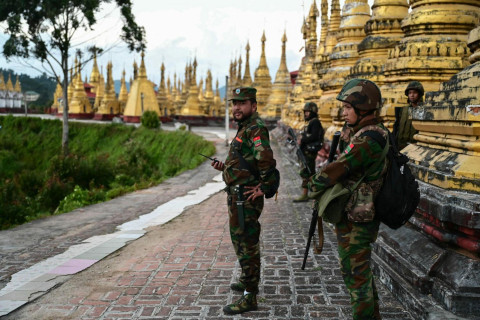
Myanmar's civil war after four years
Oped, Thitinan Pongsudhirak, Published on 31/01/2025
» Four years after its military coup and consequent civil war, Myanmar's spotlight in global headlines continues to dim as geostrategic reorientations and realignments among the major powers take centre stage. Dramatic and drastic foreign policy changes are afoot in the United States under the second administration of President Donald J Trump, while the European Union faces an existential threat from Russia's aggression in Ukraine, and Japan is mired in political sclerosis at home. Myanmar's fate and future will thus likely be determined by the course and outcome of its civil war, China's expanding influence in the country and Asean member states' manoeuvres to a lesser extent.
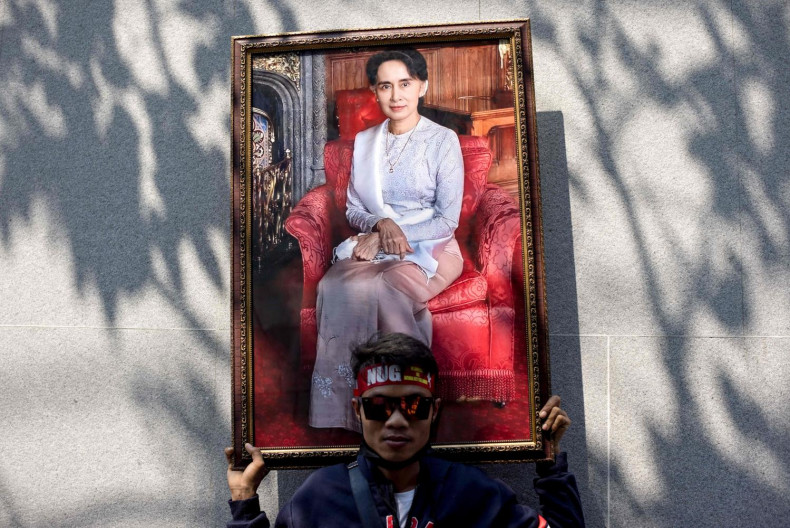
Reversing Myanmar's internal strife
Oped, Thitinan Pongsudhirak, Published on 10/02/2023
» This month marks two anniversaries of ongoing conflicts in Europe and Southeast Asia, namely 12 months after Russia invaded Ukraine and two years since Myanmar's military seized power by toppling a democratically elected and civilian-led government under Aung San Suu Kyi.
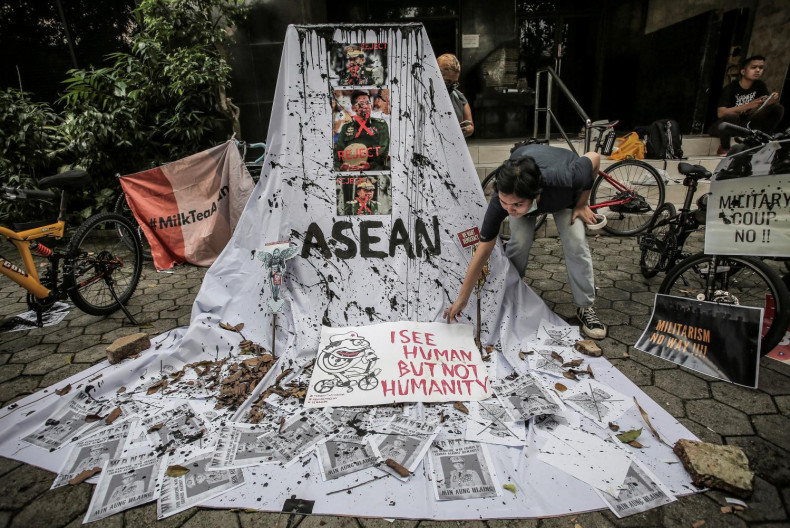
Myanmar: From diplomacy to force
Oped, Thitinan Pongsudhirak, Published on 30/04/2021
» At its recent "special" summit in Jakarta on Myanmar's crisis, Asean reached its diplomatic maximum by coming up with a "five-point consensus" that will likely prove too little and too slow. Constrained by consensus and its non-interference principle where any of its 10 members has a virtual veto, Asean's overdue response to Myanmar's fast-escalating violence on the ground is likely to prove ineffective. As Asean's diplomacy faces limitations, more of Myanmar's outcomes are likely to be decided by the use of force in an intensifying civil war.

Why Thai student movement can't exist
Oped, Thitinan Pongsudhirak, Published on 28/08/2020
» Thailand's new round of political confrontation in the 21st century -- the first under a new reign -- is showing signs of déjà vu with fundamentally different dynamics. Earlier rounds of the Thai drama from 2005 to 2014 went through three major acts, each beginning with an election, followed by a problematic government and street demonstrations, ending with military or judicial interventions. Even though its electoral allies lost in these three polls, the pro-establishment side won each time it went onto the streets citing the monarchy as legitimacy and moral authority.

Moral dilemmas of handling the virus
Oped, Thitinan Pongsudhirak, Published on 03/04/2020
» It is hard to calibrate a commensurate response to the coronavirus (Covid-19) pandemic. Owing to the lack of accurate and reliable information, a media feeding frenzy and the mass psychology of fear, the choice has become all or nothing, not much in between. Individuals, societies and states worldwide are now incentivised to overdo it and err on the side of caution, being safe rather than sorry. This means that the likelihood of "overshooting" with Covid responses is likely to heighten in the foreseeable future in view of morally unacceptable alternatives.
Uni rankings, wages need a bigger boost
News, Thitinan Pongsudhirak, Published on 08/06/2018
» The Quacquarelli Symonds (QS) World University rankings for 2018 are out, and the news is again not good for Thailand. Compared to the rest of the world, Thailand's top universities don't stand in good stead. Nor do they rank well compared to their peers in the region.
The Indo-Pacific and Asean centrality
News, Thitinan Pongsudhirak, Published on 01/06/2018
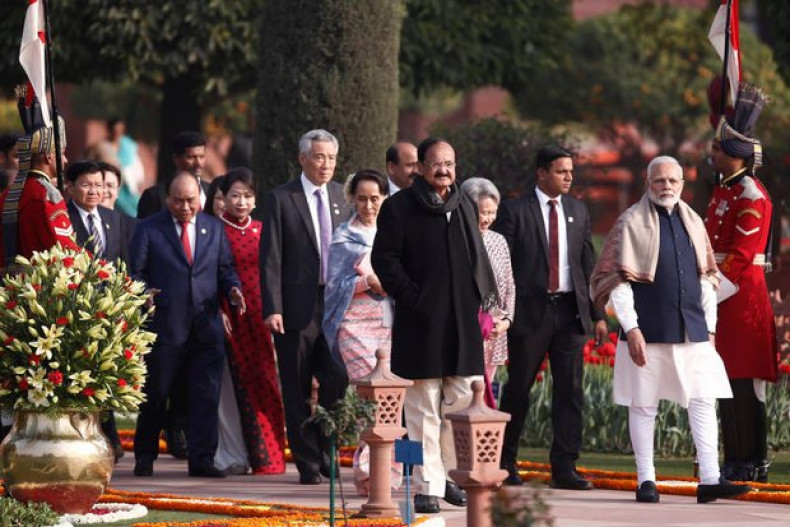
» Even though US President Donald Trump repeatedly alluded to it in his speeches at Asean-led summits in Danang and Manila late last year, and despite its reference in both the United States National Security Strategy and National Defence Strategy, the geographic notion of a "free and open Indo-Pacific" (FOIP) straddling both the vast Pacific and Indian oceans has been given short shrift in many capitals. Chinese Foreign Minister Wang Yi suggested last March that the Indo-Pacific was only an "attention-grabbing idea", akin to "the sea foam in the Pacific and Indian Ocean" that "may get some attention but will soon dissipate". Asean leaders have paid some attention but have not had a collective and cohesive reaction to it. But now everyone in Asian security circles and beyond will take notice.