



Showing 1 - 10 of 12
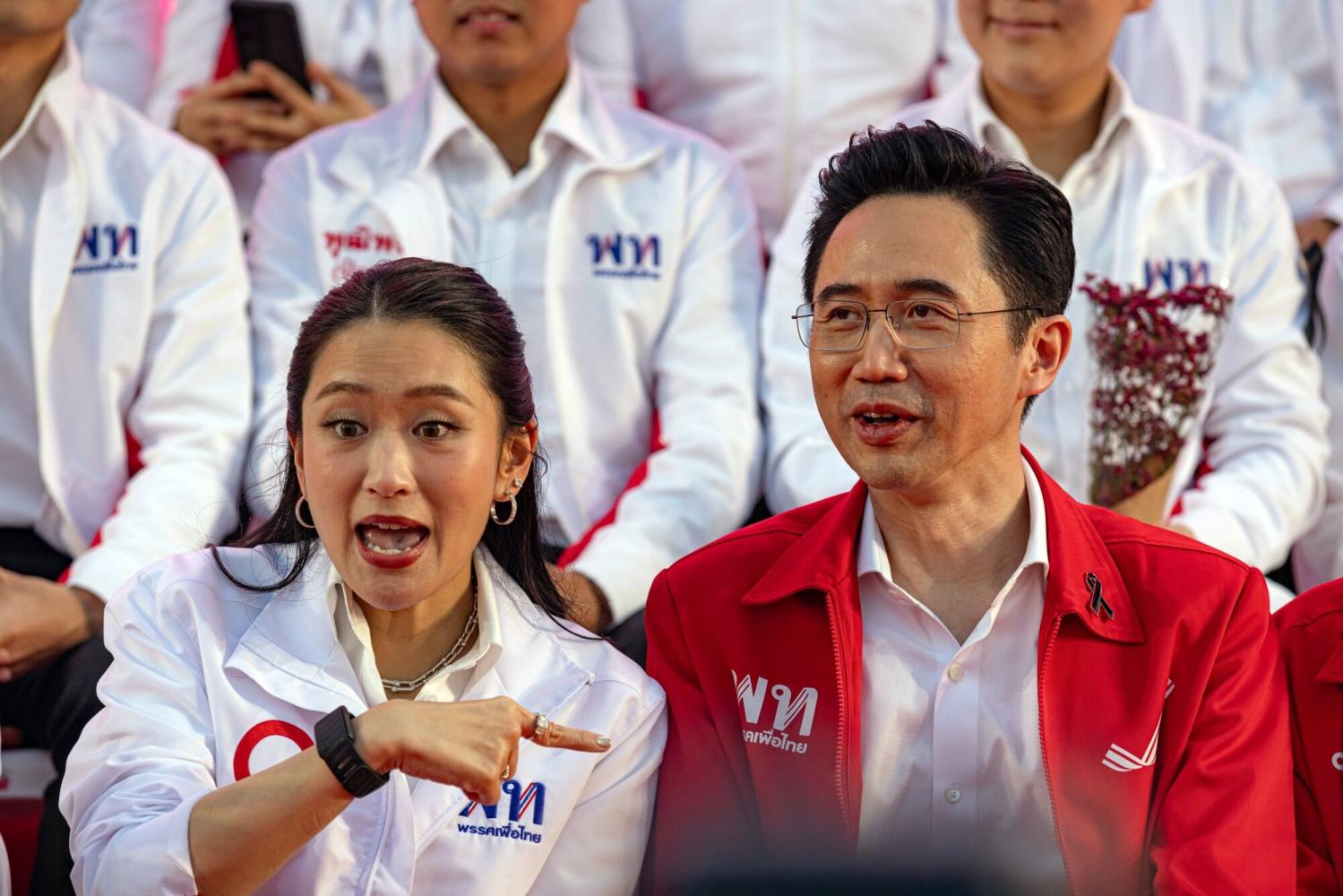
Three main parties and two directions
Oped, Thitinan Pongsudhirak, Published on 16/01/2026
» Although Thailand's election campaign is reaching fever pitch ahead of voting day on Feb 8, the dynamics and contours of its final outcome can be gleaned from past polls over the last 25 years. Only once in January 2001, as was indicated in this space last week, were voter results fully honoured and carried out. Other elections were either upended by military coups or manipulated by judicial interventions.

Thailand needs a geostrategic rebalance
Oped, Thitinan Pongsudhirak, Published on 06/06/2025
» With two military coups and multiple judicial interventions that combined to subvert election results and weaken democratic institutions over the past two decades, it is unsurprising that Thailand's geostrategic position has leaned increasingly towards China. Naturally, the more Thailand becomes autocratic, the more it will be estranged from established democracies in Europe and North America, as well as Japan and South Korea, with nowhere to turn but to Beijing. But this China orientation is a geostrategic mistake at this time. Thailand should correct its course until clearer signs emerge as to which side of the superpower struggle will come out on top.

Uyghurs deportation a strategic risk
Oped, Thitinan Pongsudhirak, Published on 07/03/2025
» Regardless of official spin, the government's decision to deport 40 Uyghurs to China was a strategic mistake on multiple levels.

Thailand's policy on Myanmar stinks
Oped, Thitinan Pongsudhirak, Published on 23/06/2023
» The latest move to coddle and recognise Myanmar's junta government by caretaker Prime Minister Prayut Chan-o-cha's outgoing regime does not add up. Sanctioned and supported by Gen Prayut, Foreign Minister Don Pramudwinai arranged an Asean-wide ministerial meeting in Pattaya on June 18 with Myanmar's junta-appointed Foreign Minister Than Swe with unusual haste. Shrouded in controversy and desperation, both the PM's and the FM's clichéd explanations just do not wash. It begs the question of whether there are vested interests involved, above and beyond Thailand's national interest, in the outgoing government's seeming acceptance of Myanmar's military regime that took power by force on Feb 1, 2021.

Post-poll lull has a lot to answer for
Oped, Thitinan Pongsudhirak, Published on 26/05/2023
» After a clear election victory, Thailand should already have a new government in office by now with Pita Limjaroenrat as prime minister, as his Move Forward Party (MFP) together with opposition ally Pheu Thai Party won a clear mandate of more than 58% of 500 lower house seats. Yet their coalition government in waiting among eight parties with 313 elected representatives is facing several critical roadblocks, including the military-appointed senate and the Election Commission (EC). Public pressure is now needed to be piled on these powerful but biased bodies that were appointed during the coup-dominated era in 2014–2019 to comply with the people's wishes, as expressed at the polls on May 14.
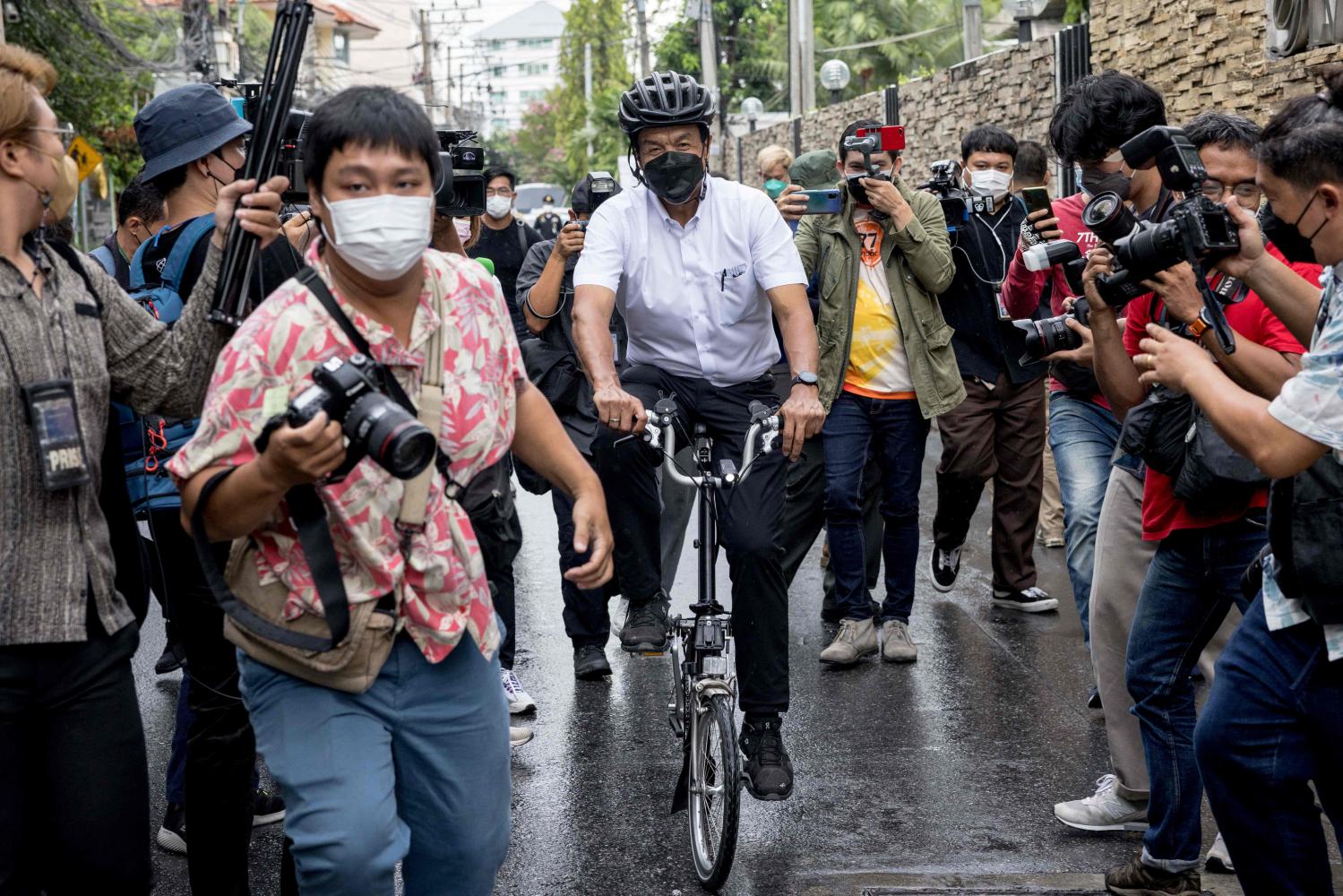
Chadchart's effect on Thai politics
Oped, Thitinan Pongsudhirak, Published on 27/05/2022
» Among the myriad of implications over Chadchart Sittipunt's thumping triumph in Bangkok's gubernatorial election last Sunday is the restoration of Thailand's self-confidence and Thais' sense of belief that tomorrow will be better than today. After years of political decay and entrenching economic stagnation stemming from societal divisions, Mr Chadchart brings into office what has been described as a "rainbow" coalition made up of people from different walks of life and political party lines, transcending the progressive and conservative sides of the political divide.

Myanmar: From diplomacy to force
Oped, Thitinan Pongsudhirak, Published on 30/04/2021
» At its recent "special" summit in Jakarta on Myanmar's crisis, Asean reached its diplomatic maximum by coming up with a "five-point consensus" that will likely prove too little and too slow. Constrained by consensus and its non-interference principle where any of its 10 members has a virtual veto, Asean's overdue response to Myanmar's fast-escalating violence on the ground is likely to prove ineffective. As Asean's diplomacy faces limitations, more of Myanmar's outcomes are likely to be decided by the use of force in an intensifying civil war.

Myanmar takes lead in autocratic race
Oped, Thitinan Pongsudhirak, Published on 12/03/2021
» In the aftermath of the military coup on Feb 1, Myanmar's armed forces have evidently taken the lead in Southeast Asia's authoritarian race to the bottom. For its speed and depth of reversal from a fragile democracy to a hard dictatorship within six weeks, Myanmar currently ranks top among developing states worldwide. At stake now is not just Myanmar's political future and the well-being of its people but the fate of developing democracies elsewhere.

Asean's declining common denominator
Oped, Thitinan Pongsudhirak, Published on 05/03/2021
» Asean is stuck deeper than ever between a rock and a hard place in view of its political impotence in dealing with the Myanmar armed forces' power grab on Feb 1. In an informal meeting online among its foreign ministers earlier this week, Asean not only failed to come up with common ground to broker a way forward away from the mounting bloodshed in Myanmar but displayed fundamental differences that have lowered the organisation's common denominator to new depths. The implications from Asean's sagging stance is that the pushback against Myanmar's military takeover must be carried out mainly by domestic political forces in the absence of regional effectiveness and with the limitations of global sanctions.

Who's culpable for Myanmar's coup?
Oped, Thitinan Pongsudhirak, Published on 12/02/2021
» When Myanmar's armed forces, known as the Tatmadaw, staged a military coup on Feb 1, reactions inside the country and outside were noticeably different. As the coup effectively disenfranchised millions of voters who chose hitherto State Counsellor Aung San Suu Kyi and her National League for Democracy (NLD) party in a landslide victory on Nov 8, public anger inside the country was immediate and conspicuous just as Myanmar's newly elected parliament was about to convene. Many outside observers, however, were more guarded and hedged, portraying the cause of the coup as more qualified and nuanced. How the coup came about has become a bone of contention that will have much to say about the post-coup dynamics and outcomes.