



Showing 1 - 8 of 8

Domestic drivers of bilateral conflict
News, Thitinan Pongsudhirak, Published on 19/12/2025
» The latest flare-up and intensification of the armed conflict between Thailand and Cambodia should be understood less as a new crisis and more as a resumption of a bilateral clash that erupted in late July.
Digesting Trump's trip through Asia
Oped, Thitinan Pongsudhirak, Published on 07/11/2025
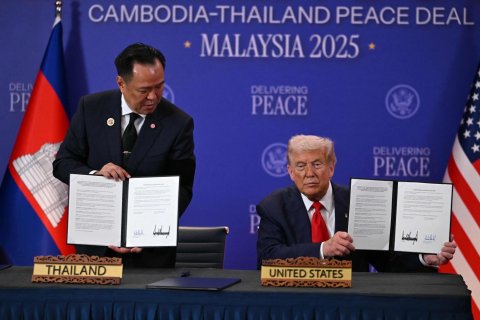
» Storming through Asia last week, US President Donald Trump's first stop in Kuala Lumpur on Oct 26, before moving on to Japan and South Korea over the next four days, capped by his meeting with Chinese President Xi Jinping before returning to Washington, was the most consequential for Southeast Asian economies.
Thailand needs a geostrategic rebalance
Oped, Thitinan Pongsudhirak, Published on 06/06/2025
» With two military coups and multiple judicial interventions that combined to subvert election results and weaken democratic institutions over the past two decades, it is unsurprising that Thailand's geostrategic position has leaned increasingly towards China. Naturally, the more Thailand becomes autocratic, the more it will be estranged from established democracies in Europe and North America, as well as Japan and South Korea, with nowhere to turn but to Beijing. But this China orientation is a geostrategic mistake at this time. Thailand should correct its course until clearer signs emerge as to which side of the superpower struggle will come out on top.
Thailand's central bank dependence
Oped, Thitinan Pongsudhirak, Published on 23/02/2024
» To proponents of central bank independence, the ongoing friction between Prime Minister and Finance Minister Srettha Thavisin and Bank of Thailand Governor Sethaput Suthiwartnarueput appears straightforward. The prime minister is putting unwarranted and unfair pressure on the central bank governor to spur the economy by loosening monetary policy and cutting interest rates. Yet, on closer scrutiny, the entrenched politicisation of central banking in Thailand may suggest otherwise. There is more than meets the eye in the politics of interest rate cuts.

Prayut running down clock to aid UTN
Oped, Thitinan Pongsudhirak, Published on 03/03/2023
» There is something odd about Thailand's upcoming election. By all indications, it is slated to take place on May 7. Prime Minister Prayut Chan-o-cha has announced that he will soon dissolve the Lower House to set the poll in motion. But no such dissolution has yet been announced, while the end of parliament's four-year term falls on March 23. The ambiguous election-setting scene is portentous and telling for several reasons.

Thailand's irresponsible runaway debt
Oped, Thitinan Pongsudhirak, Published on 11/06/2021
» A major lasting damage Prime Minister Prayut Chan-o-cha will eventually leave behind is his government's co-optation and capture of autonomous agencies that used to safeguard and uphold Thailand's macroeconomic well-being and political level-playing field.
Misguided myopia of asking the rich
Oped, Thitinan Pongsudhirak, Published on 24/04/2020
» Prime Minister Prayut Chan-o-cha's initiative to seek more cooperation and assistance from Thailand's 20 wealthiest billionaires is understandable. Thailand needs all the help it can get to handle and manage the social and economic ravages of the coronavirus (Covid-19) crisis. But making an appeal in writing from the top to the country's richest is short-sighted and misguided on many levels. It displays a government at the end of its tether and a leader who is being forced to own up to mismanaging the country for the past six years.
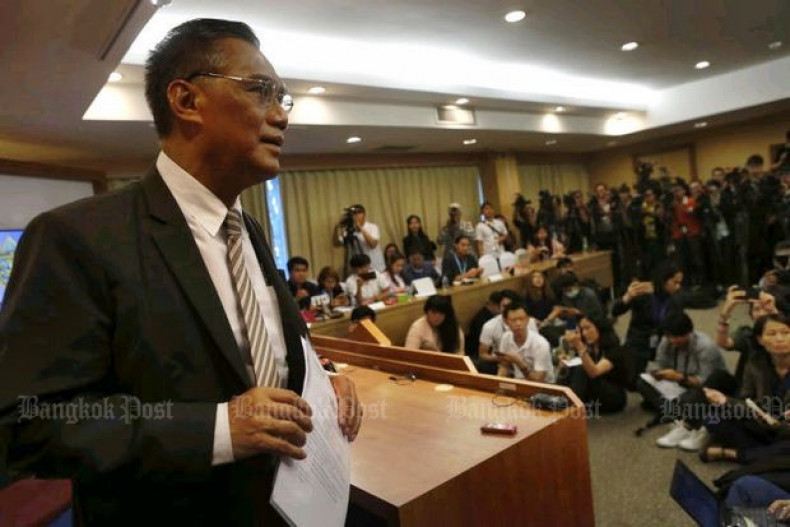
Election Commission must assert itself
News, Thitinan Pongsudhirak, Published on 25/01/2019
» Thailand is supposed to have an independent Election Commission (EC) that oversees all electoral contests from local polls to national referendums. But as Thailand heads towards a general election on March 24, the seven-member EC has appeared less than eager and enthusiastic and too beholden to government preferences in staging what will be Thailand's first election in nearly nine years.