



Showing 1 - 10 of 17
Trump's 'America First' in overdrive
News, Thitinan Pongsudhirak, Published on 23/01/2026
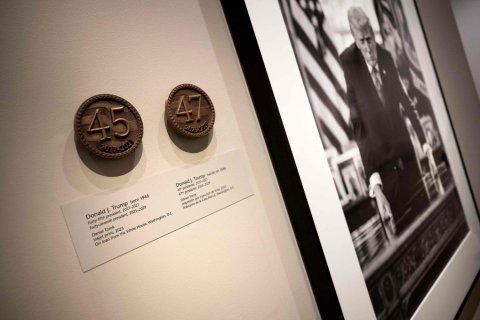
» President Donald Trump's extraterritorial capture of Venezuelan President Nicolas Maduro and his wife on cocaine-trafficking and terrorism-related charges earlier this month and repeated demand to take over Greenland at the World Economic Forum this week are part and parcel of a belligerent and transformative "America First" paradigm that dates back at least four decades.
Flawed Asean needs to regain footing
Oped, Thitinan Pongsudhirak, Published on 10/10/2025
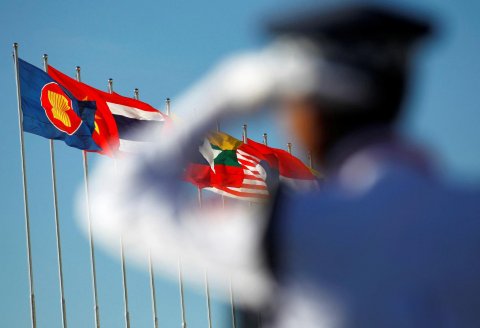
» Nearly six decades after its founding, the Association of Southeast Asian Nations (Asean) finds itself back where it began -- divided, uncertain, and vulnerable to the influence of major powers. Once hailed as a model for regional cooperation in the developing world, Asean now faces a crisis of purpose. Unless it can rediscover the unity and collective way forward that defined its early decades, Southeast Asia's flagship institution risks slipping into irrelevance.
A perilous era of absolute advantage
News, Thitinan Pongsudhirak, Published on 25/04/2025
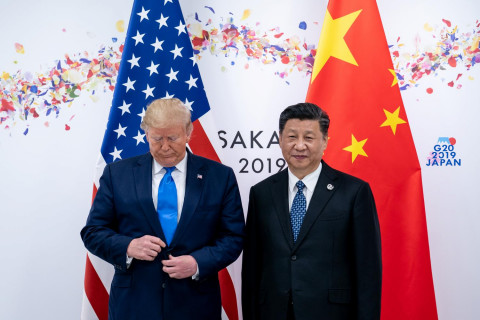
» If a date had to be pinpointed, the post-Second World War international system came to an unmistakable end on April 2 -- the so-called "Liberation Day" -- when US President Donald Trump announced comprehensive "reciprocal" tariffs to a bewildered global audience. The blatantly protectionist move was equivalent to the United States' abrogation and abandonment of the rules-based international order that it ironically and instrumentally constructed and upheld over nearly eight decades. What comes now is a dangerous era of absolute advantage in global trade, investment, and finance, bent on unilateralism over multilateralism, competition over cooperation, nationalism over interdependence, and the singular quest to dominate and reshape the global pecking order under the rubric of making America "great again".

Japan's dilemmas need bold answers
Oped, Thitinan Pongsudhirak, Published on 03/11/2023
» Among the big countries vying for power and influence in the fluid and contentious geostrategic arena, Japan faces the most daunting challenges. Most of the recognised major powers in Asia, from China and India to Indonesia and South Korea, are rising and aspiring for bigger roles and grander objectives, while Japan's place in the global pecking order has been in decline. The last time Japan had to confront such an existential threat to its place in the world may have been in the 1860s when the Western powers shook up and threatened to take over the isolated and inward-looking martial society.
The global leadership India needs
Oped, Thitinan Pongsudhirak, Published on 21/10/2022
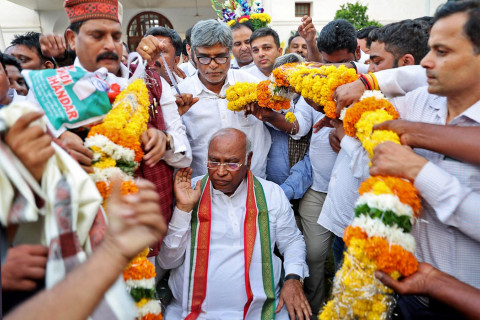
» India, like China, takes enormous pride in its civilisation's scale and antiquity -- and rightly so. But such pride can also lead to a complacent and sometimes dangerous insularity. Since gaining independence from the British Empire 75 years ago, India has mostly looked inward, focusing on improving the welfare of its population by building a strong democracy and a healthy economy.

Global politics in dangerous territory
Oped, Thitinan Pongsudhirak, Published on 02/09/2022
» While Russia's profound and transformational invasion of Ukraine on Feb 24 has fundamentally reshaped and reinforced contentious trends and contours in the geopolitics and geoeconomics of Asia, it did not set out a new direction in world politics. The international system had already been unravelling over the past decade, underpinned by the United States-China geostrategic rivalry and competition. Given deteriorating patterns and trends, the international environment is entering dangerous territory where what seemed unthinkable not long ago may soon appear to be very conceivable indeed.
Keeping democratic institutions weak
Oped, Thitinan Pongsudhirak, Published on 22/07/2022
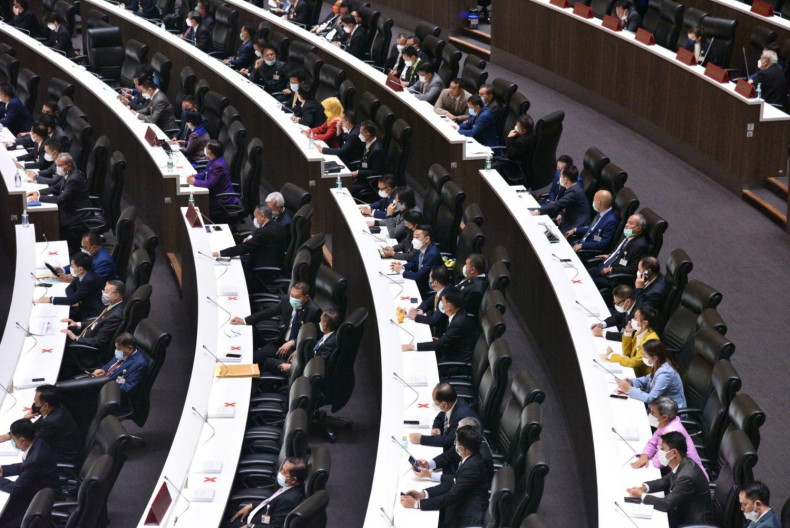
» The worst thing one can do in Thai politics is to run for office and win by a landslide. When this happens, the knives will come out and the massive election winner will be overthrown before long -- one way or another -- because the real source of power in Thailand is unelected. Such was the fate of Thaksin Shinawatra when he spearheaded the Thai Rak Thai Party to win two landslide poll victories in January 2001 and February 2005, first a near majority and later a thumping 75% of the lower house of parliament.
Correcting the pandemic policy tack
Oped, Thitinan Pongsudhirak, Published on 30/07/2021
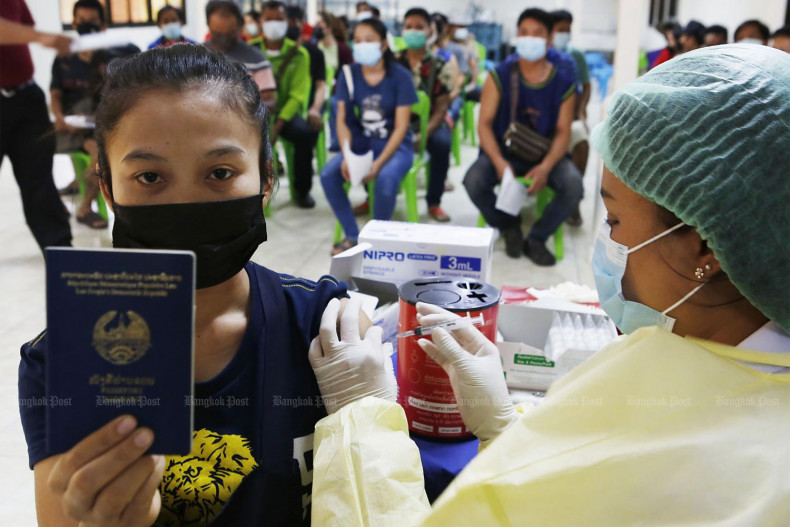
» That Thailand's coronavirus pandemic has been grossly mismanaged is self-evident. Infection rates have soared to new highs this month while vaccine availability and access remain shoddy and abysmal. The overstretched healthcare system is creaking under growing demand, while several scenes so far of Covid-afflicted people being left to die on the streets have shaken the country's collective morale and elicited soul-searching questions about how Thailand has managed to reach this dire juncture.

Thailand's jab fiasco needs an inquiry
Oped, Thitinan Pongsudhirak, Published on 16/07/2021
» Thailand's vaccine rollout is evidently a complete shambles due to questionable procurement, supply shortage, and misallocation amid a deadly surge of the Covid-19 "Delta" variant. The situation has been going from bad to worse with no end in sight as a poorly conceived strategy unfolds into a national calamity. As public anger mounts with fast-spreading calls for Prime Minister Prayut Chan-o-cha's ouster, the Covid-19 pandemic is becoming Thailand's political game-changer more than anyone could have anticipated.
Myanmar: From diplomacy to force
Oped, Thitinan Pongsudhirak, Published on 30/04/2021
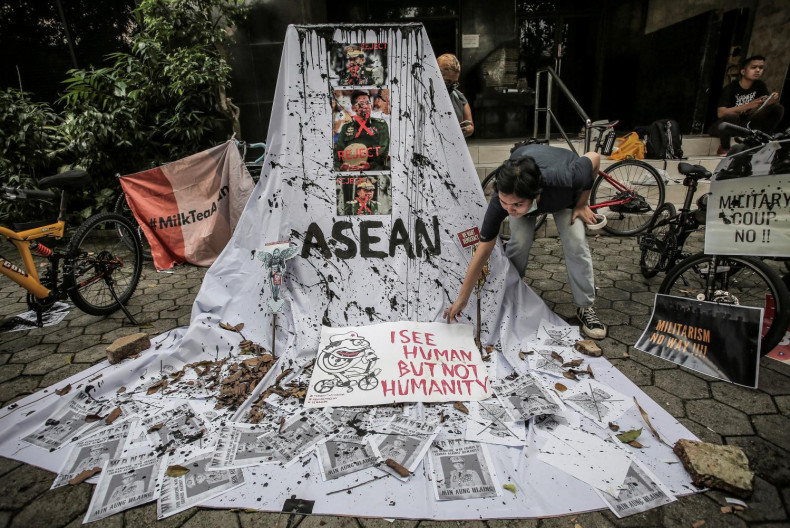
» At its recent "special" summit in Jakarta on Myanmar's crisis, Asean reached its diplomatic maximum by coming up with a "five-point consensus" that will likely prove too little and too slow. Constrained by consensus and its non-interference principle where any of its 10 members has a virtual veto, Asean's overdue response to Myanmar's fast-escalating violence on the ground is likely to prove ineffective. As Asean's diplomacy faces limitations, more of Myanmar's outcomes are likely to be decided by the use of force in an intensifying civil war.