



Showing 1 - 10 of 12
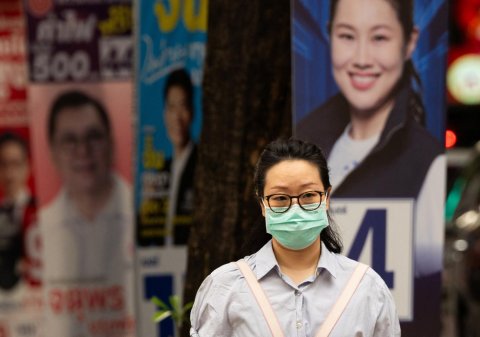
Will poll be breakout or more of same?
Oped, Thitinan Pongsudhirak, Published on 06/02/2026
» As Thais go to the polls this Sunday, the most consequential question is whether Thailand will finally break out of its debilitating cycle of political instability and economic underperformance that has marked the past two decades. The signs and signals suggest otherwise -- at least not yet.
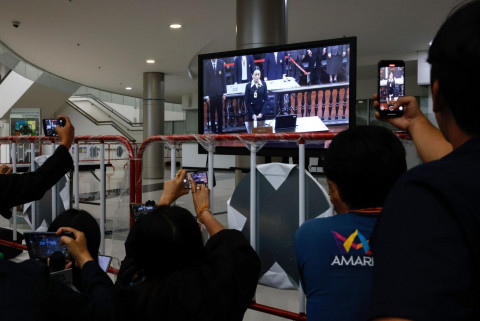
Thailand's costly political shenanigans
Oped, Thitinan Pongsudhirak, Published on 22/08/2025
» In a country of 70 million where a handful of men can remove an elected government time and again, there can be no stability and progress, only tension and regression. This is how Thailand can be characterised over the past two decades. It is now going through yet another cycle of heightened political instability with the potential collapse of the government under suspended Prime Minister Paetongtarn Shinawatra in the footsteps of previous leaders who were similarly ousted by the Constitutional Court.
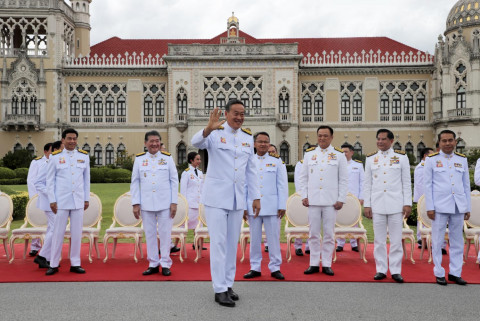
What's next for post-Thaksin Thailand?
Oped, Thitinan Pongsudhirak, Published on 08/09/2023
» The formation of a new coalition government under Prime Minister Srettha Thavisin has closed a two-decade chapter in Thai politics.
The truth about Thai money politics
Oped, Thitinan Pongsudhirak, Published on 13/01/2023
» As the election looms in Thailand, money politics returns with a vengeance.
Post-Covid headwinds hit the region
Oped, Thitinan Pongsudhirak, Published on 14/10/2022
» As the five economies in mainland Southeast Asia re-emerge from the Covid-19 pandemic, their prospects for recovery and return to growth and development appear challenged, characterised by deteriorating balance of payments, fiscal weaknesses, currency depreciations, and rising inflation amidst global monetary tightening and recession risks.
Domestic drivers of superpower rivalry
Oped, Thitinan Pongsudhirak, Published on 10/07/2020
» The coronavirus pandemic is fundamentally global but its impact is mainly local because of the international system of state sovereignty, borders and divergent national interests. What is needed to cope with, contain and overcome the pandemic is more international cooperation and coordination. But we are seeing less international efforts to fight the virus together and more self-help where every nation fends for itself. The upshot from this fractured and fragmented international system during Covid-19 is the primacy of domestic determinants of international outcomes. Nowhere is this reality clearer than the competition and confrontation between the United States and China.
Trump gamesmanship risks Asean ties
News, Thitinan Pongsudhirak, Published on 15/11/2019
» Apart from India's withdrawal from the Regional Comprehensive Economic Partnership, the other memorable outcome of the recent Asean Summit and 14th East Asia Summit was the second consecutive absence of US President Donald Trump.
Thailand's tale told via 'The Nation'
News, Thitinan Pongsudhirak, Published on 28/06/2019
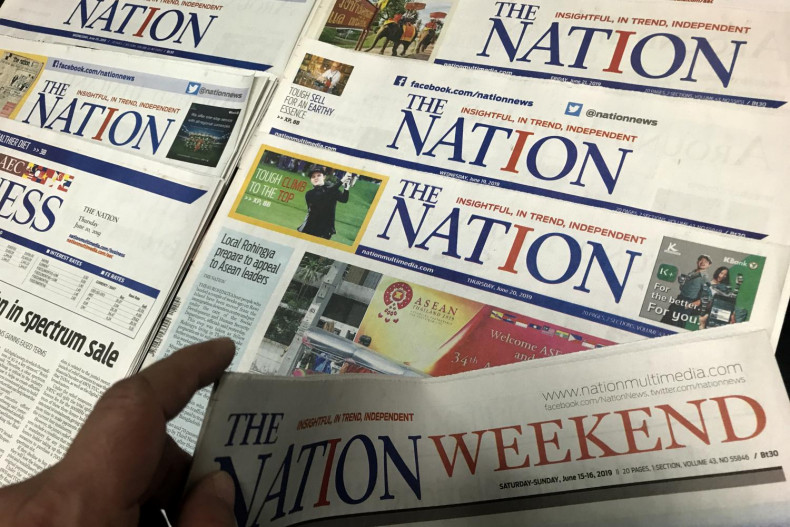
» Nearly five decades ago, The Nation newspaper started out as a pro-democracy, anti-military news organisation. It was fiercely independent and invariably hard-hitting vis-à-vis the powers-that-be. An English-language newspaper owned by Thais from the outset, it prided itself for having neither fear nor favour. Its lamentable expiry as a print newspaper today -- an online version will continue -- provides multiple parallels for Thailand's contemporary political history, ongoing polarisation and the changing nature of the business of journalism worldwide.
5 years backwards under military rule
News, Thitinan Pongsudhirak, Published on 24/05/2019
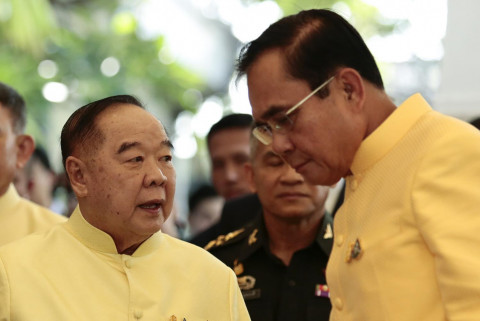
» Now that five years have elapsed since Thailand's last military coup, it is an opportune juncture to take stock of where the country is heading. When it seized power in May 2014, the military junta, known as the National Council for Peace and Order, initially had legitimacy from royal ascent and broad approval from its restoration of stability and order after more than half a year of street protests in Bangkok by the People's Democratic Reform Committee that was intent on overthrowing the Pheu Thai government.

TRC dissolution turns up political heat
News, Thitinan Pongsudhirak, Published on 08/03/2019
» It is deja vu all over again in Thai politics. Another political party aligned to Thaksin Shinawatra, an ousted, self-exiled and convicted former prime minister, found its way to the Constitutional Court where it was dissolved in short order for "opposing the democratic system with the King as head of state".