



Showing 1 - 10 of 35
Digesting Trump's trip through Asia
Oped, Thitinan Pongsudhirak, Published on 07/11/2025
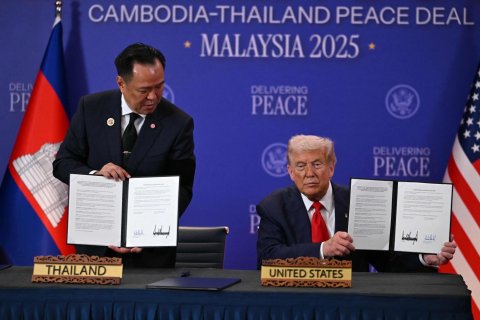
» Storming through Asia last week, US President Donald Trump's first stop in Kuala Lumpur on Oct 26, before moving on to Japan and South Korea over the next four days, capped by his meeting with Chinese President Xi Jinping before returning to Washington, was the most consequential for Southeast Asian economies.

Trump II's intellectual foundations
Oped, Thitinan Pongsudhirak, Published on 22/11/2024
» It seems counterintuitive and contradictory to think of an intellectual foundation behind United States President-elect Donald J Trump when he is professedly unintellectual, even anti-intellectual. But make no mistake. Mr Trump is merely a phenomenon. Understanding it reveals his worldview and consequent policy prospects. But doing so requires seeing the Trump phenomenon as it is rather than why and how it is detested by countless millions of us. Indeed, the biggest difficulty when analysing Mr Trump and his second administration is the global disdain he elicits.

Post-Covid headwinds hit the region
Oped, Thitinan Pongsudhirak, Published on 14/10/2022
» As the five economies in mainland Southeast Asia re-emerge from the Covid-19 pandemic, their prospects for recovery and return to growth and development appear challenged, characterised by deteriorating balance of payments, fiscal weaknesses, currency depreciations, and rising inflation amidst global monetary tightening and recession risks.

Geoeconomics of the US-China tech war
Oped, Thitinan Pongsudhirak, Published on 16/09/2022
» Chinese President Xi Jinping's arrival in Central Asia this week in his first overseas travel in nearly three years is perhaps the most consequential irony of the coronavirus pandemic. As the place where the deadly pandemic began in early 2020, China was the first to swiftly and successfully suppress and contain Covid-19 within weeks, while its counterparts in North America and Europe languished for months under mounting death tolls and hospitalisations.

Implications of Blinken's aborted visit
Oped, Thitinan Pongsudhirak, Published on 17/12/2021
» Having skipped Thailand due to a Covid-19 case among his travel delegation, the United States Secretary of State Antony Blinken's aborted three-country tour of Southeast Asia has hindered the full projection of President Joe Biden's Indo-Pacific geostrategy. Not wrapping up the trip with a visit to Thailand, a mainland Southeast Asia pivot and longstanding US treaty ally, also misses an opportunity to shore up what has been a relative bilateral estrangement. In short, Secretary Blinken's diplomatic foray in Southeast Asia has fallen short for the time being.
Aukus poses challenges to other powers
Oped, Thitinan Pongsudhirak, Published on 15/10/2021
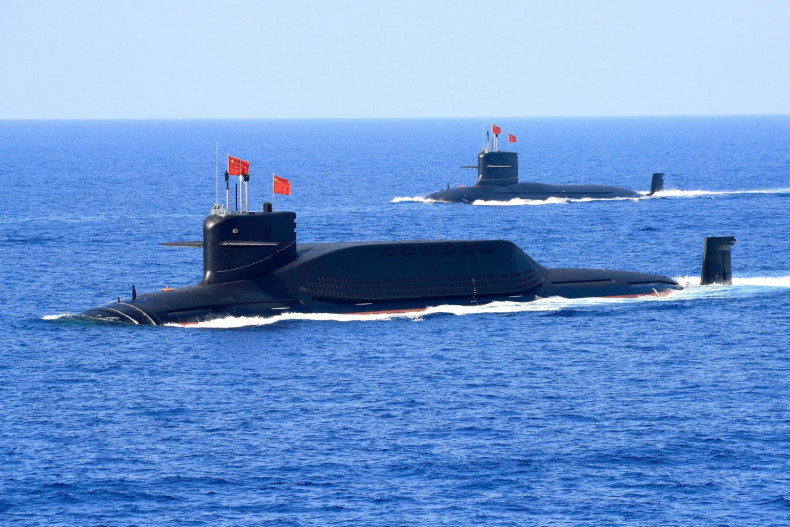
» The Australia-United Kingdom-United States (Aukus) security pact has caused ripple effects across oceans and continents. Not only will the trilateral security partnership provoke China, but it will likely further divide Southeast Asia and overshadow Asean-centred cooperative vehicles, such as the East Asia Summit. Beyond these concerns, the Aukus deal to share Anglo-American nuclear technology to enable Australia's acquisition of eight nuclear-powered submarines over two decades poses challenges to other major powers, particularly the European Union and its key members as well as Japan.

Aukus pact raises geopolitical tensions
Oped, Thitinan Pongsudhirak, Published on 08/10/2021
» In less than a month, the trilateral security partnership among Australia, the United States and the United Kingdom (Aukus) has stolen the thunder from other geostrategic schemes that have been around for over a decade.
54 years on, Asean needs new modality
Oped, Thitinan Pongsudhirak, Published on 13/08/2021
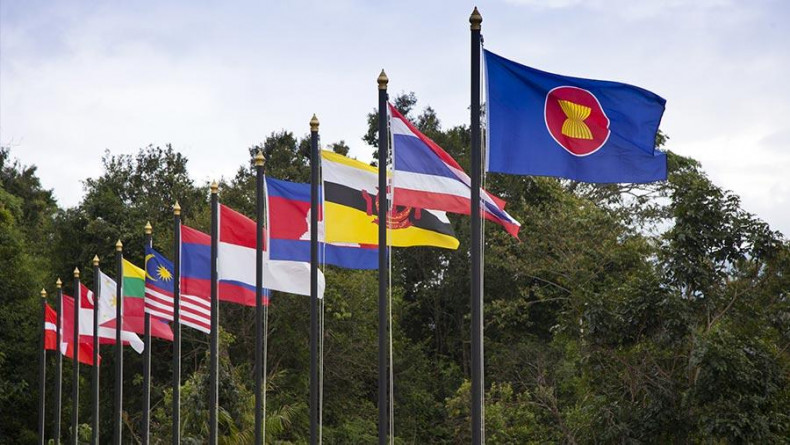
» After 54 years of being together, Asean is at the end of its tether. It has never been more divided than now, split within member states and across all 10 of them, dominated once again by divisive superpower rivalry and competition. In practice, this means Asean will appear increasingly ineffectual and inert. There will be much bureaucratic motion but few substantive organisational and policy outcomes amid unresolved challenges from within and from outside the region. Asean's best way forward may require unprecedented radical thinking towards a multi-track organisation to ensure relevance and momentum where it can be generated.
Correcting the pandemic policy tack
Oped, Thitinan Pongsudhirak, Published on 30/07/2021
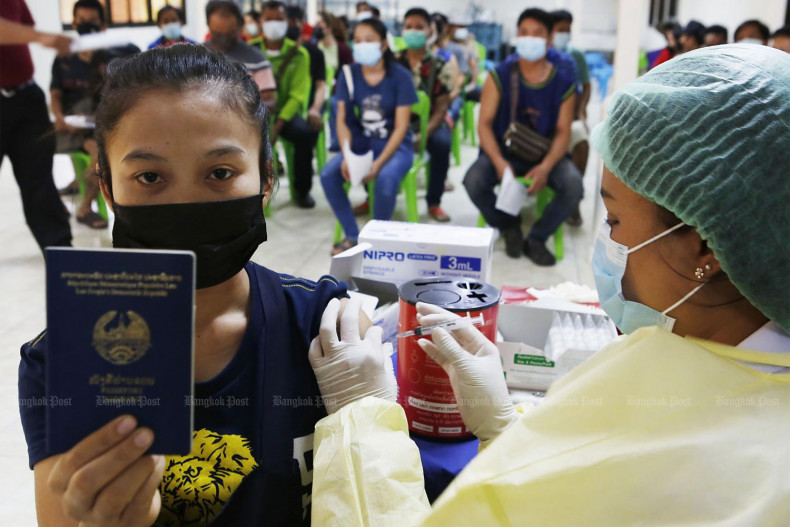
» That Thailand's coronavirus pandemic has been grossly mismanaged is self-evident. Infection rates have soared to new highs this month while vaccine availability and access remain shoddy and abysmal. The overstretched healthcare system is creaking under growing demand, while several scenes so far of Covid-afflicted people being left to die on the streets have shaken the country's collective morale and elicited soul-searching questions about how Thailand has managed to reach this dire juncture.

Thailand's jab fiasco needs an inquiry
Oped, Thitinan Pongsudhirak, Published on 16/07/2021
» Thailand's vaccine rollout is evidently a complete shambles due to questionable procurement, supply shortage, and misallocation amid a deadly surge of the Covid-19 "Delta" variant. The situation has been going from bad to worse with no end in sight as a poorly conceived strategy unfolds into a national calamity. As public anger mounts with fast-spreading calls for Prime Minister Prayut Chan-o-cha's ouster, the Covid-19 pandemic is becoming Thailand's political game-changer more than anyone could have anticipated.