



Showing 1 - 10 of 16
No-confidence and poll date in flux
Oped, Thitinan Pongsudhirak, Published on 14/11/2025
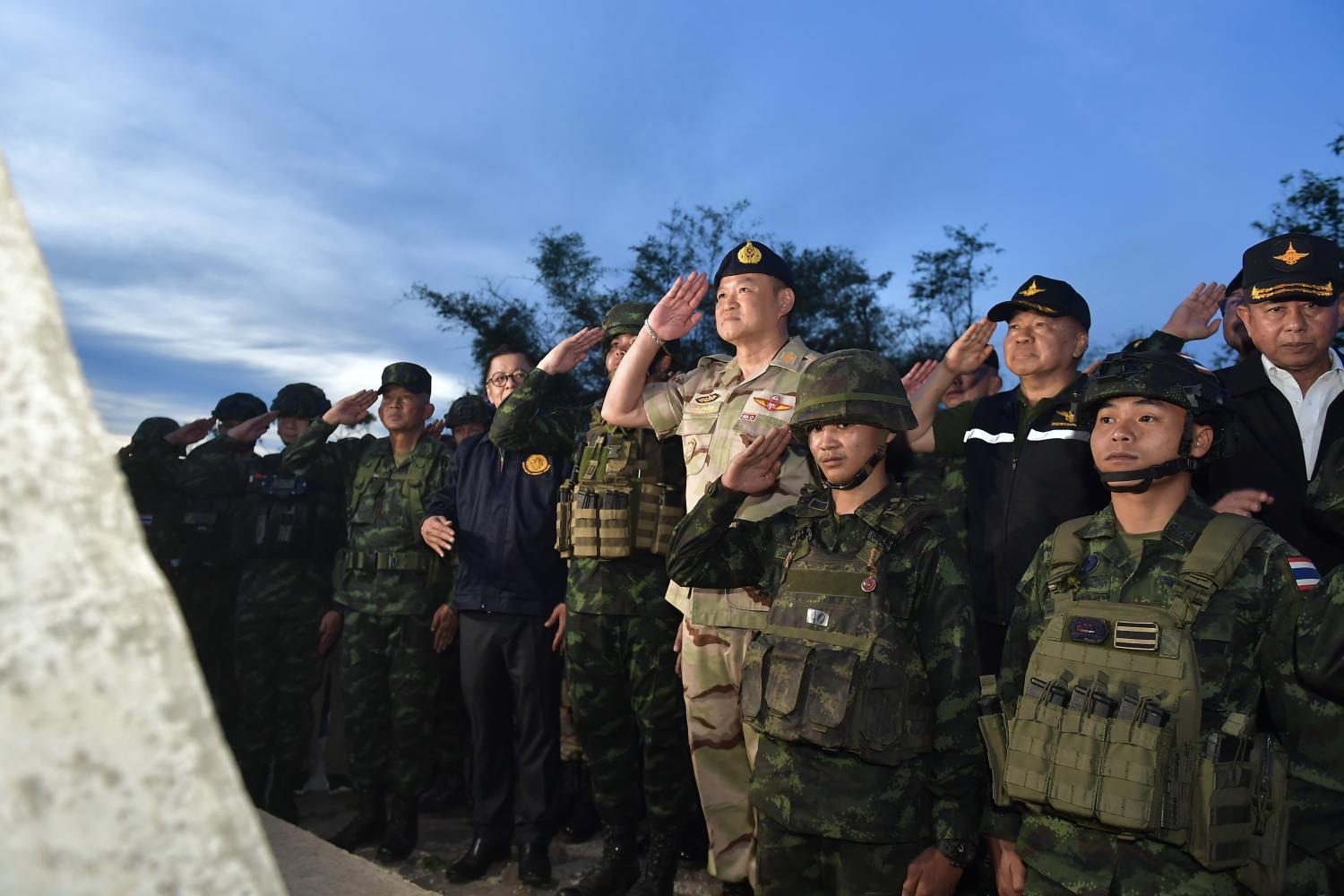
» Amid the drumbeats of military conflict with Cambodia, Thailand's political environment is evidently unruly and unsettled. The minority government of Anutin Charnvirakul, the third prime minister from the third largest-winning party since the latest national election in May 2023, is hard-pressed to stay in office beyond the four-month "Memorandum of Agreement" between his Bhumjaithai Party (BJT) and the People's Party (PP), the largest camp in the national assembly.
Anutin's new cabinet is a mixed bag
Oped, Thitinan Pongsudhirak, Published on 26/09/2025
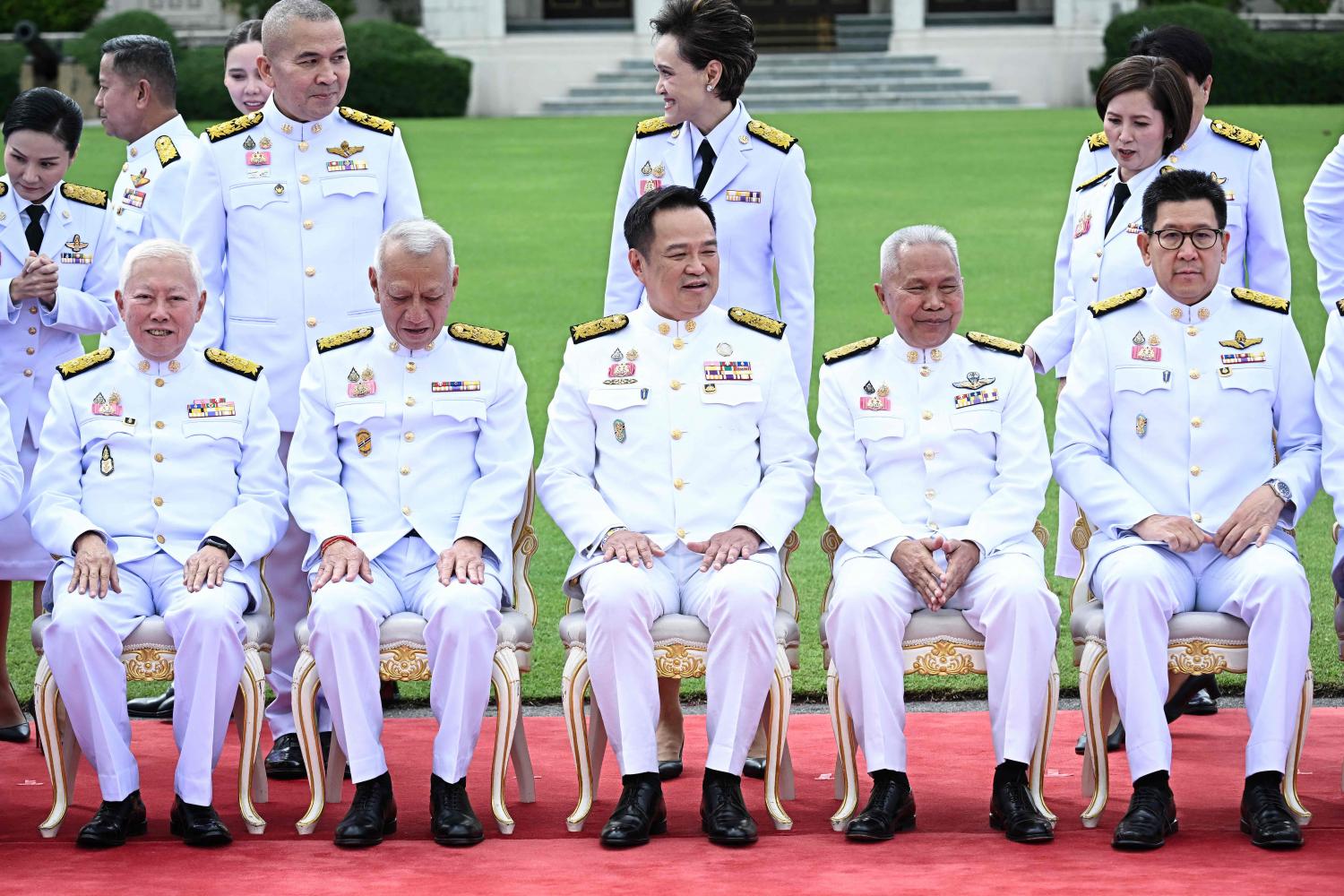
» The composition and size of Prime Minister Anutin Charnvirakul's 36-member cabinet suggest that he intends to stay in office for as long as possible, clinging to the terms of the government-enabling Memorandum of Agreement (MOA) and calling an early election only if circumstances make it unavoidable.

A backdrop to Trump's stunning win
Oped, Thitinan Pongsudhirak, Published on 08/11/2024
» Analysts often face the tough task of assessing an outcome the way it is rather than how they would like it to be. Nowhere is this challenge more daunting than analysing the stunning election results in the United States this week. Against the odds, former President Donald J Trump of the Republican Party has resoundingly won a second term over Vice President Kamala D Harris of the Democratic Party both in the popular vote and the Electoral College. The Republican Party also captured the Senate and the House of Representatives. While the implications for Thailand and the rest of Southeast Asia are wide-ranging and far-reaching, it is first and foremost necessary to understand the nature of the Trump victory.

Thailand's spreading rot of irregularity
Oped, Thitinan Pongsudhirak, Published on 19/07/2024
» The rot in Thailand's institutional makeup has become so deep, dense and widespread that it can be found nearly everywhere there is controversy. Newly elected Senator Keskamol Pleansamai is the latest case in point. Just about everything that comes with her meteoric rise to the Senate spurs accusations of irregularity and impropriety.

The post-election showdown explained
Oped, Thitinan Pongsudhirak, Published on 07/07/2023
» Thai politics will finally reach its climax with a parliamentary vote for the next prime minister on July 13 and the emergence of a coalition government soon thereafter. How things pan out will depend on the extent of "what you see is what you get" or otherwise.

The fault line that polarises Thai politics
Oped, Thitinan Pongsudhirak, Published on 07/04/2023
» With all of Thailand's contesting political parties lined up behind populist policy platforms ahead of the general election on May 14, it is not readily obvious what sets them apart.

The global leadership India needs
Oped, Thitinan Pongsudhirak, Published on 21/10/2022
» India, like China, takes enormous pride in its civilisation's scale and antiquity -- and rightly so. But such pride can also lead to a complacent and sometimes dangerous insularity. Since gaining independence from the British Empire 75 years ago, India has mostly looked inward, focusing on improving the welfare of its population by building a strong democracy and a healthy economy.

US shoots itself in foot over Taiwan
Oped, Thitinan Pongsudhirak, Published on 05/08/2022
» Even pro-democracy critics of China’s authoritarian ways would have to call United States House Speaker Nancy Pelosi’s visit to Taiwan an undue provocation that ended up as a lose-lose outcome for all concerned, including the 82-year-old congresswoman. Everything about it was misguided and self-indulgent, designed for domestic consumption in the US rather than regional peace and security in Asia. The US, by way of Mrs Pelosi, has unnecessarily shot itself in the foot big time, leaving regional states and societies to deal with the consequences.

Thailand can't have it both ways abroad
Oped, Thitinan Pongsudhirak, Published on 05/11/2021
» Images of Prime Minister Prayut Chan-o-cha hobnobbing with world leaders like United States President Joe Biden, German Chancellor Angela Merkel and UN Secretary-General Antonio Guterres at the COP26 Climate Summit in Glasgow sparked mixed feelings at home.

Thai charter changes without reform
Oped, Thitinan Pongsudhirak, Published on 25/06/2021
» In view of the ongoing parliamentary debate about constitutional revisions, it has become the consensus that the 2017 charter is flawed and in need of change. At issue is the nature and extent of charter amendments. What is being proposed can be categorised into three positions -- those favouring amendments without fundamental reforms and others who want reforms with all necessary amendments, with some advocating measures in between. Owing to the powers of incumbency, status quo proponents aligned with the coalition government of Prime Minister Prayut Chan-o-cha are likely to carry the day, thereby stoking political tensions to manifest on the horizon.