



Showing 1 - 10 of 29

Domestic drivers of bilateral conflict
News, Thitinan Pongsudhirak, Published on 19/12/2025
» The latest flare-up and intensification of the armed conflict between Thailand and Cambodia should be understood less as a new crisis and more as a resumption of a bilateral clash that erupted in late July.
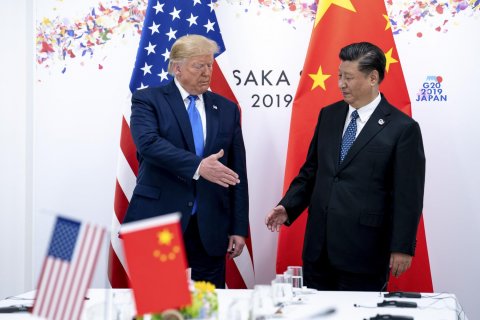
Southeast Asia amid the US-China rift
Oped, Thitinan Pongsudhirak, Published on 03/10/2025
» The rivalry between the United States and China has become the defining contest of the 21st century. Barely two decades ago, Washington and Beijing were partners in prosperity. America's support for China's entry into the World Trade Organization in 2001 epitomised the high-water mark of engagement, reflecting the belief that economic integration would lead to greater political cooperation. Today, that partnership has morphed into suspicion and confrontation. Relations between the United States and China have deteriorated so swiftly that many observers now describe them as locked in a "new Cold War". The more pressing question, however, is not whether this analogy holds, but whether confrontation can be managed short of outright conflict.

A backdrop to Trump's stunning win
Oped, Thitinan Pongsudhirak, Published on 08/11/2024
» Analysts often face the tough task of assessing an outcome the way it is rather than how they would like it to be. Nowhere is this challenge more daunting than analysing the stunning election results in the United States this week. Against the odds, former President Donald J Trump of the Republican Party has resoundingly won a second term over Vice President Kamala D Harris of the Democratic Party both in the popular vote and the Electoral College. The Republican Party also captured the Senate and the House of Representatives. While the implications for Thailand and the rest of Southeast Asia are wide-ranging and far-reaching, it is first and foremost necessary to understand the nature of the Trump victory.

Two issues at stake in US president race
Oped, Thitinan Pongsudhirak, Published on 01/11/2024
» As the quadrennial presidential contest in the United States reaches its conclusion next week, the two fundamental and entwined issues at stake are how America sees itself at home and how its consequent role abroad ought to be. This is not the first time these soul-searching questions are determining who gets to rule the country, but they are a recent phenomenon. Beyond them, the rest are merely theatre, money, and manoeuvres that underpin any major election spectacle.
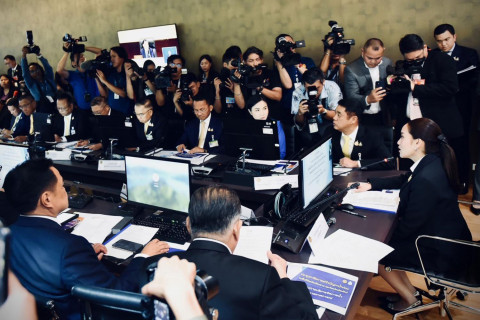
New government is new wine in old bottle
Oped, Thitinan Pongsudhirak, Published on 13/09/2024
» On the face of it, the new government under Prime Minister Paetongtarn Shinawatra appears to be a generational shift and gender breakthrough. Ms Paetongtarn is the youngest prime minister ever at 38 and only the second female government leader after her aunt Yingluck Shinawatra in 2011-14. The Paetongtarn cabinet features a record eight women among 36 with more ministers in their 30s-50s and fewer above 60. Yet on closer scrutiny, the new and younger faces are largely family legacies and proxies, surrounded by old-style politicians, while the new government's policy directions sound dated not well-suited for the times ahead.
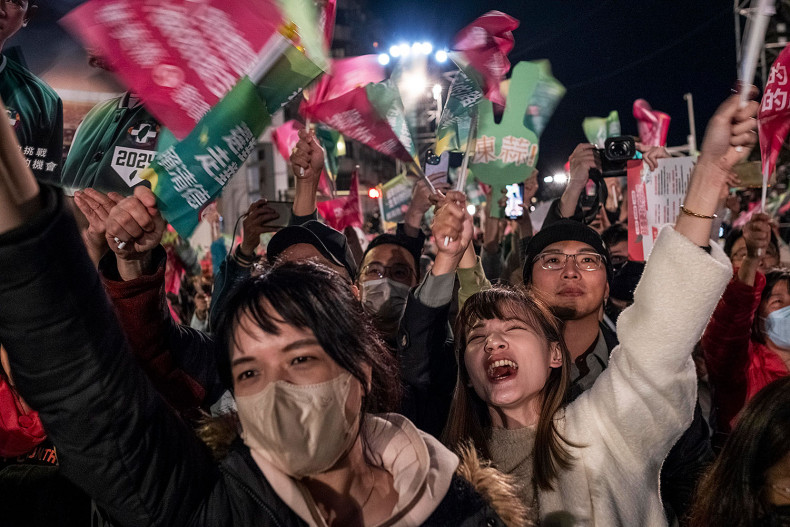
No losers, two winners in Taiwan poll
Oped, Thitinan Pongsudhirak, Published on 26/01/2024
» Among elections in Asia this year, Taiwan's is no less consequential, not just for the island country's political future but also for the United States-China rivalry and broader geopolitics. In the event, the results from the Jan 13 general election in Taiwan ended up with no major losers among the main contenders and two big wins for democracy in Asia and the geopolitical status quo.

The continuing crisis of Thai democracy
Oped, Thitinan Pongsudhirak, Published on 11/08/2023
» The prolonged volatility and instability in Thai politics attest to a continuing crisis of democracy since the military coup in September 2006. It is characterised by the nature, direction and duration of government after an election. Unless the poll-topping political party is backed by the conservative military-authoritarian regime, it is either not allowed to take power or gets overthrown while in office before completing its term. This crisis of Thai democracy has now persisted since the May 14 poll, as the formation of the next government remains stuck in a stalemate.
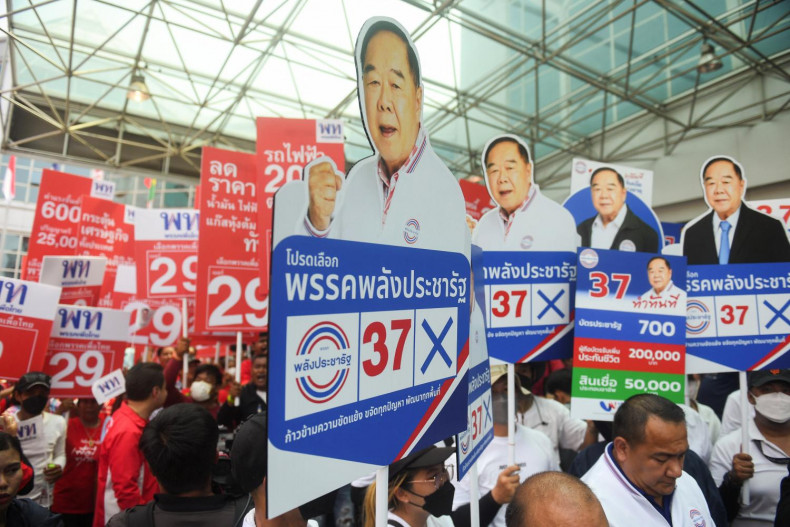
The politics of post-poll govt formation
Oped, Thitinan Pongsudhirak, Published on 21/04/2023
» As the campaign season heats up ahead of Thailand's poll on May 14, voter surveys have consistently indicated that the momentum favours the opposition Pheu Thai (PTP) and Move Forward (MFP) parties well ahead of the government side, comprising Palang Pracharath (PPRP), United Thai Nation (UTN), Bhumjaithai (BJP) and Democrat (DP) parties. On the personal popularity of prime minister candidates, survey results similarly suggest that the MFP's Pita Limjaroenrat and the PTP's Paetongtarn Shinawatra are neck and neck, followed by the PTP's Srettha Thavisin and the UTN's and incumbent premier Prayut Chan-o-cha.
Stakes and meanings of the 2023 poll
Oped, Thitinan Pongsudhirak, Published on 17/03/2023
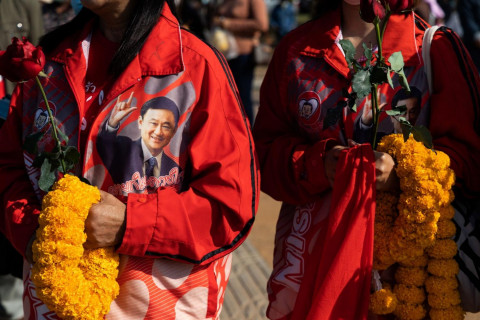
» For all intents and purposes, Prime Minister Prayut Chan-o-cha will not call an early election and will practically use up the full four-year term before dissolving the Lower House. Calling an early poll is often a sign of confidence and stability while putting it off to the last minute can be seen as timid and desperate. Nevertheless, the good news is that Thailand will have an election soon. The broader stakes and meanings of the upcoming poll are as follows.

Prayut running down clock to aid UTN
Oped, Thitinan Pongsudhirak, Published on 03/03/2023
» There is something odd about Thailand's upcoming election. By all indications, it is slated to take place on May 7. Prime Minister Prayut Chan-o-cha has announced that he will soon dissolve the Lower House to set the poll in motion. But no such dissolution has yet been announced, while the end of parliament's four-year term falls on March 23. The ambiguous election-setting scene is portentous and telling for several reasons.