



Showing 1 - 10 of 31
Thailand's political trajectory in 2026
Oped, Thitinan Pongsudhirak, Published on 09/01/2026
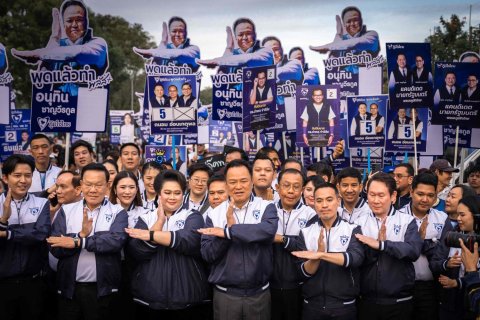
» What happens in Thai politics this year and the immediate horizon will be determined by the upcoming election on Feb 8. While contesting political parties are in full campaign mode, the contemporary history of Thai polls so far in the 21st century is not encouraging. Only once in the past 25 years have voting results went the way they were meant to, in accordance with the popular will. Whether the vote in four weeks will follow the same pattern will depend on whether the conservative establishment gets its preferred outcome.
New government is new wine in old bottle
Oped, Thitinan Pongsudhirak, Published on 13/09/2024
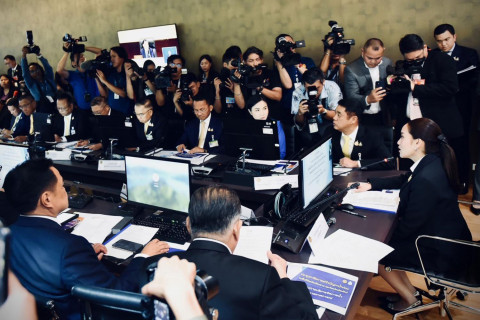
» On the face of it, the new government under Prime Minister Paetongtarn Shinawatra appears to be a generational shift and gender breakthrough. Ms Paetongtarn is the youngest prime minister ever at 38 and only the second female government leader after her aunt Yingluck Shinawatra in 2011-14. The Paetongtarn cabinet features a record eight women among 36 with more ministers in their 30s-50s and fewer above 60. Yet on closer scrutiny, the new and younger faces are largely family legacies and proxies, surrounded by old-style politicians, while the new government's policy directions sound dated not well-suited for the times ahead.

Asian elections, democracy in 2024
Oped, Thitinan Pongsudhirak, Published on 29/12/2023
» Billed as the biggest election year ever as more than half of the global population goes to the polls, 2024 will be critical to the debate about democratisation and autocratisation. Asia will lead the way with elections in India, Bangladesh, Pakistan, and Indonesia, while the most recent polls in Myanmar and Thailand offer long-term lessons about democracy and dictatorship. The salient themes next year will be about the self-perpetuating tendencies of incumbent regimes and the resilience of democratic rule when authoritarianism seemed to have the upper hand.
Our custodial democracy on display
Oped, Thitinan Pongsudhirak, Published on 21/07/2023
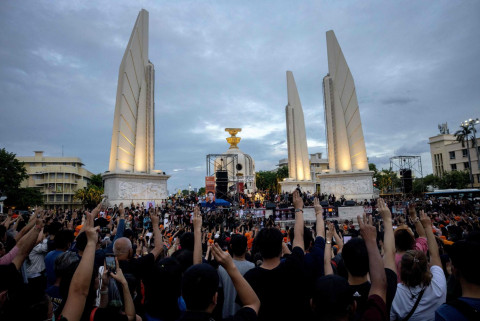
» After a watershed election and a clear message from voters for change, the integrity of Thailand's democratic system has come into question. It turns out that election results are only necessary but not sufficient to form a government and run this country.

Thai elections without democracy
Oped, Thitinan Pongsudhirak, Published on 14/07/2023
» Although it may come across as dramatic and unprecedented, Move Forward Party (MFP) leader Pita Limjaroenrat’s ordeal in trying to take office as prime minister after winning the May 14 election is par for the course in Thai politics over the past two decades.

The post-election showdown explained
Oped, Thitinan Pongsudhirak, Published on 07/07/2023
» Thai politics will finally reach its climax with a parliamentary vote for the next prime minister on July 13 and the emergence of a coalition government soon thereafter. How things pan out will depend on the extent of "what you see is what you get" or otherwise.
Charter a straitjacket on democracy
Oped, Thitinan Pongsudhirak, Published on 19/05/2023
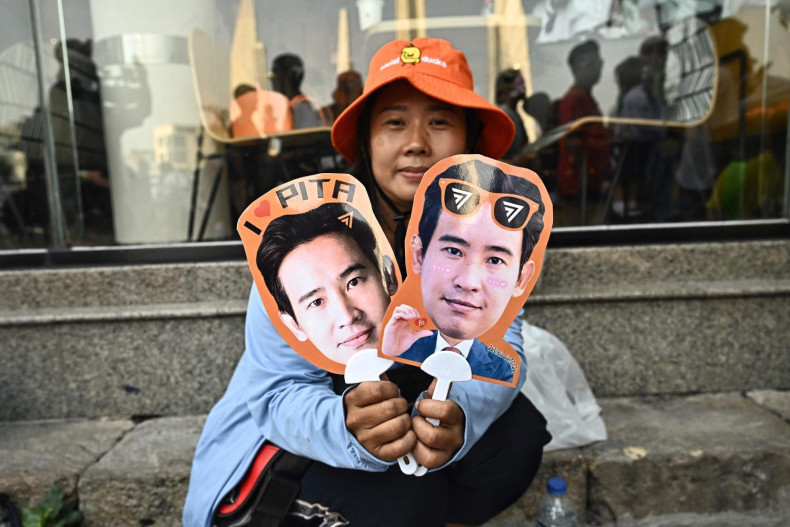
» The military-appointed constitution drafting committee that was set up after the coup in 2014 surely knew what it was doing. It crafted a charter in 2017 that now acts as a straitjacket on Thailand's democratic outcome from the general election last Sunday.
Populism triumphs as election looms
Oped, Thitinan Pongsudhirak, Published on 24/03/2023
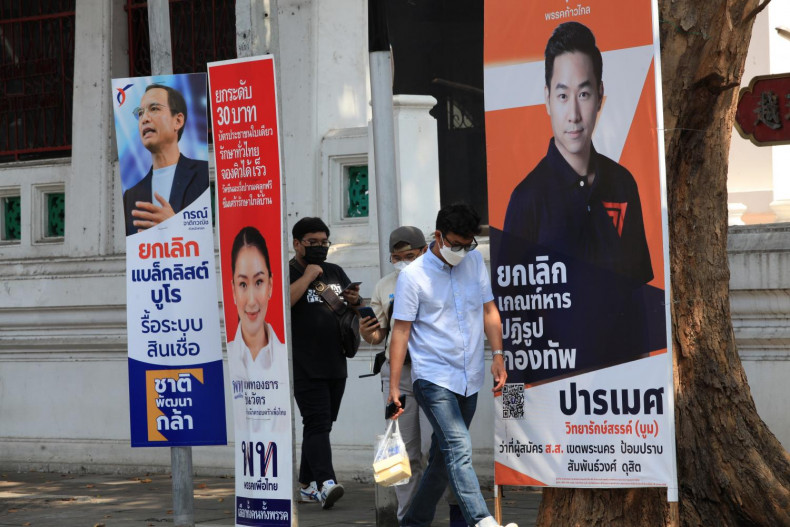
» Although the campaign season for Thailand's much-anticipated election has only just begun, populism has already become the runaway winner. All of the contesting parties have come up with a plethora of populist pledges to woo voters. That populism has triumphed in Thai politics bears multiple longer-term implications.
Keeping democratic institutions weak
Oped, Thitinan Pongsudhirak, Published on 22/07/2022
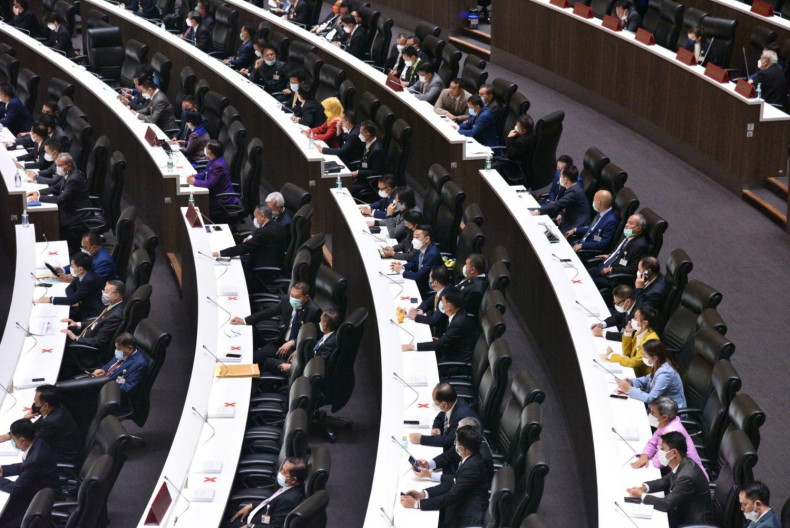
» The worst thing one can do in Thai politics is to run for office and win by a landslide. When this happens, the knives will come out and the massive election winner will be overthrown before long -- one way or another -- because the real source of power in Thailand is unelected. Such was the fate of Thaksin Shinawatra when he spearheaded the Thai Rak Thai Party to win two landslide poll victories in January 2001 and February 2005, first a near majority and later a thumping 75% of the lower house of parliament.
The geopolitics of China's CPTPP move
Oped, Thitinan Pongsudhirak, Published on 03/12/2021
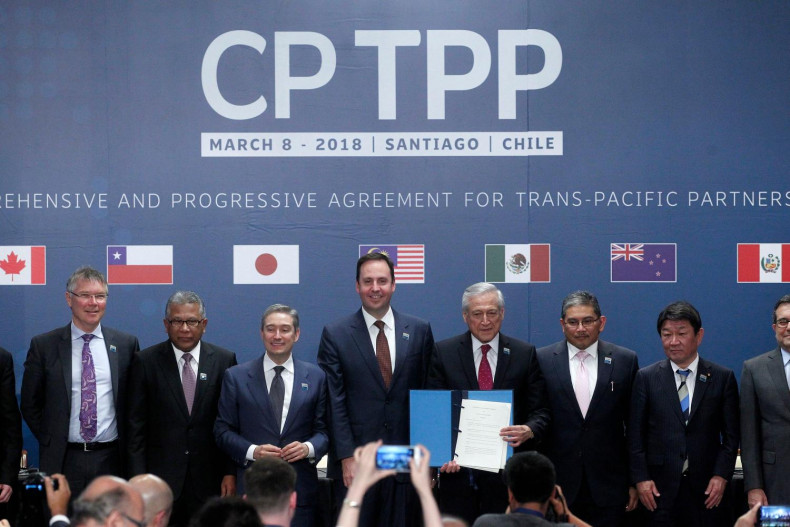
» Nowhere is the intersection between geopolitics and geoeconomics more evident than the accession negotiations under the 11-member Comprehensive and Progressive Agreement for Trans-Pacific Partnership (CPTPP). At issue are three new applications for accession by the United Kingdom, China, and Taiwan. While the UK's candidacy alters the geographic crux of what has been Asia-Pacific trade liberalisation, China's and Taiwan's entry efforts represent a proxy showdown between the United States-led global order and 75-year-old alliance system versus Beijing's geostrategic ambitions and objectives.