



Showing 1 - 10 of 16
Flawed Asean needs to regain footing
Oped, Thitinan Pongsudhirak, Published on 10/10/2025
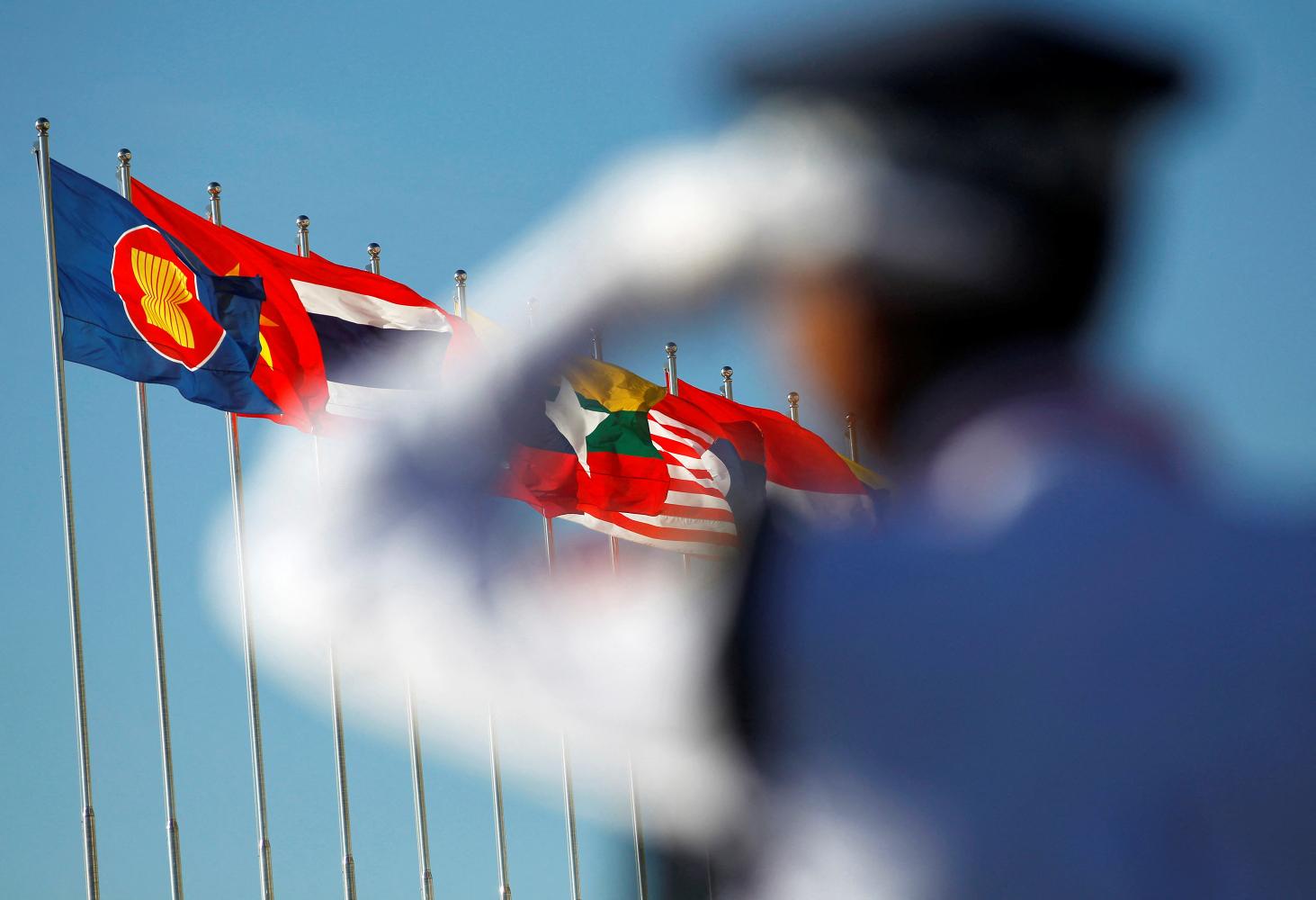
» Nearly six decades after its founding, the Association of Southeast Asian Nations (Asean) finds itself back where it began -- divided, uncertain, and vulnerable to the influence of major powers. Once hailed as a model for regional cooperation in the developing world, Asean now faces a crisis of purpose. Unless it can rediscover the unity and collective way forward that defined its early decades, Southeast Asia's flagship institution risks slipping into irrelevance.

Asean role stuck on Myanmar coup
Oped, Thitinan Pongsudhirak, Published on 25/08/2023
» President Joe Biden's decision to skip Asean-related summits in the Indonesian capital Jakarta on Sept 5-7 in favour of the G-20 leaders' meeting in India just two days later has been greeted with howls of disappointment and criticism around Southeast Asian capitals and elsewhere that are concerned about America's role in the region.

Myanmar's military takeover falters
Oped, Thitinan Pongsudhirak, Published on 03/02/2023
» Global news headlines this month will be focused on the one-year anniversary of Russia's invasion of Ukraine, which falls on Feb 24. This external aggression, where a bigger state unilaterally takes territory from a smaller neighbour by force, can be juxtaposed to an internal subjugation in Myanmar, where a military coup took place two years ago this week. Whether the aggression is externally between states, or internally within a state, the oppressors behave the same way and pursue similar objectives of conquest and dominance. Reversing an internal subjugation is as morally compelling as turning back an external aggression. What Myanmar's civilian-led resistance coalition needs is a fraction of the aid the Ukrainians have been receiving.

Apec's geopolitics and geoeconomics
Oped, Thitinan Pongsudhirak, Published on 11/11/2022
» The upcoming leaders' meeting in Bangkok among the 21 member economies of the Asia-Pacific Economic Cooperation (Apec) should be seen in conjunction with its preceding Asean-related summits in the Cambodian capital of Phnom Penh and the G20 summit in Bali, the Indonesian island resort. This one-two-three combination in three Southeast Asian countries over a ten-day period is supposed to showcase Asean's central role in the promotion of peace, security and prosperity in the region and the wider world. But as Asean's summit season gets underway in Cambodia, excitement and promise have given way to anxieties and apprehensions. While these summit talks are an extraordinary opportunity to tone down geopolitical temperatures and geoeconomic competition, they are likely to yield mixed results.

America, Asean in geostrategic drift
Oped, Thitinan Pongsudhirak, Published on 13/05/2022
» As Southeast Asia's renowned regional bloc, Asean has been wanting to have its cake as well as eat it. Its summit meeting with the United States in Washington this week is a testimony to trying to have it both ways. When Washington cares less about Asean, the nominally 10-member grouping frets about the lack of attention and priority. But when the US cares more, some Asean members are sceptical about its intentions and interests. This summit is likely to show that the US and Asean member states are less in line and increasingly unaligned.

Russia's war causes regional disarray
Oped, Thitinan Pongsudhirak, Published on 18/03/2022
» President Vladimir Putin's decision to invade Ukraine from Feb 24 is deeply consequential for Southeast Asia, both as a region and Asean as a regional organisation. Even though this region is relatively far away from the cut and thrust of Russia's war in Ukraine, Asean has already encountered new internal divisions stemming from the raging conflict in Europe. As a result, Asean's age-old approach of consensus will likely become more problematic in the search for new and more effective ways of cooperation among like-minded member states.

Myanmar military fails sovereignty test
Oped, Thitinan Pongsudhirak, Published on 04/02/2022
» After seizing power from an elected civilian government on Feb 1 last year, Myanmar's military junta under the State Administration Council (SAC) has fallen short of the four categories that constitute the definition of a sovereign state.

Implications of Blinken's aborted visit
Oped, Thitinan Pongsudhirak, Published on 17/12/2021
» Having skipped Thailand due to a Covid-19 case among his travel delegation, the United States Secretary of State Antony Blinken's aborted three-country tour of Southeast Asia has hindered the full projection of President Joe Biden's Indo-Pacific geostrategy. Not wrapping up the trip with a visit to Thailand, a mainland Southeast Asia pivot and longstanding US treaty ally, also misses an opportunity to shore up what has been a relative bilateral estrangement. In short, Secretary Blinken's diplomatic foray in Southeast Asia has fallen short for the time being.

Thai-Australian ties in the regional mix
Oped, Thitinan Pongsudhirak, Published on 05/06/2020
» Unlike the externally originated coronavirus pandemic, the mass protests in the United States in the aftermath of George Floyd's wrongful death at the hands of police officers in Minneapolis are internally driven. Seen from outside, the public fury, street demonstrations and ensuing violence over the fatal suffocation of Floyd, a black man, yield geopolitical ramifications. If the US is socially unwell and geopolitically unreliable, regional states in Asia will have to respond accordingly in view of the US-China rivalry and competition. A case in point is Thailand-Australia relations in the regional mix.

RCEP without India poses new hurdles
News, Thitinan Pongsudhirak, Published on 08/11/2019
» On the face of it, the Regional Comprehensive Economic Partnership is an Indo-Pacific trade pact that would shore up the stalled world trade liberalisation and stem the rising tide of protectionism in the global economy. India's withdrawal from the RCEP -- whose other 15 members comprise the 10 Asean economies along with China, Japan, South Korea, Australia and New Zealand -- is a major setback, posing new challenges for the Asean-centred trade bloc. Asean should persuade India to return to the RCEP fold, while preparing for a much less promising RCEP15 as second-best outcome.