



Showing 1 - 10 of 16
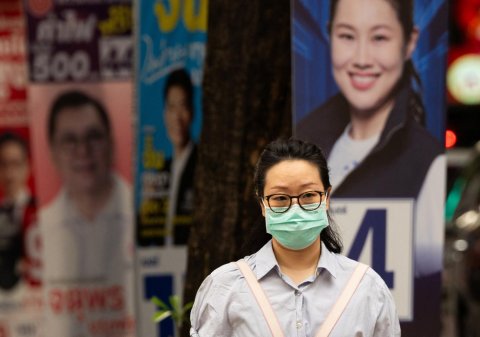
Will poll be breakout or more of same?
Oped, Thitinan Pongsudhirak, Published on 06/02/2026
» As Thais go to the polls this Sunday, the most consequential question is whether Thailand will finally break out of its debilitating cycle of political instability and economic underperformance that has marked the past two decades. The signs and signals suggest otherwise -- at least not yet.
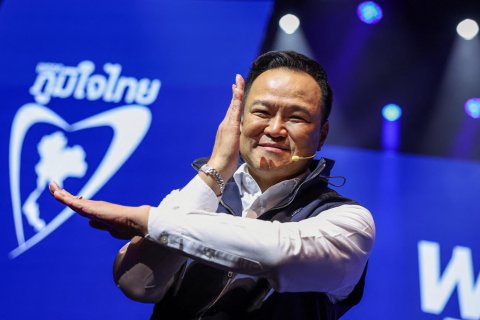
Another wasted year in Thai politics
Oped, Thitinan Pongsudhirak, Published on 26/12/2025
» As Thailand winds down 2025 with an early election looming on Feb 8, the most consequential issue to watch in the coming year will be whether recent topsy-turvy political patterns of polls, protests, and military and judicial interventions give way to a compromise between the old guard clinging on to vested interests and the new generation clamouring for reform and change.

Domestic drivers of bilateral conflict
News, Thitinan Pongsudhirak, Published on 19/12/2025
» The latest flare-up and intensification of the armed conflict between Thailand and Cambodia should be understood less as a new crisis and more as a resumption of a bilateral clash that erupted in late July.
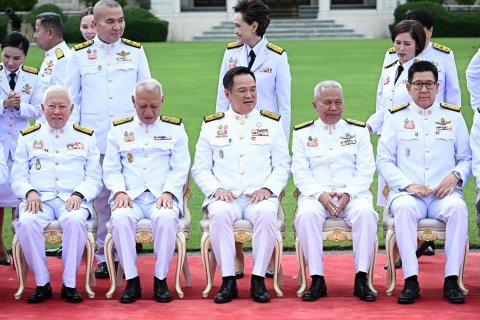
Anutin's new cabinet is a mixed bag
Oped, Thitinan Pongsudhirak, Published on 26/09/2025
» The composition and size of Prime Minister Anutin Charnvirakul's 36-member cabinet suggest that he intends to stay in office for as long as possible, clinging to the terms of the government-enabling Memorandum of Agreement (MOA) and calling an early election only if circumstances make it unavoidable.
New govt may last longer than pledged
Oped, Thitinan Pongsudhirak, Published on 12/09/2025
» Thailand's latest round of political tumult reached a culmination when the Constitutional Court removed Paetongtarn Shinawatra of the hitherto ruling Pheu Thai (PT) Party from office on Aug 29, paving the way for Bhumjaithai Party (BJT) leader Anutin Charnvirakul to succeed her as prime minister with the Lower House's majority support a week later.
PM's crisis and Thai political directions
Oped, Thitinan Pongsudhirak, Published on 27/06/2025
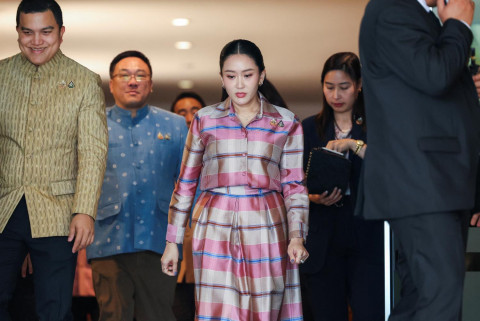
» What began just a month ago as a minor border dispute with Cambodia has spiralled into an existential political crisis in Thailand. In what she understood to be a private phone conversation with Cambodia's former prime minister and Senate President, Hun Sen, Prime Minister Paetongtarn Shinawatra compromised her premiership and undermined Thai national interests. While she tries to ride out the storm, her tenure appears wobbly and unworkable. What comes next will likely proceed in one of three directions revolving around the Thai parliamentary processes, each with its own scenarios and considerations.
Two wasted decades in Thai politics
Oped, Thitinan Pongsudhirak, Published on 20/12/2024
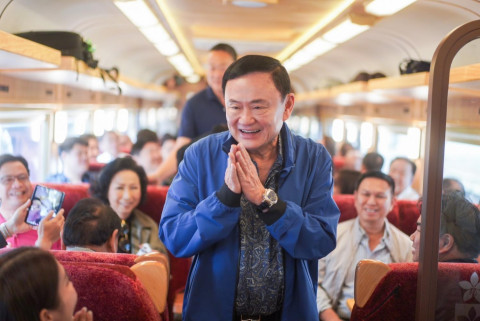
» Now that Thaksin Shinawatra appears actively back in Thai politics, it is demoralising to look back at Thailand's wasted time and opportunities. Once a promising country on the way from democratic transition to consolidation in the late 1990s, Thailand has become semi-autocratic, and its rocky political trajectory over the past two decades is now structural. The traditional institutions of power that grew out of the Cold War have been calling the shots in earlier decades and are just unwilling to let the country move forward in the immediate years ahead.

Foreign policy needs to be democratic
Oped, Thitinan Pongsudhirak, Published on 11/10/2024
» To the extent that foreign policy starts at home, Prime Minister Paetongtarn Shinawatra's latest diplomatic forays should be supported because Thailand has become a regional laggard with its international standing at an all-time low. Elected civilian leaders by the people, as opposed to unelected appointees from military-conservative elites, are the way ahead to regain Thailand's international profile and forward movements. Ms Paetongtarn is evidently not the first-best elected outcome, but she is all Thailand has to work with for now.
Thailand's judiciary faces challenges
Oped, Thitinan Pongsudhirak, Published on 24/05/2024
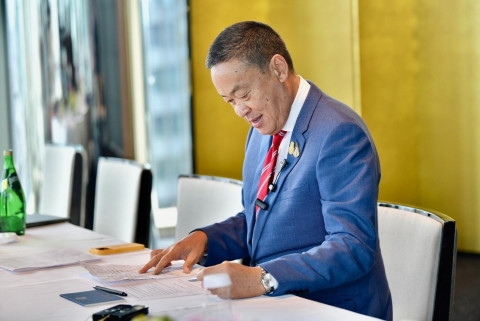
» Thailand appears to be a country of 70 million, ultimately ruled by an unelected few. This sobering reality was on display when two connected groups of top generals seized power from democratically elected governments in September 2006 and May 2014. Unlike these blatant military coups over the past two decades, at issue now is the power and role of the judiciary. While Thailand has another democratically elected civilian government under Prime Minister Srettha Thavisin, the question that needs to be asked is whether the country is effectively under judicial rule.

Thai charter court deserves scrutiny
Oped, Thitinan Pongsudhirak, Published on 04/08/2023
» Amid the volatility and confusion during the interim since the May 14 election, Thailand's Constitutional Court has further thickened the plot by accepting a petition to rule on whether a parliamentary vote using the meeting rules to deny the renomination of Move Forward Party leader Pita Limjaroenrat's premiership was unconstitutional.