



Showing 1 - 10 of 21

Domestic drivers of bilateral conflict
News, Thitinan Pongsudhirak, Published on 19/12/2025
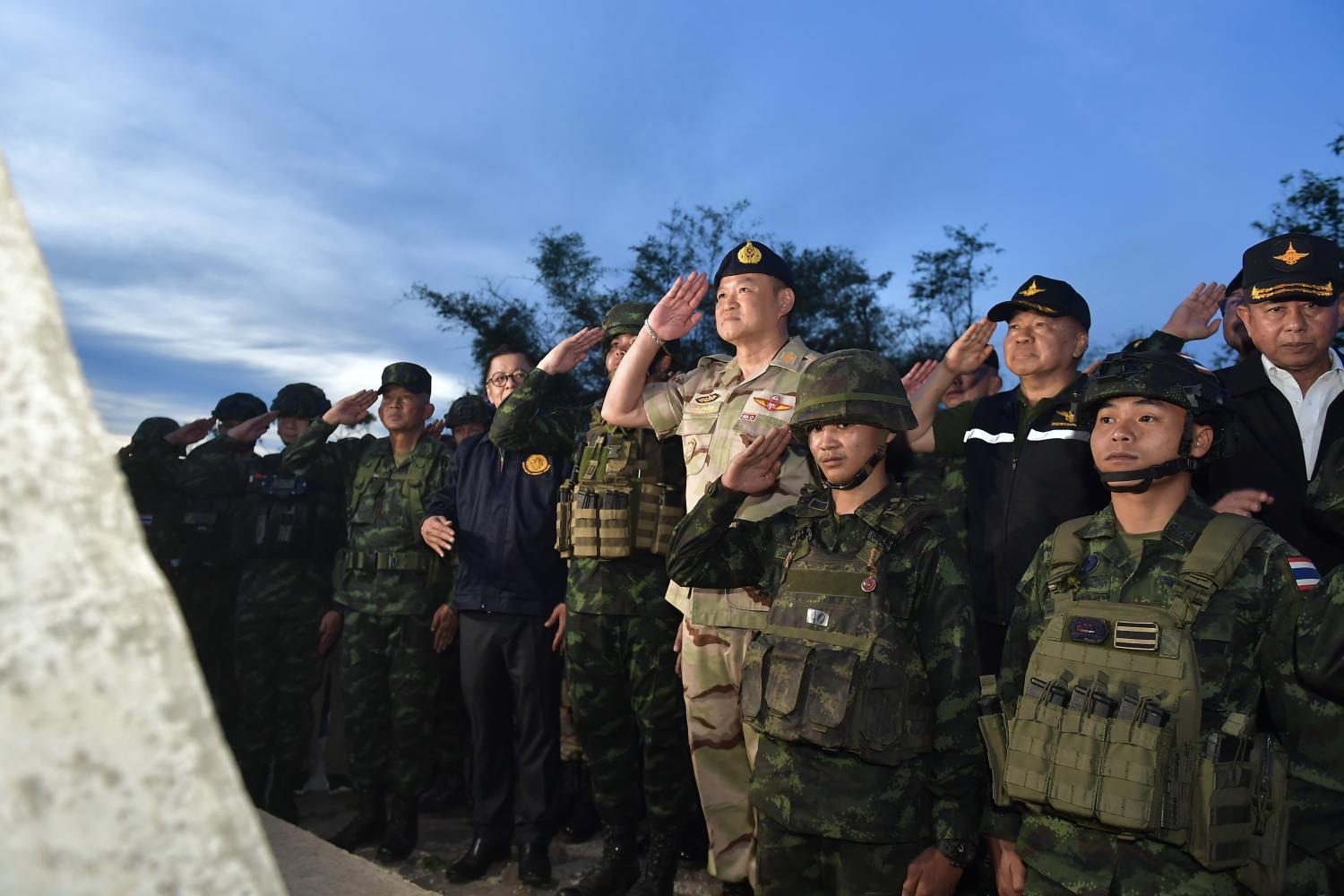
» The latest flare-up and intensification of the armed conflict between Thailand and Cambodia should be understood less as a new crisis and more as a resumption of a bilateral clash that erupted in late July.
No-confidence and poll date in flux
Oped, Thitinan Pongsudhirak, Published on 14/11/2025
» Amid the drumbeats of military conflict with Cambodia, Thailand's political environment is evidently unruly and unsettled. The minority government of Anutin Charnvirakul, the third prime minister from the third largest-winning party since the latest national election in May 2023, is hard-pressed to stay in office beyond the four-month "Memorandum of Agreement" between his Bhumjaithai Party (BJT) and the People's Party (PP), the largest camp in the national assembly.
Thai-Cambodian feud is Asean's worst
Oped, Thitinan Pongsudhirak, Published on 15/08/2025
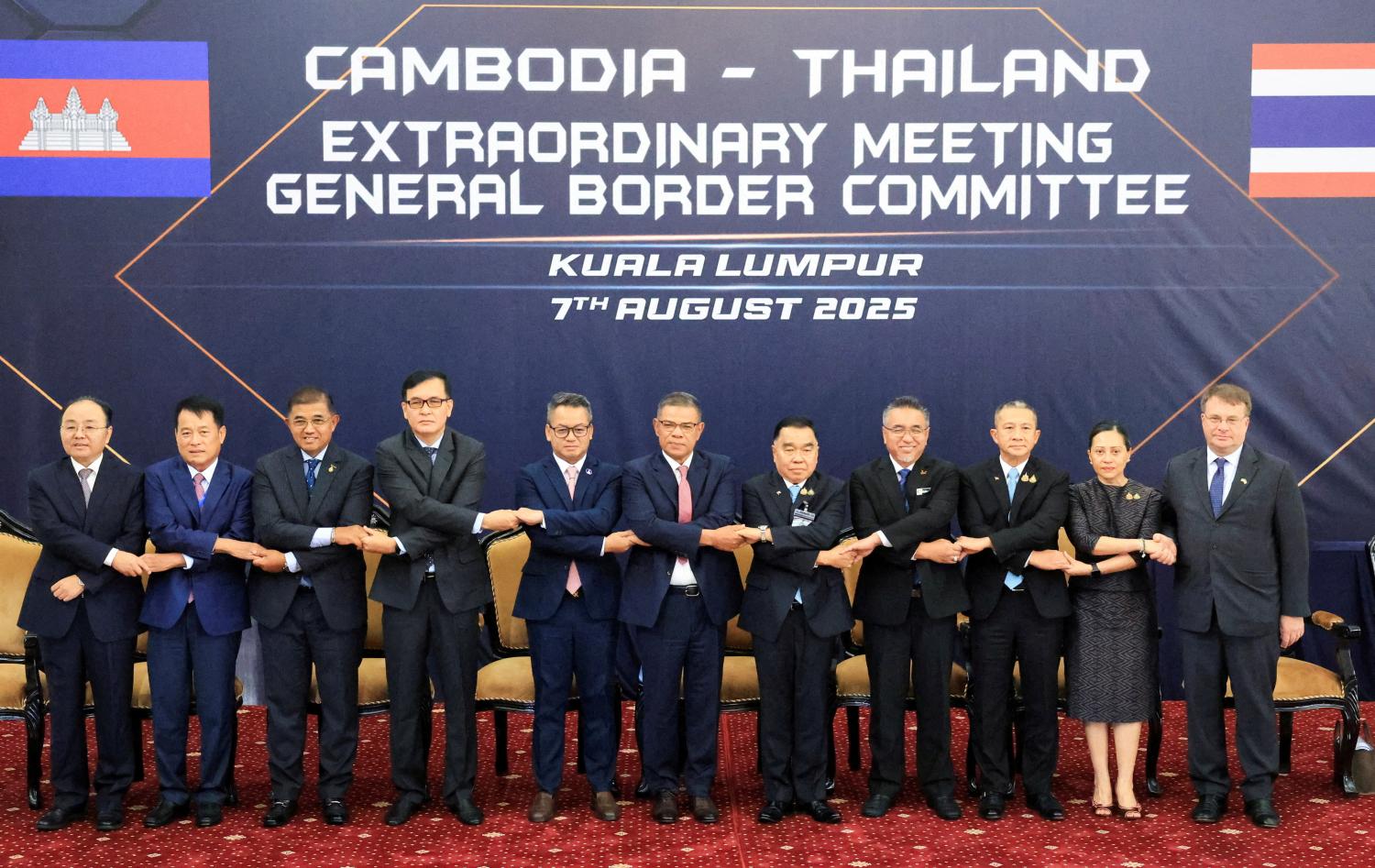
» The border dispute and consequent military conflict between Cambodia and Thailand in recent weeks have become Asean's worst crisis in its 58 years of existence. Ironically, it was an intra-regional war between Indonesia and Malaysia that gave rise to Asean in 1967, but now an intra-Asean military clash is undermining the Southeast Asian organisation's core reason for being and its main claim to credibility and prominence. Unless Asean, under Malaysia as its rotational chair this year, moves fast to contain the bilateral dispute and reinforce a delicate ceasefire agreement, Southeast Asia will be looked upon increasingly as a region and less as an organisation of member states.

A perilous era of absolute advantage
News, Thitinan Pongsudhirak, Published on 25/04/2025
» If a date had to be pinpointed, the post-Second World War international system came to an unmistakable end on April 2 -- the so-called "Liberation Day" -- when US President Donald Trump announced comprehensive "reciprocal" tariffs to a bewildered global audience. The blatantly protectionist move was equivalent to the United States' abrogation and abandonment of the rules-based international order that it ironically and instrumentally constructed and upheld over nearly eight decades. What comes now is a dangerous era of absolute advantage in global trade, investment, and finance, bent on unilateralism over multilateralism, competition over cooperation, nationalism over interdependence, and the singular quest to dominate and reshape the global pecking order under the rubric of making America "great again".

Thailand between the US and China
Oped, Thitinan Pongsudhirak, Published on 29/03/2024
» Amid what now has to be acknowledged as a direct non-military conflict and a geoeconomic war of sorts between the United States and China, Thailand is in a quandary. While characterising Thailand's geostrategic dilemma as a US-China binary can be exaggerated and misleading, it does have a point. As with many other developing countries in the region, Thailand will come under increasing pressure to choose between the two competing superpowers. The ability not to choose thus becomes an overarching geostrategic objective.

Digital wallet should be implemented
Oped, Thitinan Pongsudhirak, Published on 16/02/2024
» The big debate in Thailand's current economic policy planning is whether the economy is facing a crisis or not. The government of Prime Minister Srettha Thavisin, who doubles as finance minister, has contended that there is an economic crisis in dire need of both monetary policy loosening and fiscal stimulus, particularly the 500-billion-baht digital wallet scheme. The Bank of Thailand, supported by a clique of economists apparently critical of the government's "populist" policy measures, asserts otherwise that an economic recovery is in progress without the need to lower the benchmark repurchase rate.

Thailand's semi-democracy faces risks
Oped, Thitinan Pongsudhirak, Published on 15/12/2023
» The government of Prime Minister and Finance Minister Srettha Thavisin has settled into an uneasy balance between the civilian-led majority forces that represent the Thai electorate and the royalist-conservative minority guardians of the established centres anchored around the monarchy, military, judiciary, and bureaucracy.

Global politics in dangerous territory
Oped, Thitinan Pongsudhirak, Published on 02/09/2022
» While Russia's profound and transformational invasion of Ukraine on Feb 24 has fundamentally reshaped and reinforced contentious trends and contours in the geopolitics and geoeconomics of Asia, it did not set out a new direction in world politics. The international system had already been unravelling over the past decade, underpinned by the United States-China geostrategic rivalry and competition. Given deteriorating patterns and trends, the international environment is entering dangerous territory where what seemed unthinkable not long ago may soon appear to be very conceivable indeed.
The politics of the Chadchart juggernaut
Oped, Thitinan Pongsudhirak, Published on 01/07/2022
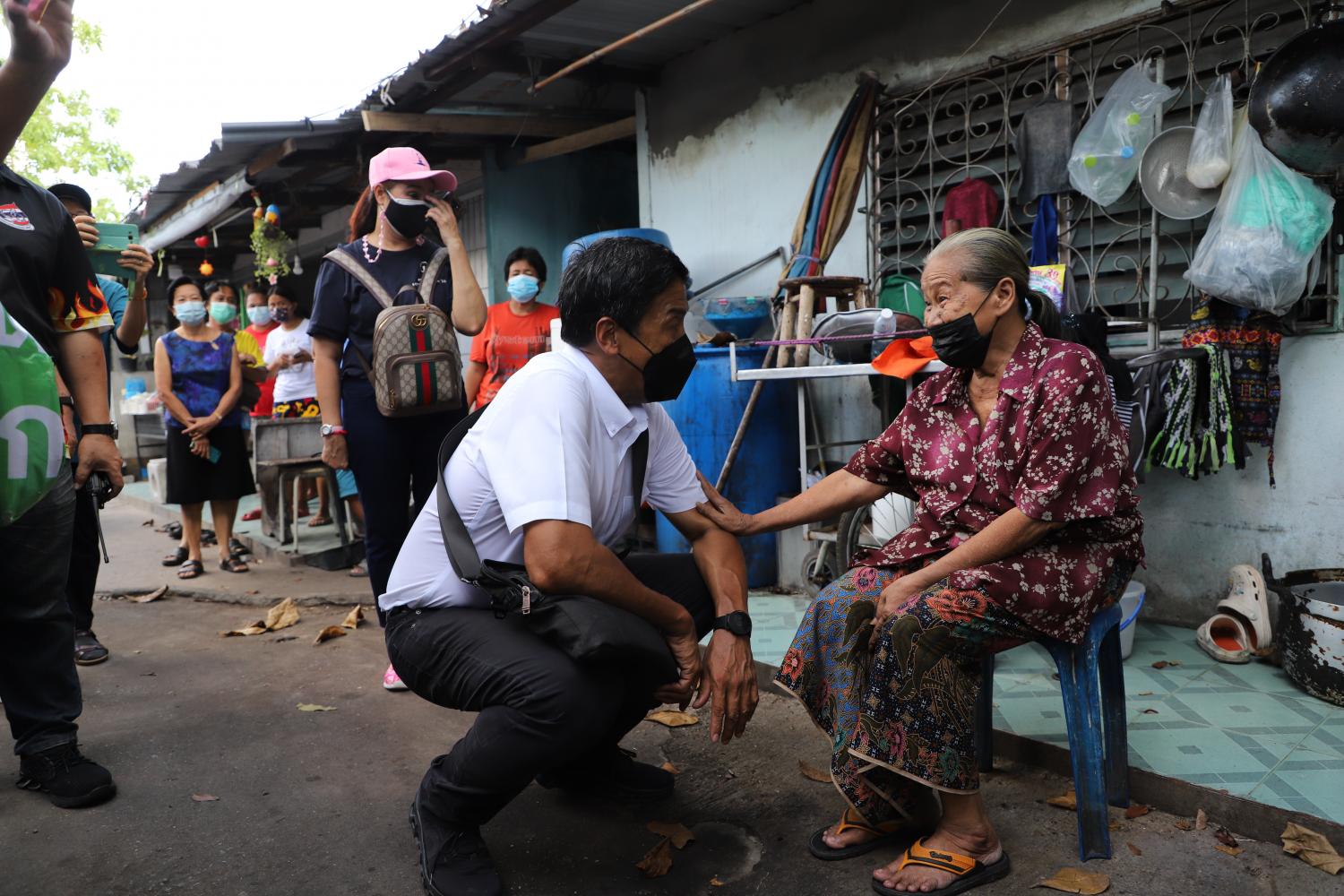
» In countries where integrity, competence and popular legitimacy in leadership are valued -- for example, in Scandinavia, Singapore or Taiwan -- Bangkok governor Chadchart Sittipunt would be considered fairly average. He would merely be another good leader who exudes modesty, humility, capability and authenticity, always in touch with and answerable to his constituents.

What happens if Asean shrinks to 9?
Oped, Thitinan Pongsudhirak, Published on 29/10/2021
» It all came down to a choice between marginalisation and irrelevance on the one hand and pragmatism and resilience on the other. At its 38th and 39th leaders' meetings and related summits with dialogue partners, Asean chose to remain relevant. In an unprecedented move with far-reaching ramifications, Asean reduced itself to nine participating members from the normal 10, excluding Myanmar. While this bold manoeuvre derived from necessity rather than initiative, it provides Southeast Asia's bloc of smaller states a small window of opportunity to regain its footing and revitalise its central role in promoting regional peace and stability in Asia.