



Showing 1 - 10 of 28
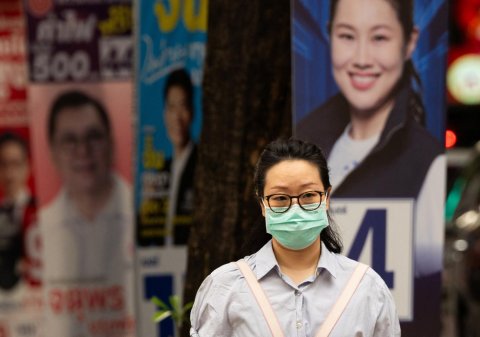
Will poll be breakout or more of same?
Oped, Thitinan Pongsudhirak, Published on 06/02/2026
» As Thais go to the polls this Sunday, the most consequential question is whether Thailand will finally break out of its debilitating cycle of political instability and economic underperformance that has marked the past two decades. The signs and signals suggest otherwise -- at least not yet.
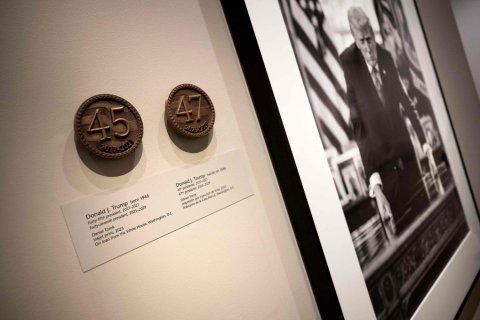
Trump's 'America First' in overdrive
News, Thitinan Pongsudhirak, Published on 23/01/2026
» President Donald Trump's extraterritorial capture of Venezuelan President Nicolas Maduro and his wife on cocaine-trafficking and terrorism-related charges earlier this month and repeated demand to take over Greenland at the World Economic Forum this week are part and parcel of a belligerent and transformative "America First" paradigm that dates back at least four decades.
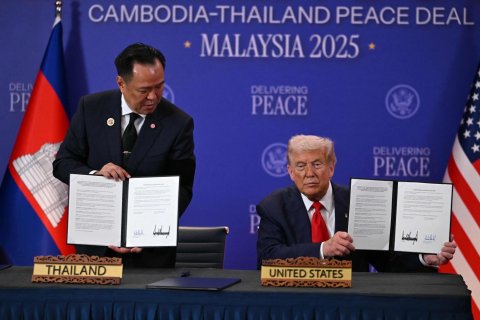
Digesting Trump's trip through Asia
Oped, Thitinan Pongsudhirak, Published on 07/11/2025
» Storming through Asia last week, US President Donald Trump's first stop in Kuala Lumpur on Oct 26, before moving on to Japan and South Korea over the next four days, capped by his meeting with Chinese President Xi Jinping before returning to Washington, was the most consequential for Southeast Asian economies.
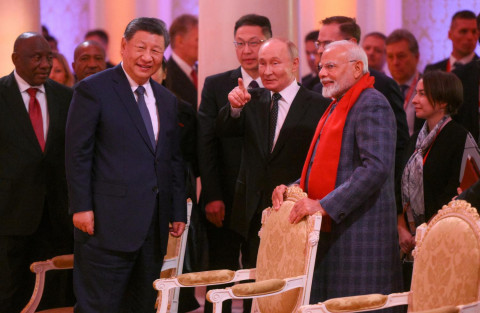
Trump's tariff blackmail boosts Brics
Oped, Thitinan Pongsudhirak, Published on 06/12/2024
» Even before officially taking office, United States President-elect Donald J Trump is shaking up the international system with drama and fanfare unlike any other major leader in recent memory. His most recent outburst to slap 100% tariffs on the "Brics" countries -- Brazil, Russia, India, China, and South Africa, as well as Egypt, Ethiopia, Iran and the United Arab Emirates -- is a case in point. While it will coerce developing economies to think twice about the cost of going their own way, this tariff blackmail and others like it also risk pushing smaller countries away from the US to other rival big powers, particularly China.

Two issues at stake in US president race
Oped, Thitinan Pongsudhirak, Published on 01/11/2024
» As the quadrennial presidential contest in the United States reaches its conclusion next week, the two fundamental and entwined issues at stake are how America sees itself at home and how its consequent role abroad ought to be. This is not the first time these soul-searching questions are determining who gets to rule the country, but they are a recent phenomenon. Beyond them, the rest are merely theatre, money, and manoeuvres that underpin any major election spectacle.

Thai foreign policy needs new rudder
Oped, Thitinan Pongsudhirak, Published on 27/09/2024
» Thailand's foreign policy posture and projection under Foreign Minister Maris Sangiampongsa and the new government of Prime Minister Paetongtarn Shinawatra is off to a good start under severe structural constraints. Given the widespread consensus both at home and abroad that Thailand has fallen behind its peers over the past two decades, the imperative of regaining its international standing is undisputed. But doing so under what the foreign minister has outlined as a "neutral stance" under "non-alignment" among the great powers is moot and misguided. What Thai foreign policy needs is multi-alignments and omni-directionality under a new rudder.

Remembering a Southeast Asianist
Oped, Thitinan Pongsudhirak, Published on 26/07/2024
» It is not often these days to find scholars of Southeast Asia with exceptional breadth and depth, prescience, and commitment who stick to their creed until the end. In the pantheon of such rare scholars, Benedict O'Gorman Anderson, who died in 2015, would have led the way. James C Scott would be right beside him in a distinctly different fashion.
Thailand's judiciary faces challenges
Oped, Thitinan Pongsudhirak, Published on 24/05/2024
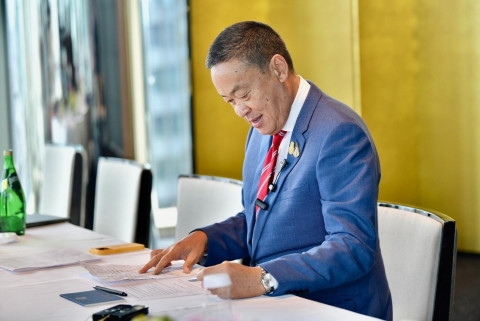
» Thailand appears to be a country of 70 million, ultimately ruled by an unelected few. This sobering reality was on display when two connected groups of top generals seized power from democratically elected governments in September 2006 and May 2014. Unlike these blatant military coups over the past two decades, at issue now is the power and role of the judiciary. While Thailand has another democratically elected civilian government under Prime Minister Srettha Thavisin, the question that needs to be asked is whether the country is effectively under judicial rule.

Myanmar as interim 'non-state' state
Oped, Thitinan Pongsudhirak, Published on 01/03/2024
» Myanmar, also known as Burma, has become a de facto state that is dominated by non-state entities. Contrary to facile claims, Myanmar is not a failed state like some that beset parts of Africa and the Middle East. The ethnically diverse country of 55 million still functions despite widespread violence in an ongoing civil war. Unless and until Myanmar is understood and re-conceptualised as an interim state comprising non-state entities, it will be difficult to move forward to remake and reconstitute a new country after the civil war and the passing of the military junta that seized power on Feb 1, 2021, led by Senior General Min Aung Hlaing.

Thai charter court deserves scrutiny
Oped, Thitinan Pongsudhirak, Published on 04/08/2023
» Amid the volatility and confusion during the interim since the May 14 election, Thailand's Constitutional Court has further thickened the plot by accepting a petition to rule on whether a parliamentary vote using the meeting rules to deny the renomination of Move Forward Party leader Pita Limjaroenrat's premiership was unconstitutional.