



Showing 1 - 8 of 8

Asean's regroup requires deep reforms
Oped, Thitinan Pongsudhirak, Published on 17/10/2025
» If Asean's 58 years thus far have been about resilience and playing a central organising role in promoting regional security and stability, its next decade will determine whether the Southeast Asian bloc can adapt and remain relevant. After the crises in Myanmar and along the Thai-Cambodian border, Asean's credibility has never been more in doubt. To regain its effectiveness as Southeast Asia's one and only agency, Asean needs to move away from the ritualistic diplomacy of mundane meetings to far-reaching reforms that chart new ways of making things work.
Trump's tariff blackmail boosts Brics
Oped, Thitinan Pongsudhirak, Published on 06/12/2024
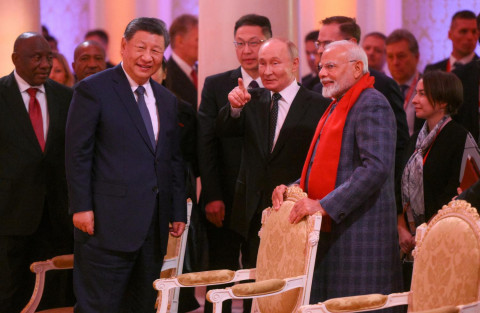
» Even before officially taking office, United States President-elect Donald J Trump is shaking up the international system with drama and fanfare unlike any other major leader in recent memory. His most recent outburst to slap 100% tariffs on the "Brics" countries -- Brazil, Russia, India, China, and South Africa, as well as Egypt, Ethiopia, Iran and the United Arab Emirates -- is a case in point. While it will coerce developing economies to think twice about the cost of going their own way, this tariff blackmail and others like it also risk pushing smaller countries away from the US to other rival big powers, particularly China.

Japan's dilemmas need bold answers
Oped, Thitinan Pongsudhirak, Published on 03/11/2023
» Among the big countries vying for power and influence in the fluid and contentious geostrategic arena, Japan faces the most daunting challenges. Most of the recognised major powers in Asia, from China and India to Indonesia and South Korea, are rising and aspiring for bigger roles and grander objectives, while Japan's place in the global pecking order has been in decline. The last time Japan had to confront such an existential threat to its place in the world may have been in the 1860s when the Western powers shook up and threatened to take over the isolated and inward-looking martial society.

Thailand's policy on Myanmar stinks
Oped, Thitinan Pongsudhirak, Published on 23/06/2023
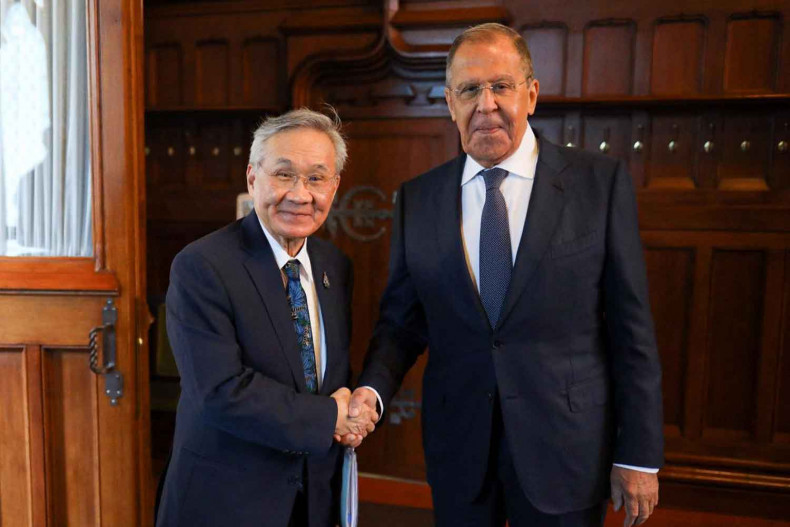
» The latest move to coddle and recognise Myanmar's junta government by caretaker Prime Minister Prayut Chan-o-cha's outgoing regime does not add up. Sanctioned and supported by Gen Prayut, Foreign Minister Don Pramudwinai arranged an Asean-wide ministerial meeting in Pattaya on June 18 with Myanmar's junta-appointed Foreign Minister Than Swe with unusual haste. Shrouded in controversy and desperation, both the PM's and the FM's clichéd explanations just do not wash. It begs the question of whether there are vested interests involved, above and beyond Thailand's national interest, in the outgoing government's seeming acceptance of Myanmar's military regime that took power by force on Feb 1, 2021.
Thai sovereignty is not for abuse
Oped, Thitinan Pongsudhirak, Published on 28/10/2022
» Thailand's dramatic and damaging shift in position towards Russia's aggression in Ukraine raises myriad questions with few answers -- none holding any water.

Asean lags behind Myanmar curve
Oped, Thitinan Pongsudhirak, Published on 06/08/2021
» The more it tries to catch up on Myanmar's post-coup crisis, the more Asean falls behind. Since Myanmar's military takeover on Feb 1, Asean has spent nearly the first three months getting its act together for a "special summit" and a "five-point consensus" on April 24 and then more than another three months to meekly implement the agreement. In the event, the appointment of Brunei's Second Foreign Minister Erywan bin Mohd Yusof as the Asean envoy to promote dialogue and humanitarian assistance in Myanmar is likely to prove too little, too late for what has been desperately needed on the ground.
Govt ducks Asean Myanmar challenge
Oped, Thitinan Pongsudhirak, Published on 23/04/2021
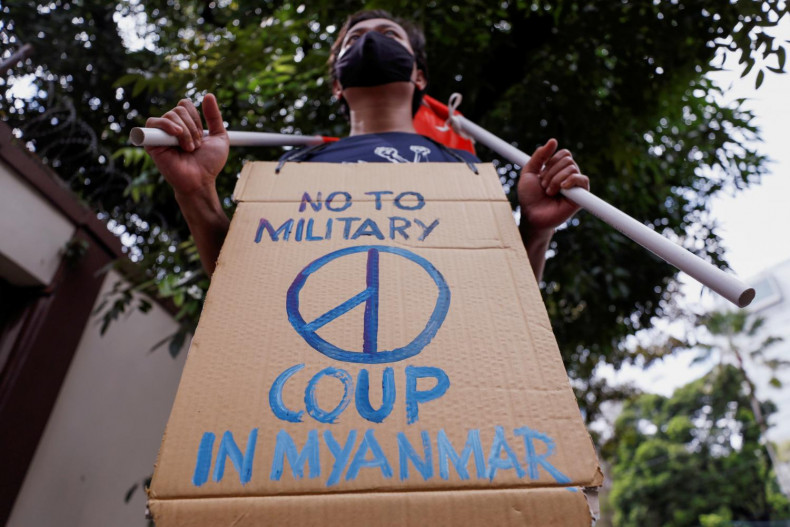
» Asean's highly anticipated "special" summit tomorrow in Jakarta on Myanmar's crisis can be declared moot on arrival. What goes into it is likely more telling that what will come out of it. Nearly three months and more than 730 civilian deaths after Myanmar's military coup on Feb 1, Asean is still unable to address its rogue member state's atrocities against its own people. The summit attendance foretells trends and dynamics of what might come next in Myanmar's fast-moving and deadly events on the ground and how they will shape regional responses and global concerns.
Asean's declining common denominator
Oped, Thitinan Pongsudhirak, Published on 05/03/2021
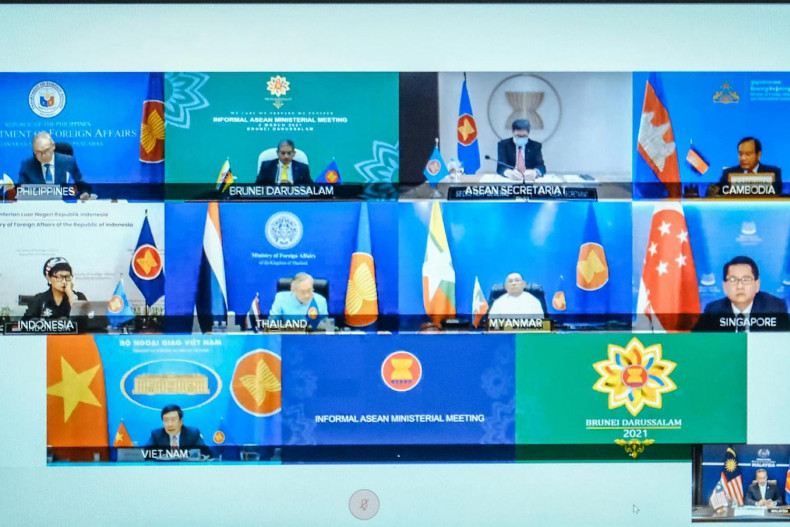
» Asean is stuck deeper than ever between a rock and a hard place in view of its political impotence in dealing with the Myanmar armed forces' power grab on Feb 1. In an informal meeting online among its foreign ministers earlier this week, Asean not only failed to come up with common ground to broker a way forward away from the mounting bloodshed in Myanmar but displayed fundamental differences that have lowered the organisation's common denominator to new depths. The implications from Asean's sagging stance is that the pushback against Myanmar's military takeover must be carried out mainly by domestic political forces in the absence of regional effectiveness and with the limitations of global sanctions.