



Showing 1 - 10 of 13
Implications of conservative triumph
Oped, Thitinan Pongsudhirak, Published on 13/02/2026
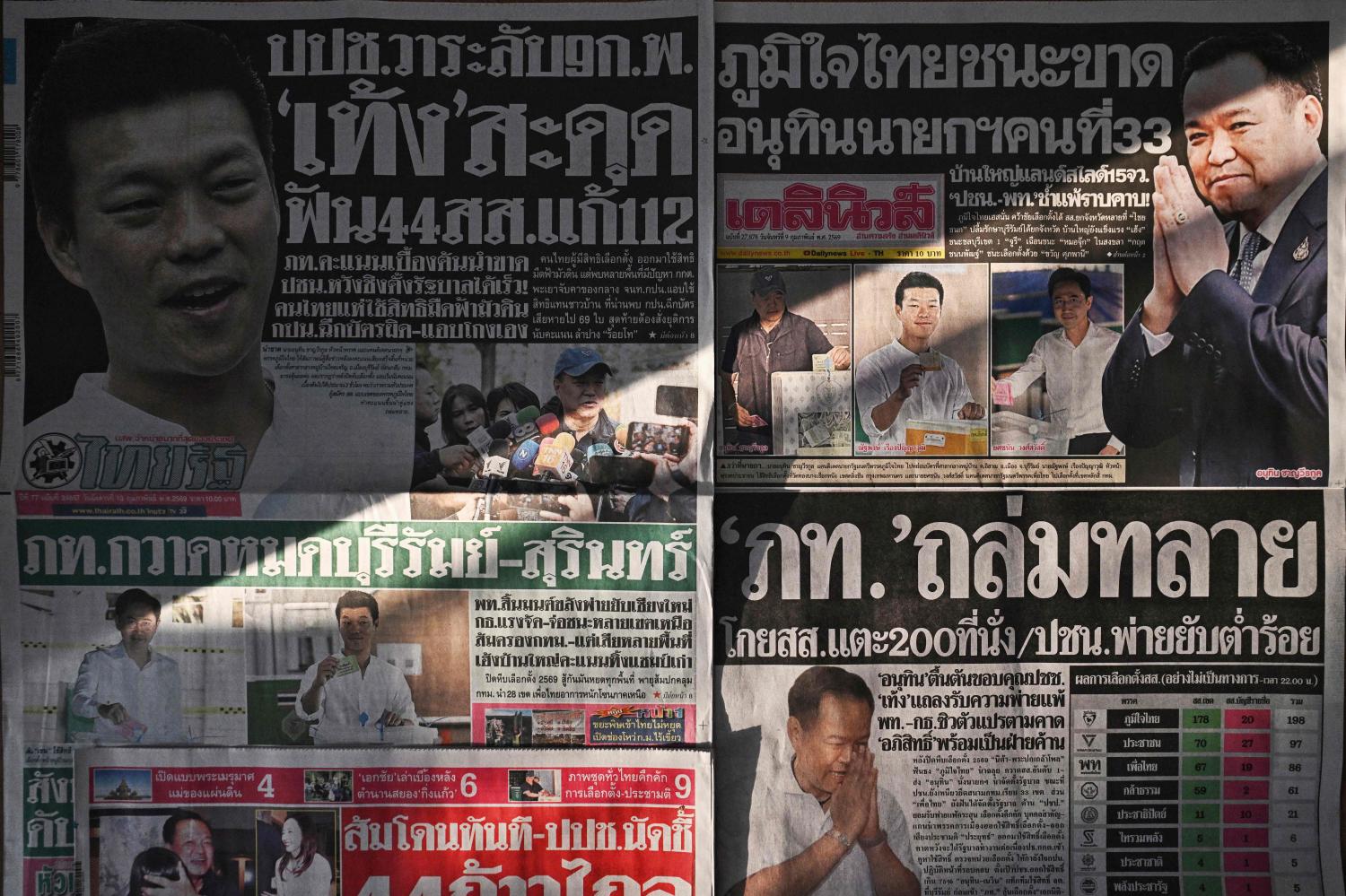
» The incumbent and conservative Bhumjaithai (BJT) Party has surprisingly swept Thailand's Feb 8 election with a commanding win. With the previously poll-leading and progressive People's Party (PP) coming in a distant second, Thailand appears headed for a conservative coalition government revolving around BJT and like-minded junior partners. Known for its conservative stance and being pro-status quo, it would not be surprising if the BJT-led coalition government, led by Prime Minister-elect Anutin Charnvirakul, were not challenged by the Constitutional Court, the Election Commission, and other supervisory agencies, which have derailed and dissolved reform-minded winning parties in the past.

New government is new wine in old bottle
Oped, Thitinan Pongsudhirak, Published on 13/09/2024
» On the face of it, the new government under Prime Minister Paetongtarn Shinawatra appears to be a generational shift and gender breakthrough. Ms Paetongtarn is the youngest prime minister ever at 38 and only the second female government leader after her aunt Yingluck Shinawatra in 2011-14. The Paetongtarn cabinet features a record eight women among 36 with more ministers in their 30s-50s and fewer above 60. Yet on closer scrutiny, the new and younger faces are largely family legacies and proxies, surrounded by old-style politicians, while the new government's policy directions sound dated not well-suited for the times ahead.

The continuing crisis of Thai democracy
Oped, Thitinan Pongsudhirak, Published on 11/08/2023
» The prolonged volatility and instability in Thai politics attest to a continuing crisis of democracy since the military coup in September 2006. It is characterised by the nature, direction and duration of government after an election. Unless the poll-topping political party is backed by the conservative military-authoritarian regime, it is either not allowed to take power or gets overthrown while in office before completing its term. This crisis of Thai democracy has now persisted since the May 14 poll, as the formation of the next government remains stuck in a stalemate.

Thailand's policy on Myanmar stinks
Oped, Thitinan Pongsudhirak, Published on 23/06/2023
» The latest move to coddle and recognise Myanmar's junta government by caretaker Prime Minister Prayut Chan-o-cha's outgoing regime does not add up. Sanctioned and supported by Gen Prayut, Foreign Minister Don Pramudwinai arranged an Asean-wide ministerial meeting in Pattaya on June 18 with Myanmar's junta-appointed Foreign Minister Than Swe with unusual haste. Shrouded in controversy and desperation, both the PM's and the FM's clichéd explanations just do not wash. It begs the question of whether there are vested interests involved, above and beyond Thailand's national interest, in the outgoing government's seeming acceptance of Myanmar's military regime that took power by force on Feb 1, 2021.
Prayut govt stuck in self-made trap
Oped, Thitinan Pongsudhirak, Published on 02/07/2021
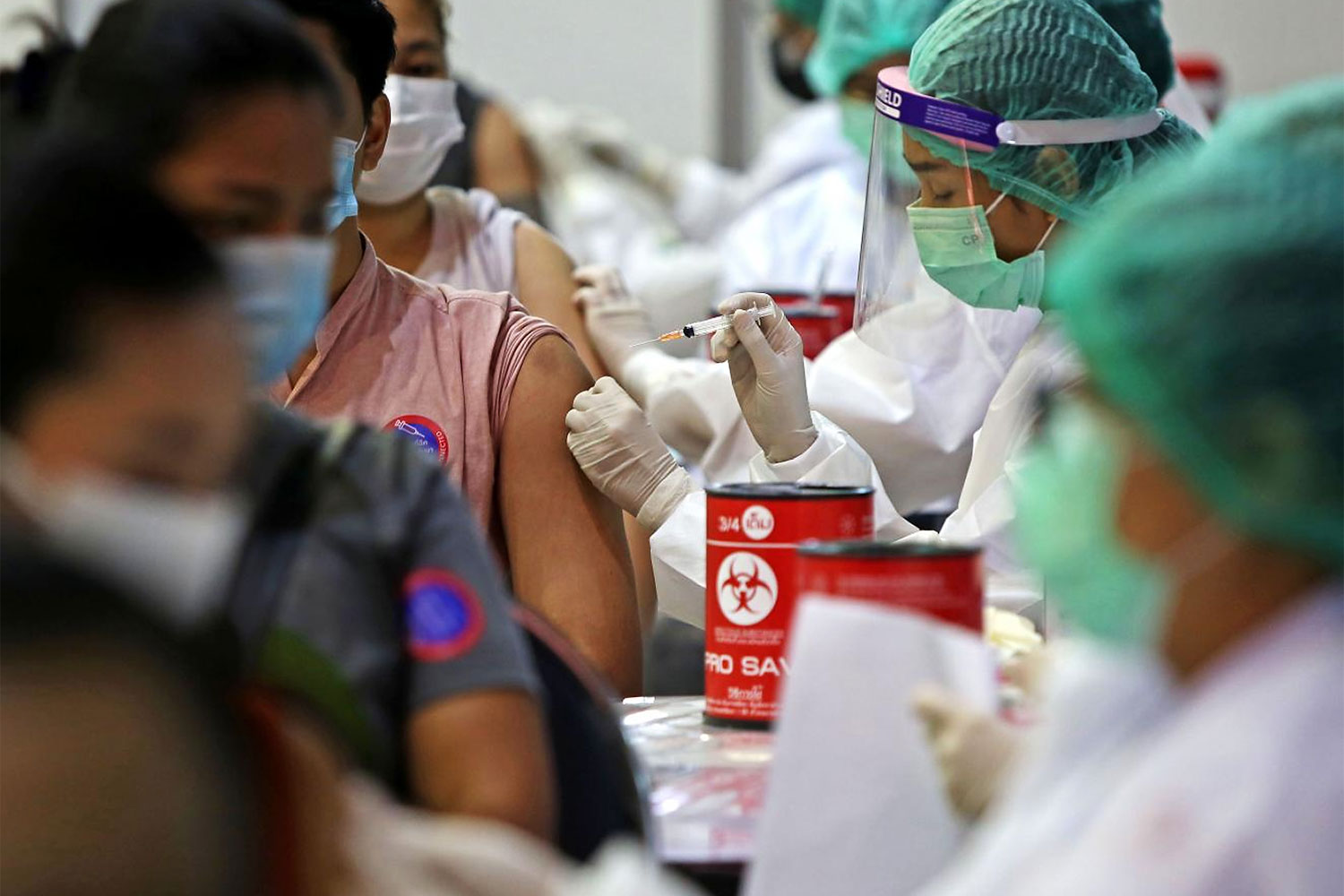
» Thailand's multi-layered crises from persistent virus infections and vaccine shortages to economic damage are building up into a potential political upheaval. The ravaging Covid-19 crisis is worse than the infamous Tom Yum Kung economic crisis in 1997-98. This time, the military-predominant government of Prime Minister Prayut Chan-o-cha is stuck in multiple traps of its own making. Getting out of this predicament means the pandemic situation is likely to get a lot worse before any hope of recovery and way forward can be found.

Thailand's irresponsible runaway debt
Oped, Thitinan Pongsudhirak, Published on 11/06/2021
» A major lasting damage Prime Minister Prayut Chan-o-cha will eventually leave behind is his government's co-optation and capture of autonomous agencies that used to safeguard and uphold Thailand's macroeconomic well-being and political level-playing field.

Asean's Myanmar crisis out of control
Oped, Thitinan Pongsudhirak, Published on 26/03/2021
» Myanmar's spiralling post-coup violence and bloodshed has become Asean's existential crisis. It is customary to pin hopes on an Asean way of fudging and nudging the main protagonists into some workable, face-saving compromise to save the day but this time the situation is dire and dark. Unless the 10-member regional organisation can make a difference in halting Myanmar's descent into uncontrollable violence and potential civil war, Asean is at risk of undermining and perhaps ending its success story.

Asean's declining common denominator
Oped, Thitinan Pongsudhirak, Published on 05/03/2021
» Asean is stuck deeper than ever between a rock and a hard place in view of its political impotence in dealing with the Myanmar armed forces' power grab on Feb 1. In an informal meeting online among its foreign ministers earlier this week, Asean not only failed to come up with common ground to broker a way forward away from the mounting bloodshed in Myanmar but displayed fundamental differences that have lowered the organisation's common denominator to new depths. The implications from Asean's sagging stance is that the pushback against Myanmar's military takeover must be carried out mainly by domestic political forces in the absence of regional effectiveness and with the limitations of global sanctions.

Undue politicisation at finance and BoT
Oped, Thitinan Pongsudhirak, Published on 03/07/2020
» Thailand's economic growth projections continue to head south as the coronavirus crisis unfolds in the second half of the year. In its most recent forecast, the Bank of Thailand anticipates a sharp contraction of 8.1% this year, worse than the 5.3% it predicted in March. Downside macroeconomic risks are substantial as the Covid-19 pandemic could still degenerate and cause further global health and economic havoc. In this dire environment, Thailand will need steady and seasoned hands to oversee macroeconomic levers. Yet both the finance ministry portfolio and the BoT governorship now face uncertainty and potential politicisation that bode ill for effective and autonomous fiscal and monetary policies.

Challenges from outside parliament
News, Thitinan Pongsudhirak, Published on 06/03/2020
» While it managed to survive the recent censure debate more comfortably that it had anticipated, Prime Minister Prayut Chan-o-cha's government is now at a new crossroads. While the threat from inside parliament has subsided owing to the opposition's disarray, challenges from outside the legislative chamber, on the streets and in the court of public opinion are likely to intensify.