



Showing 1 - 10 of 42
Implications of conservative triumph
Oped, Thitinan Pongsudhirak, Published on 13/02/2026
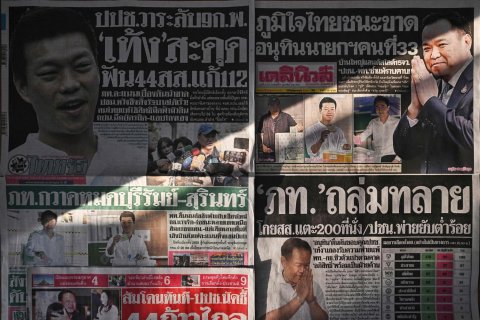
» The incumbent and conservative Bhumjaithai (BJT) Party has surprisingly swept Thailand's Feb 8 election with a commanding win. With the previously poll-leading and progressive People's Party (PP) coming in a distant second, Thailand appears headed for a conservative coalition government revolving around BJT and like-minded junior partners. Known for its conservative stance and being pro-status quo, it would not be surprising if the BJT-led coalition government, led by Prime Minister-elect Anutin Charnvirakul, were not challenged by the Constitutional Court, the Election Commission, and other supervisory agencies, which have derailed and dissolved reform-minded winning parties in the past.

Domestic drivers of bilateral conflict
News, Thitinan Pongsudhirak, Published on 19/12/2025
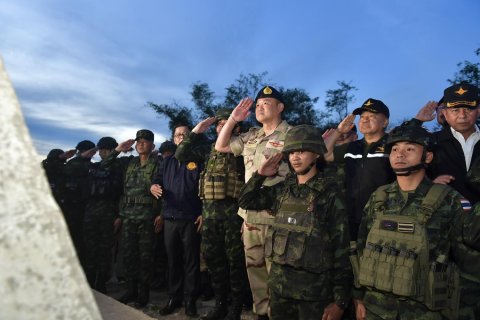
» The latest flare-up and intensification of the armed conflict between Thailand and Cambodia should be understood less as a new crisis and more as a resumption of a bilateral clash that erupted in late July.
No-confidence and poll date in flux
Oped, Thitinan Pongsudhirak, Published on 14/11/2025
» Amid the drumbeats of military conflict with Cambodia, Thailand's political environment is evidently unruly and unsettled. The minority government of Anutin Charnvirakul, the third prime minister from the third largest-winning party since the latest national election in May 2023, is hard-pressed to stay in office beyond the four-month "Memorandum of Agreement" between his Bhumjaithai Party (BJT) and the People's Party (PP), the largest camp in the national assembly.
Flawed Asean needs to regain footing
Oped, Thitinan Pongsudhirak, Published on 10/10/2025
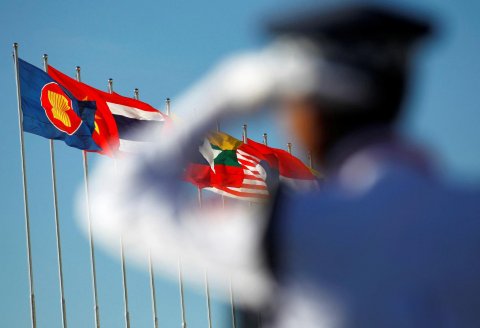
» Nearly six decades after its founding, the Association of Southeast Asian Nations (Asean) finds itself back where it began -- divided, uncertain, and vulnerable to the influence of major powers. Once hailed as a model for regional cooperation in the developing world, Asean now faces a crisis of purpose. Unless it can rediscover the unity and collective way forward that defined its early decades, Southeast Asia's flagship institution risks slipping into irrelevance.
Southeast Asia amid the US-China rift
Oped, Thitinan Pongsudhirak, Published on 03/10/2025
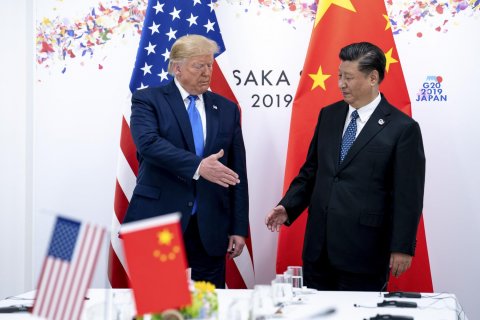
» The rivalry between the United States and China has become the defining contest of the 21st century. Barely two decades ago, Washington and Beijing were partners in prosperity. America's support for China's entry into the World Trade Organization in 2001 epitomised the high-water mark of engagement, reflecting the belief that economic integration would lead to greater political cooperation. Today, that partnership has morphed into suspicion and confrontation. Relations between the United States and China have deteriorated so swiftly that many observers now describe them as locked in a "new Cold War". The more pressing question, however, is not whether this analogy holds, but whether confrontation can be managed short of outright conflict.
Anutin's new cabinet is a mixed bag
Oped, Thitinan Pongsudhirak, Published on 26/09/2025
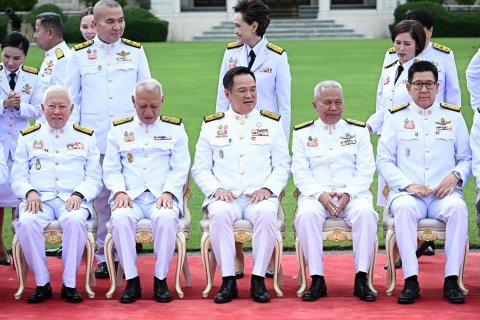
» The composition and size of Prime Minister Anutin Charnvirakul's 36-member cabinet suggest that he intends to stay in office for as long as possible, clinging to the terms of the government-enabling Memorandum of Agreement (MOA) and calling an early election only if circumstances make it unavoidable.
Thai-Cambodian feud is Asean's worst
Oped, Thitinan Pongsudhirak, Published on 15/08/2025
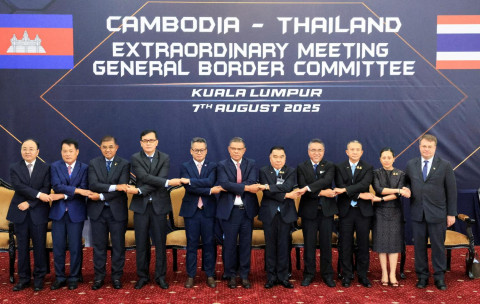
» The border dispute and consequent military conflict between Cambodia and Thailand in recent weeks have become Asean's worst crisis in its 58 years of existence. Ironically, it was an intra-regional war between Indonesia and Malaysia that gave rise to Asean in 1967, but now an intra-Asean military clash is undermining the Southeast Asian organisation's core reason for being and its main claim to credibility and prominence. Unless Asean, under Malaysia as its rotational chair this year, moves fast to contain the bilateral dispute and reinforce a delicate ceasefire agreement, Southeast Asia will be looked upon increasingly as a region and less as an organisation of member states.
PM's crisis and Thai political directions
Oped, Thitinan Pongsudhirak, Published on 27/06/2025
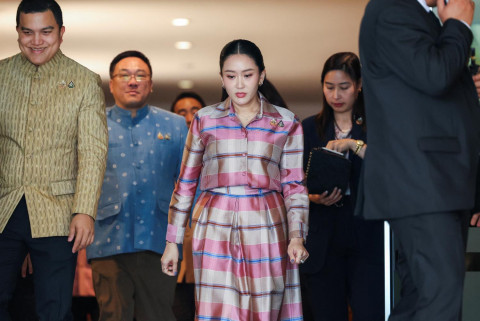
» What began just a month ago as a minor border dispute with Cambodia has spiralled into an existential political crisis in Thailand. In what she understood to be a private phone conversation with Cambodia's former prime minister and Senate President, Hun Sen, Prime Minister Paetongtarn Shinawatra compromised her premiership and undermined Thai national interests. While she tries to ride out the storm, her tenure appears wobbly and unworkable. What comes next will likely proceed in one of three directions revolving around the Thai parliamentary processes, each with its own scenarios and considerations.
Thai political crisis from border dispute
News, Thitinan Pongsudhirak, Published on 20/06/2025
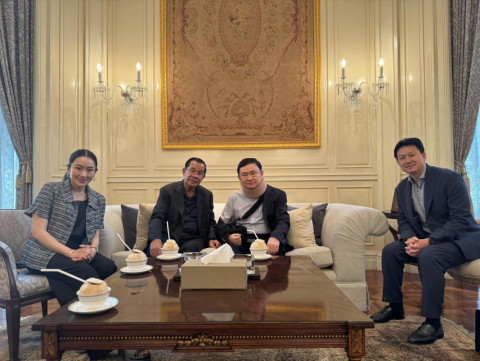
» The Thai-Cambodian border dispute has turned into a full-blown political crisis in Thailand. Cambodia's former prime minister and Senate President Hun Sen dropped a bombshell in Thai politics by revealing a taped private conversation that is irrevocably compromising to Thai Prime Minister Paetongtarn Shinawatra and her Pheu Thai party-led coalition government and deeply damaging to Thailand's national interest.
Defusing Thai-Cambodian border row
Oped, Thitinan Pongsudhirak, Published on 13/06/2025
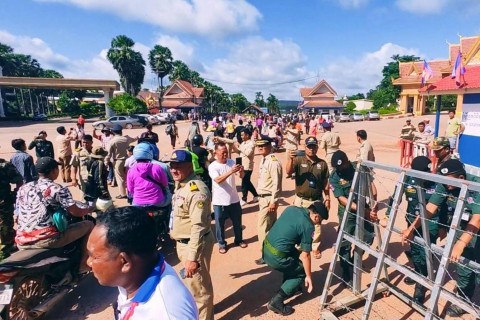
» At issue in the ongoing border standoff between the Thai and Cambodian armed forces is timing and circumstance. In less than two weeks, a seemingly minor border skirmish intensified into a full-scale military confrontation. What is being overlooked in the thick of mutual antagonism and ultranationalism on both sides is when and how the current round of confrontation transpired. Getting its origins right is crucial to finding ways and means for conflict resolution.