



Showing 1 - 10 of 15
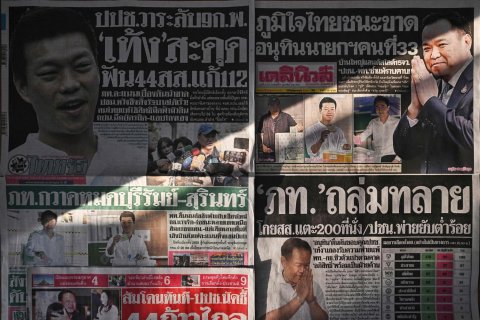
Implications of conservative triumph
Oped, Thitinan Pongsudhirak, Published on 13/02/2026
» The incumbent and conservative Bhumjaithai (BJT) Party has surprisingly swept Thailand's Feb 8 election with a commanding win. With the previously poll-leading and progressive People's Party (PP) coming in a distant second, Thailand appears headed for a conservative coalition government revolving around BJT and like-minded junior partners. Known for its conservative stance and being pro-status quo, it would not be surprising if the BJT-led coalition government, led by Prime Minister-elect Anutin Charnvirakul, were not challenged by the Constitutional Court, the Election Commission, and other supervisory agencies, which have derailed and dissolved reform-minded winning parties in the past.

Smart geopolitics starts on home front
Oped, Thitinan Pongsudhirak, Published on 21/02/2025
» According to a longstanding axiom, all politics is local. If so, then smart and crafty geopolitics must start at home with sufficient domestic political stability and consensus about how the country should navigate what is increasingly a turbulent geostrategic chessboard. Put this way, few countries can appreciate the intersection of geopolitics and domestic politics more than Thailand. Its rocky and volatile home front over the past two decades continues to impede and constrain its geostrategic projection.

Thailand needs middle power ambition
Oped, Thitinan Pongsudhirak, Published on 18/10/2024
» Having participated in the recent Asean-related summit meetings in Vientiane, Prime Minister Paetongtarn Shinawatra and her team must now work out Thailand's foreign policy priorities and posture. Foreign policy projection peaked around 20 years ago when Thailand was recognised as an emerging regional leader with the potential of a middle power. Since then, foreign policy has been patchy and hostage to polarisation and domestic political volatility. It is time to chart a way forward for Thailand's international standing and role despite ongoing political conflict at home.

Thailand between the US and China
Oped, Thitinan Pongsudhirak, Published on 29/03/2024
» Amid what now has to be acknowledged as a direct non-military conflict and a geoeconomic war of sorts between the United States and China, Thailand is in a quandary. While characterising Thailand's geostrategic dilemma as a US-China binary can be exaggerated and misleading, it does have a point. As with many other developing countries in the region, Thailand will come under increasing pressure to choose between the two competing superpowers. The ability not to choose thus becomes an overarching geostrategic objective.

Japan's dilemmas need bold answers
Oped, Thitinan Pongsudhirak, Published on 03/11/2023
» Among the big countries vying for power and influence in the fluid and contentious geostrategic arena, Japan faces the most daunting challenges. Most of the recognised major powers in Asia, from China and India to Indonesia and South Korea, are rising and aspiring for bigger roles and grander objectives, while Japan's place in the global pecking order has been in decline. The last time Japan had to confront such an existential threat to its place in the world may have been in the 1860s when the Western powers shook up and threatened to take over the isolated and inward-looking martial society.

Early implications of Russia's invasion
Oped, Thitinan Pongsudhirak, Published on 04/03/2022
» Just one week after his military invasion of Ukraine, Russian President Vladimir Putin has found some truisms of warfare the hard way. Once war starts, the fog that accompanies it and the friction that it creates lead to unanticipated and unintended outcomes. Russia's war of aggression against Ukraine, borne out of choice rather than necessity, appears to be dragging on, not the short and swift victory Mr Putin and his military planners might have envisaged. While Russia may still triumph on Ukrainian battlefields, it has lost the war just about everywhere else.
Age-old nature of the 'New Cold War'
Oped, Thitinan Pongsudhirak, Published on 19/11/2021
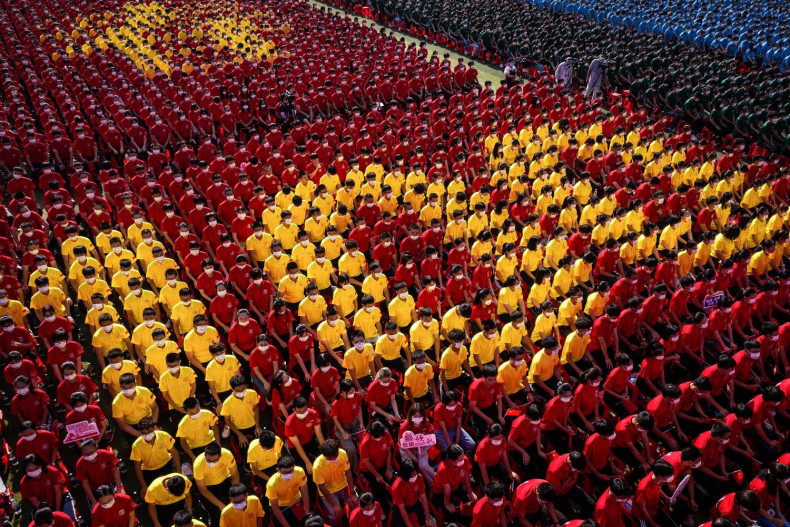
» History is back with a vengeance. Contrary to what proponents of the "end of history" theory said a few decades ago, the ideological struggle of the 20th century between the "free world" versus "the socialist-communist" camp is still ongoing, despite the Cold War ending over three decades ago. The struggle now features the United States-led Western alliance versus the China-centric global network of nations with authoritarian tendencies.
Aukus poses challenges to other powers
Oped, Thitinan Pongsudhirak, Published on 15/10/2021
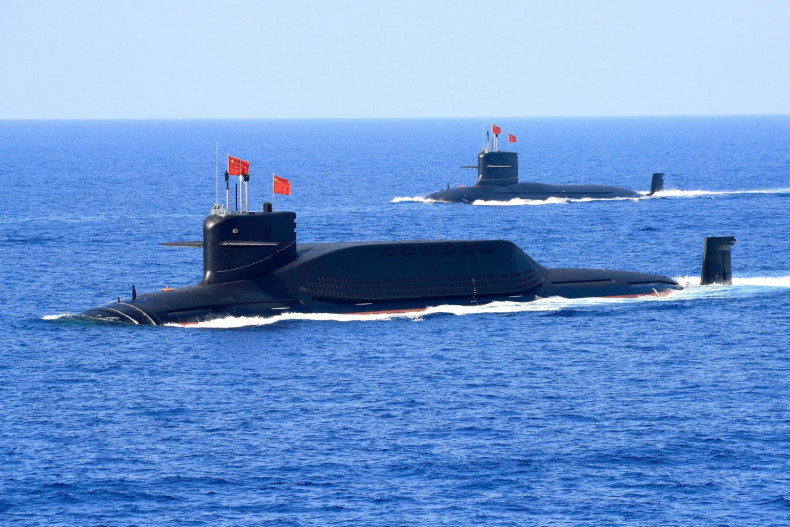
» The Australia-United Kingdom-United States (Aukus) security pact has caused ripple effects across oceans and continents. Not only will the trilateral security partnership provoke China, but it will likely further divide Southeast Asia and overshadow Asean-centred cooperative vehicles, such as the East Asia Summit. Beyond these concerns, the Aukus deal to share Anglo-American nuclear technology to enable Australia's acquisition of eight nuclear-powered submarines over two decades poses challenges to other major powers, particularly the European Union and its key members as well as Japan.

Biden's pivot to free, open Indo-Pacific
Oped, Thitinan Pongsudhirak, Published on 03/09/2021
» If former United States President Barack Obama is known for his "pivot to Asia" geostrategy and President Donald Trump for the Free and Open Indo-Pacific, there is now a geostrategic synthesis under President Joe Biden. It can be aptly called the US "pivot to the Free and Open Indo-Pacific".
China-US rivalry on Mekong mainland
Oped, Thitinan Pongsudhirak, Published on 27/11/2020
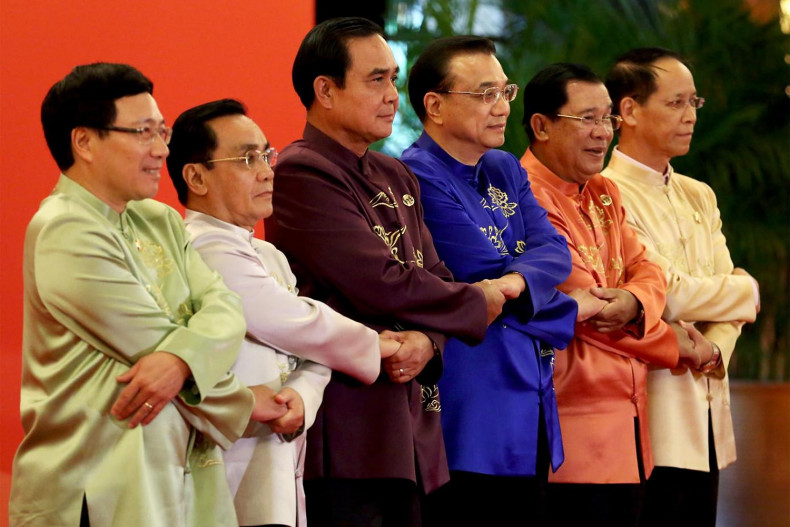
» Unlike other key foreign policy areas where President-elect Joe Biden will likely change the course left behind by outgoing President Donald Trump, the Mekong River region in mainland Southeast Asia represents a low-hanging fruit where continuity from Washington carries consensus. As China has dominated the Mekong space by operating a string of upstream dams and controlling downstream river resources, Cambodia, Laos, Thailand, and Vietnam as adversely affected riparian countries have looked for ways and means to mitigate and counterbalance Beijing's aggressive freshwater offensive. All the incoming Biden administration has to do is to keep its eye on the Mekong and work with like-minded partners to keep mainland Southeast Asian countries from becoming Beijing's uncontested front yard.