



Showing 1 - 8 of 8
Trump's 'America First' in overdrive
News, Thitinan Pongsudhirak, Published on 23/01/2026
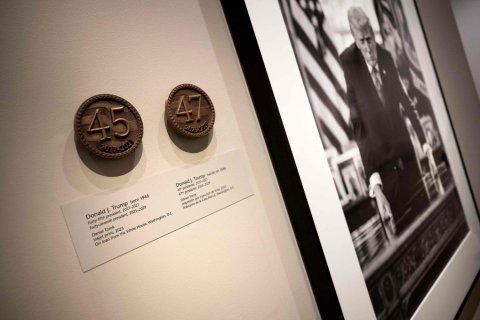
» President Donald Trump's extraterritorial capture of Venezuelan President Nicolas Maduro and his wife on cocaine-trafficking and terrorism-related charges earlier this month and repeated demand to take over Greenland at the World Economic Forum this week are part and parcel of a belligerent and transformative "America First" paradigm that dates back at least four decades.

Thailand lags in the global trade war
Oped, Thitinan Pongsudhirak, Published on 11/04/2025
» Thailand is fast isolating itself from the international community and falling behind in the emerging geoeconomic warfare to the detriment of its economy and people. The elected government of Prime Minister Paetongtarn Shinawatra is ironically coming up with outcomes that resemble those of the military administration a decade ago. Thailand must now move quickly to contain policy damage and restore its international standing to navigate and come out of the intensifying geoeconomic war in as decent a shape as possible.
The tyranny of anarchy and what to do
Oped, Thitinan Pongsudhirak, Published on 21/03/2025
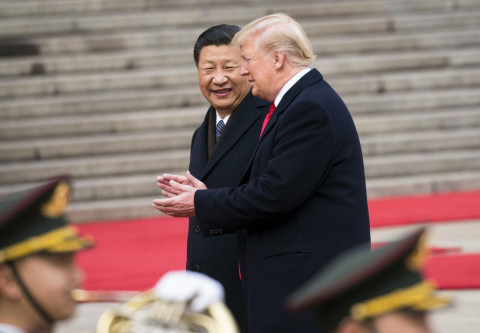
» It is both exciting and alarming to be a student of international affairs as the world is being turned upside down. In just two months, the second administration of President Donald J Trump has sent shockwaves rippling through the international system as the United States pulls back from its role as leader, underwriter, and guardian of the nearly 80-year-old international order that it instrumentally constructed after WWII. In view of the US's portentous withdrawal, relative anarchy in the international system is back with a vengeance, leaving Asean members and smaller states elsewhere to fend for themselves in a self-help geostrategic environment.

The tide of history shifts in Thai politics
Oped, Thitinan Pongsudhirak, Published on 02/06/2023
» Notwithstanding the ongoing political shenanigans by appointed agencies to shape final outcomes after the May 14 poll, Thailand already will never be the same again. The Move Forward Party's (MFP) victory as the largest winning side, with 151 out of 500 parliamentary seats, is profound but not unprecedented. Together with the Pheu Thai Party's 141 MPs, these two opposition parties are unwittingly sending a message to each other and to the broader political establishment that the curve of Thai history is shifting tectonically. Failing to grasp and adjust to this evolving tide of history could marginalise Pheu Thai and challenge the establishment to its core foundations.
Domestic drivers of superpower rivalry
Oped, Thitinan Pongsudhirak, Published on 10/07/2020
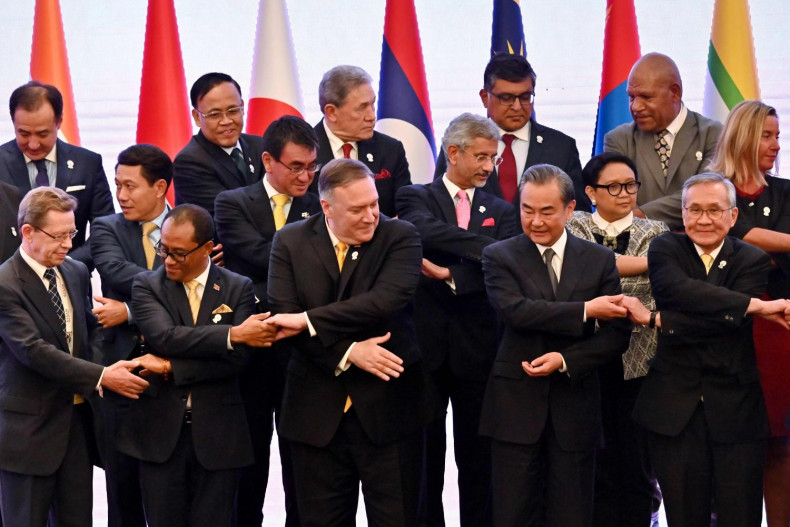
» The coronavirus pandemic is fundamentally global but its impact is mainly local because of the international system of state sovereignty, borders and divergent national interests. What is needed to cope with, contain and overcome the pandemic is more international cooperation and coordination. But we are seeing less international efforts to fight the virus together and more self-help where every nation fends for itself. The upshot from this fractured and fragmented international system during Covid-19 is the primacy of domestic determinants of international outcomes. Nowhere is this reality clearer than the competition and confrontation between the United States and China.
Rail deals must have accountability
News, Thitinan Pongsudhirak, Published on 03/05/2019
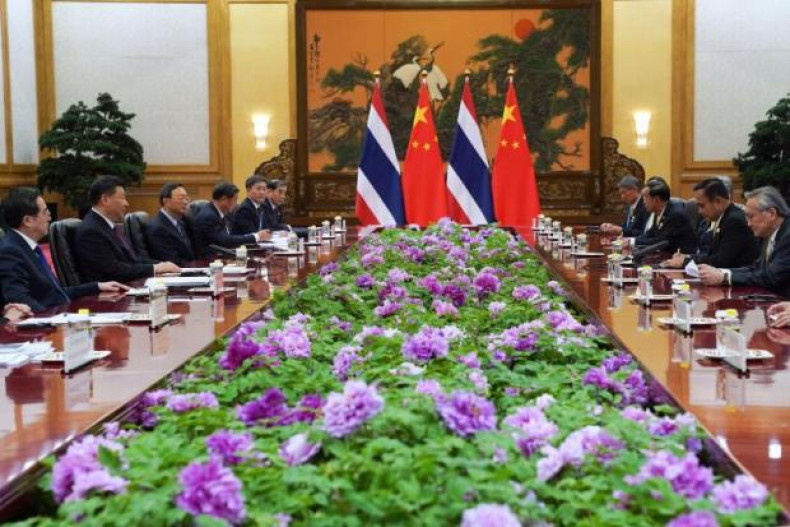
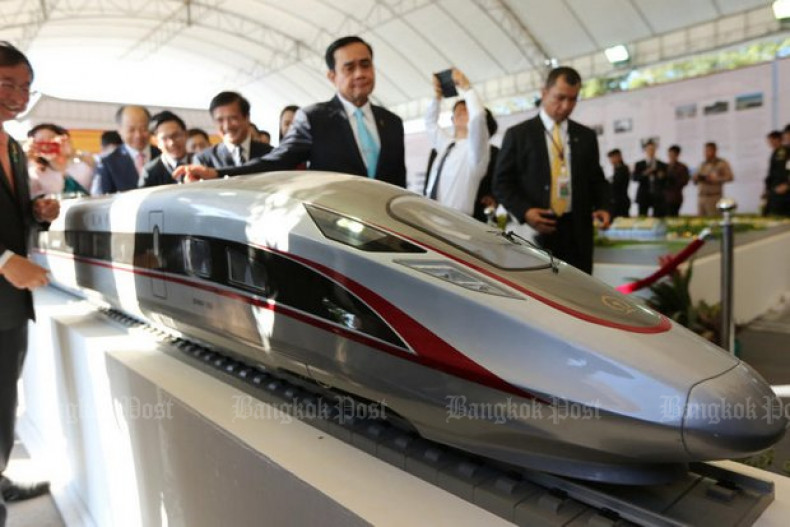
» Prime Minister Prayut Chan-o-cha's recent participation in the second Belt and Road Forum (BRF) in Beijing was problematic on many levels. On what basis did Gen Prayut negotiate a rail deal between Thailand and China? What are the details and cost-benefit considerations of this deal? The lack of transparency and public accountability surrounding the Thailand and China rail plan is likely to pose future questions and problems for a huge infrastructure project Thailand can use, but according to whose terms its people must be the main beneficiary.
China's Belt & Road needs to listen more
News, Thitinan Pongsudhirak, Published on 30/11/2018
» In the aftermath of a tense Asean-led summit season, it is clear now that the United States and China are engaged in a great-power competition not seen since the Cold War. The US-China trade war, irrespective of negotiated talks in Buenos Aires between President Donald Trump and President Xi Jinping, is set to deteriorate over the next two years and probably longer. The two superpowers may have fundamental and structural differences that cannot be resolved without a sweeping deal that realigns their geopolitical status and geoeconomic interests in a way that is acceptable to both, an unlikely prospect. So the confrontation will likely intensify.
Singapore a lesson for subpar countries
News, Thitinan Pongsudhirak, Published on 29/06/2018
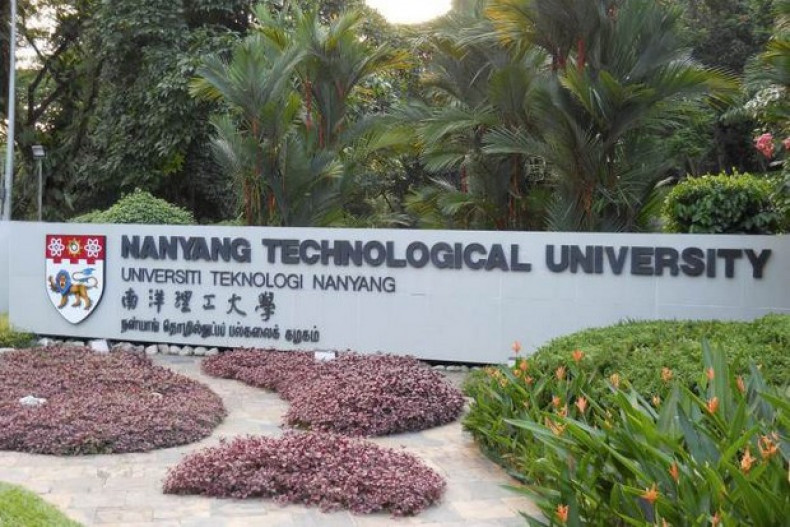
» It would seem a cliché to say Singapore has figured it out. But it has, more or less, especially when compared to its subpar neighbours.