



Showing 1 - 10 of 14
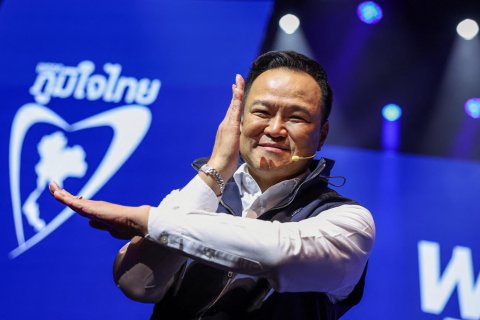
Another wasted year in Thai politics
Oped, Thitinan Pongsudhirak, Published on 26/12/2025
» As Thailand winds down 2025 with an early election looming on Feb 8, the most consequential issue to watch in the coming year will be whether recent topsy-turvy political patterns of polls, protests, and military and judicial interventions give way to a compromise between the old guard clinging on to vested interests and the new generation clamouring for reform and change.
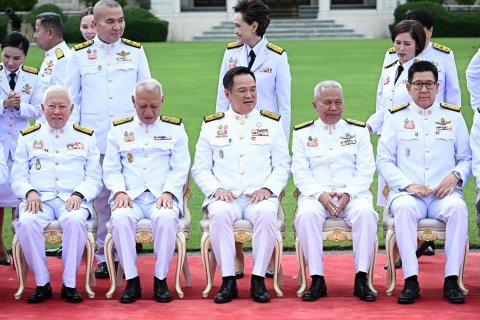
Anutin's new cabinet is a mixed bag
Oped, Thitinan Pongsudhirak, Published on 26/09/2025
» The composition and size of Prime Minister Anutin Charnvirakul's 36-member cabinet suggest that he intends to stay in office for as long as possible, clinging to the terms of the government-enabling Memorandum of Agreement (MOA) and calling an early election only if circumstances make it unavoidable.
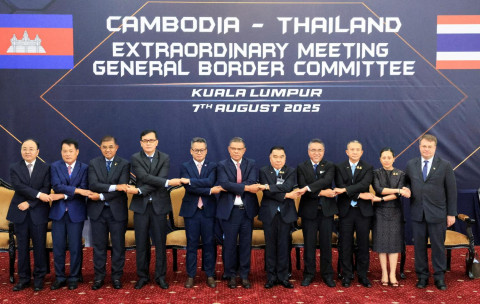
Thai-Cambodian feud is Asean's worst
Oped, Thitinan Pongsudhirak, Published on 15/08/2025
» The border dispute and consequent military conflict between Cambodia and Thailand in recent weeks have become Asean's worst crisis in its 58 years of existence. Ironically, it was an intra-regional war between Indonesia and Malaysia that gave rise to Asean in 1967, but now an intra-Asean military clash is undermining the Southeast Asian organisation's core reason for being and its main claim to credibility and prominence. Unless Asean, under Malaysia as its rotational chair this year, moves fast to contain the bilateral dispute and reinforce a delicate ceasefire agreement, Southeast Asia will be looked upon increasingly as a region and less as an organisation of member states.
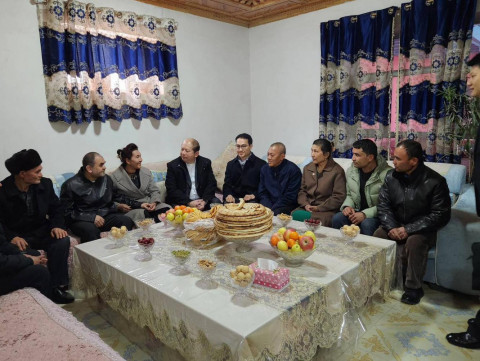
Uyghurs deportation a strategic risk
Oped, Thitinan Pongsudhirak, Published on 07/03/2025
» Regardless of official spin, the government's decision to deport 40 Uyghurs to China was a strategic mistake on multiple levels.

Prospects at home and abroad in 2024
Oped, Thitinan Pongsudhirak, Published on 05/01/2024
» Overlooked but deeply consequential, 2024 will be the first time in a decade that Thailand is ruled by a civilian-led government. Whatever frustration and disenchantment that arise this year, memories must not run short. Thailand suffered deeply under the coup-backed regime of Gen Prayut Chan-o-cha. Seeing his back is politically good riddance, and having Srettha Thavisin as a thoroughly civilian and pro-business prime minister bodes well for the country. Yet Mr Srettha has his work cut out to boost the economy, address constitutional reform, restore Thailand's international standing, and stay in office into next year amid the global economic slowdown.
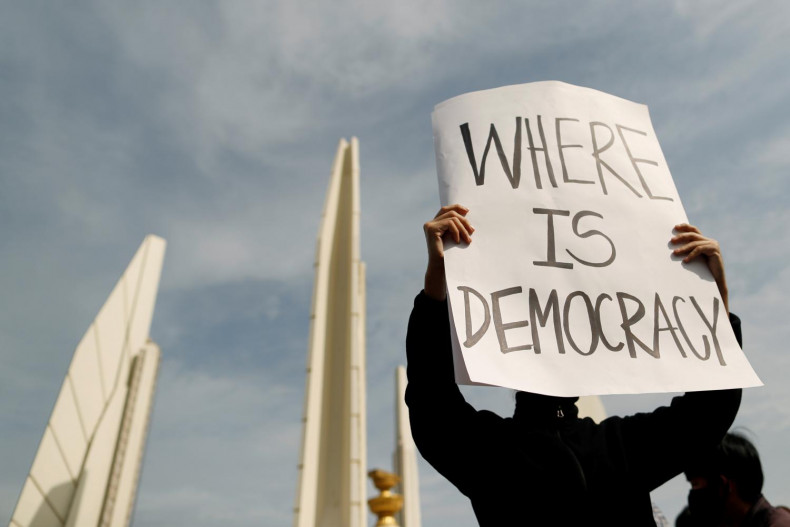
The misguided US 'democracy summit'
Oped, Thitinan Pongsudhirak, Published on 10/12/2021
» The United States government under President Joe Biden is putting up the right fight in a counterproductive way in its online organisation of a "summit for democracy" this week. Much touted since he won the election in November last year, President Biden's summit of democracies has proved controversial, with both good intentions and unintended consequences. The real battleground, as clichés about the benefits and drawbacks of democracy go, is to make the case that popular rule where citizens should have rights and freedoms for their own collective self-determination is ultimately preferable and superior than all other forms of government.

Biden's pivot to free, open Indo-Pacific
Oped, Thitinan Pongsudhirak, Published on 03/09/2021
» If former United States President Barack Obama is known for his "pivot to Asia" geostrategy and President Donald Trump for the Free and Open Indo-Pacific, there is now a geostrategic synthesis under President Joe Biden. It can be aptly called the US "pivot to the Free and Open Indo-Pacific".
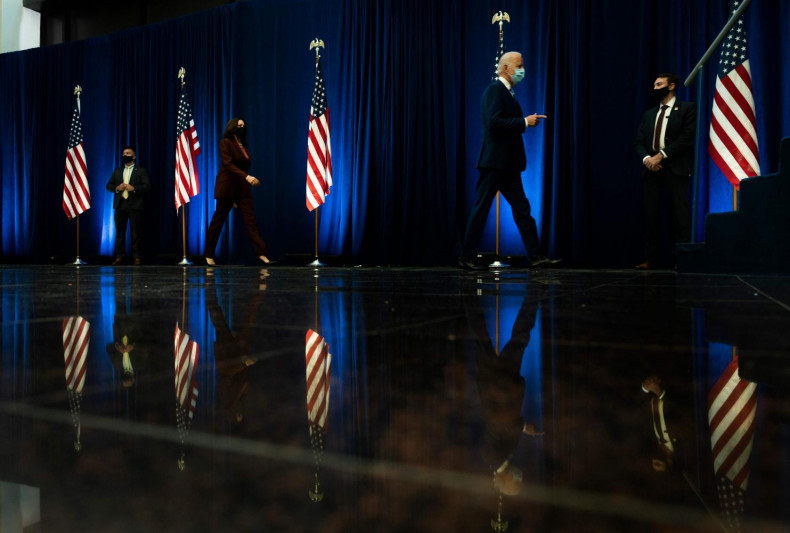
US presidential poll and implications
Oped, Thitinan Pongsudhirak, Published on 06/11/2020
» It is surprisingly unsurprising. Contrary to most polls and pundits, incumbent United States President Donald J Trump did not lose by a landslide in the presidential election this week. The final results are so close that both candidates, Mr Trump and Democratic Party rival Joe Biden, have claimed victory. Despite ongoing rancour and acrimony until the next US president is sworn in next January, several outcomes and implications are already clear.
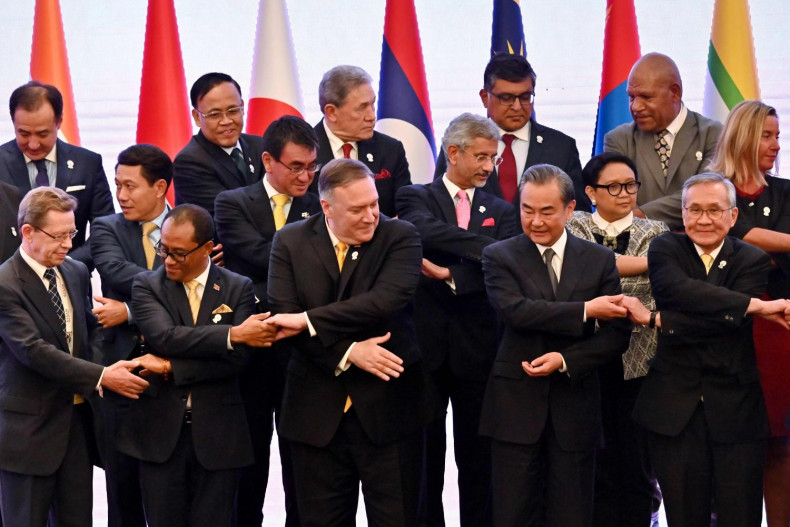
Domestic drivers of superpower rivalry
Oped, Thitinan Pongsudhirak, Published on 10/07/2020
» The coronavirus pandemic is fundamentally global but its impact is mainly local because of the international system of state sovereignty, borders and divergent national interests. What is needed to cope with, contain and overcome the pandemic is more international cooperation and coordination. But we are seeing less international efforts to fight the virus together and more self-help where every nation fends for itself. The upshot from this fractured and fragmented international system during Covid-19 is the primacy of domestic determinants of international outcomes. Nowhere is this reality clearer than the competition and confrontation between the United States and China.
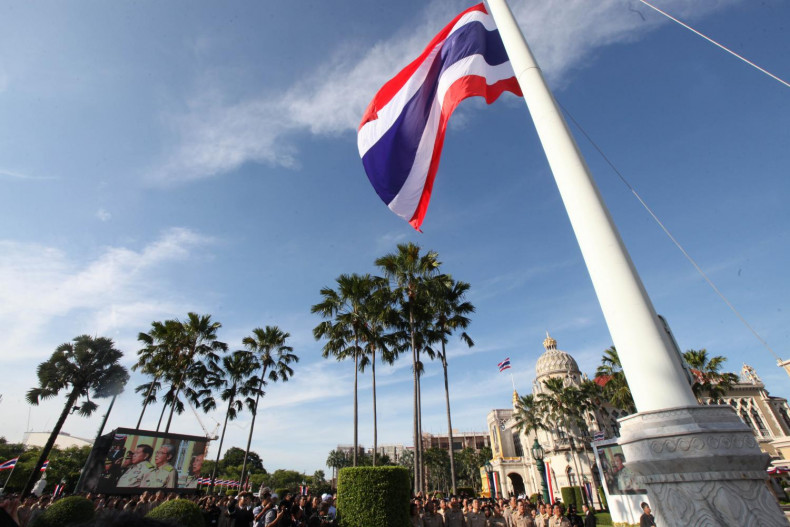
Thailand's strategic path is rudderless
News, Thitinan Pongsudhirak, Published on 19/06/2020
» As the coronavirus pandemic continues to wreak havoc worldwide, domestic tension and pressure will compel three broad responses from the various afflicted countries. First, these countries may react to virus-induced domestic challenges by blaming and taking it out on outsiders. Alternatively, they may be so preoccupied at home that they become marginalised abroad. In other instances, countries that have coped effectively with Covid-19 will be able to regain their footing faster and move on sooner as the rest of the pack remains bogged down in acrimony and discord.