



Showing 1 - 10 of 24
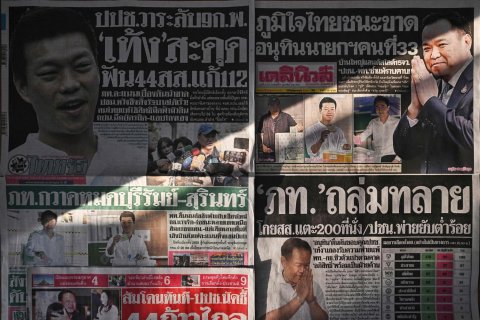
Implications of conservative triumph
Oped, Thitinan Pongsudhirak, Published on 13/02/2026
» The incumbent and conservative Bhumjaithai (BJT) Party has surprisingly swept Thailand's Feb 8 election with a commanding win. With the previously poll-leading and progressive People's Party (PP) coming in a distant second, Thailand appears headed for a conservative coalition government revolving around BJT and like-minded junior partners. Known for its conservative stance and being pro-status quo, it would not be surprising if the BJT-led coalition government, led by Prime Minister-elect Anutin Charnvirakul, were not challenged by the Constitutional Court, the Election Commission, and other supervisory agencies, which have derailed and dissolved reform-minded winning parties in the past.
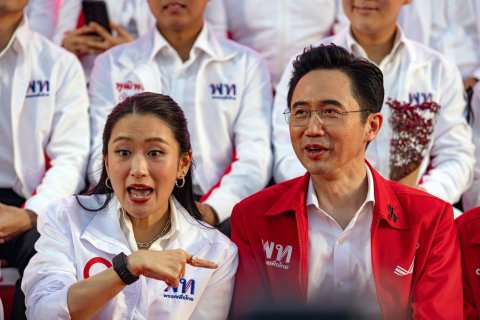
Three main parties and two directions
Oped, Thitinan Pongsudhirak, Published on 16/01/2026
» Although Thailand's election campaign is reaching fever pitch ahead of voting day on Feb 8, the dynamics and contours of its final outcome can be gleaned from past polls over the last 25 years. Only once in January 2001, as was indicated in this space last week, were voter results fully honoured and carried out. Other elections were either upended by military coups or manipulated by judicial interventions.
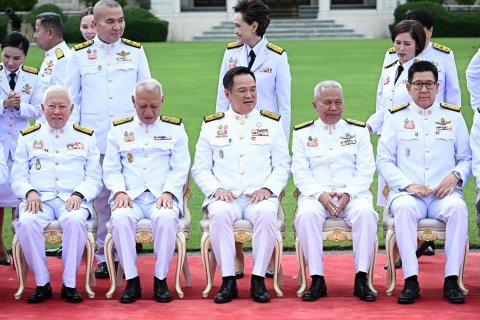
Anutin's new cabinet is a mixed bag
Oped, Thitinan Pongsudhirak, Published on 26/09/2025
» The composition and size of Prime Minister Anutin Charnvirakul's 36-member cabinet suggest that he intends to stay in office for as long as possible, clinging to the terms of the government-enabling Memorandum of Agreement (MOA) and calling an early election only if circumstances make it unavoidable.
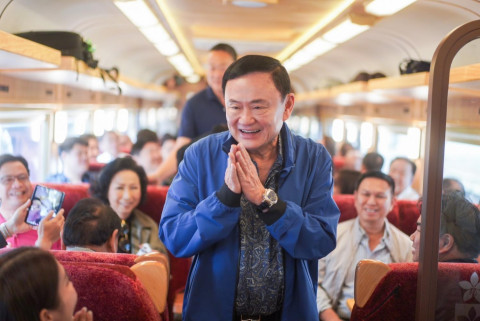
Two wasted decades in Thai politics
Oped, Thitinan Pongsudhirak, Published on 20/12/2024
» Now that Thaksin Shinawatra appears actively back in Thai politics, it is demoralising to look back at Thailand's wasted time and opportunities. Once a promising country on the way from democratic transition to consolidation in the late 1990s, Thailand has become semi-autocratic, and its rocky political trajectory over the past two decades is now structural. The traditional institutions of power that grew out of the Cold War have been calling the shots in earlier decades and are just unwilling to let the country move forward in the immediate years ahead.

Prospects at home and abroad in 2024
Oped, Thitinan Pongsudhirak, Published on 05/01/2024
» Overlooked but deeply consequential, 2024 will be the first time in a decade that Thailand is ruled by a civilian-led government. Whatever frustration and disenchantment that arise this year, memories must not run short. Thailand suffered deeply under the coup-backed regime of Gen Prayut Chan-o-cha. Seeing his back is politically good riddance, and having Srettha Thavisin as a thoroughly civilian and pro-business prime minister bodes well for the country. Yet Mr Srettha has his work cut out to boost the economy, address constitutional reform, restore Thailand's international standing, and stay in office into next year amid the global economic slowdown.

The tide of history shifts in Thai politics
Oped, Thitinan Pongsudhirak, Published on 02/06/2023
» Notwithstanding the ongoing political shenanigans by appointed agencies to shape final outcomes after the May 14 poll, Thailand already will never be the same again. The Move Forward Party's (MFP) victory as the largest winning side, with 151 out of 500 parliamentary seats, is profound but not unprecedented. Together with the Pheu Thai Party's 141 MPs, these two opposition parties are unwittingly sending a message to each other and to the broader political establishment that the curve of Thai history is shifting tectonically. Failing to grasp and adjust to this evolving tide of history could marginalise Pheu Thai and challenge the establishment to its core foundations.
Thai politics' murky tunnel to nowhere
Oped, Thitinan Pongsudhirak, Published on 07/01/2022
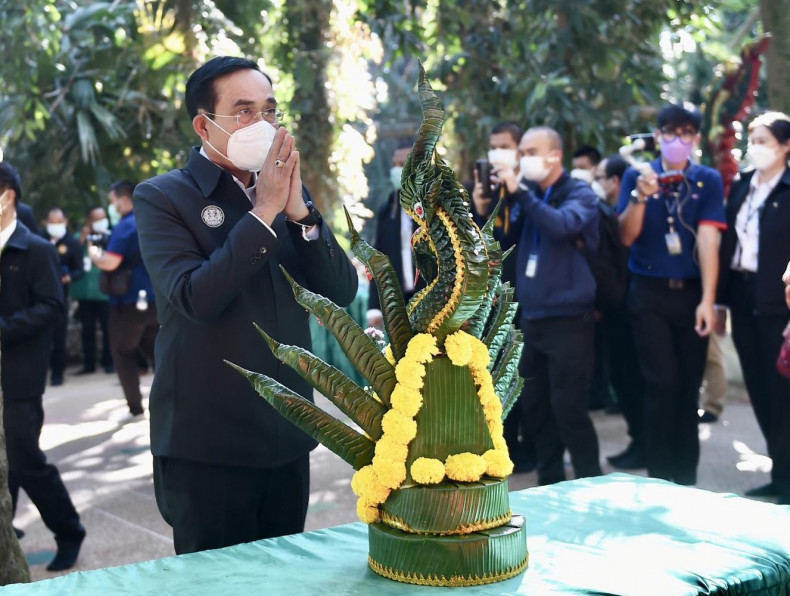
» Starting out a new year should engender a sense of hope and optimism that tomorrow can be better than yesterday. But the reality in Thailand suggests otherwise. A sense of prolonged malaise and discontent pervades the scene, where politics will likely prove murky with an economy persistently in the doldrums, underpinned by continuing societal divisions and broad-based unhappiness. Unless drastic changes and reforms take place very soon, this year is likely to further solidify the onset of a decade of decay and stagnation.

Biden's pivot to free, open Indo-Pacific
Oped, Thitinan Pongsudhirak, Published on 03/09/2021
» If former United States President Barack Obama is known for his "pivot to Asia" geostrategy and President Donald Trump for the Free and Open Indo-Pacific, there is now a geostrategic synthesis under President Joe Biden. It can be aptly called the US "pivot to the Free and Open Indo-Pacific".
54 years on, Asean needs new modality
Oped, Thitinan Pongsudhirak, Published on 13/08/2021
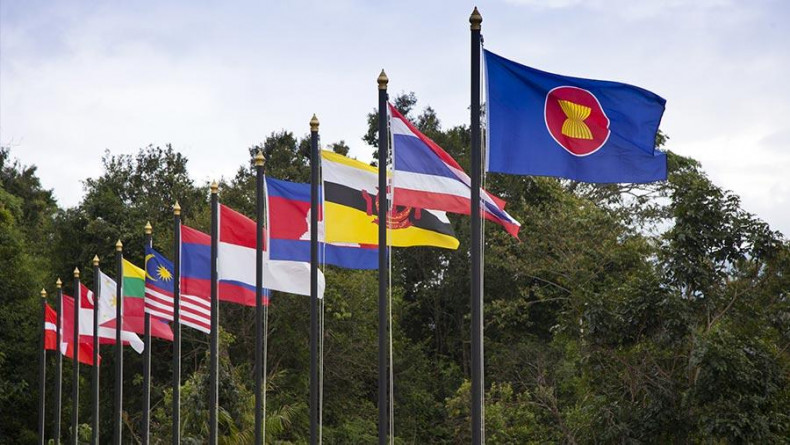
» After 54 years of being together, Asean is at the end of its tether. It has never been more divided than now, split within member states and across all 10 of them, dominated once again by divisive superpower rivalry and competition. In practice, this means Asean will appear increasingly ineffectual and inert. There will be much bureaucratic motion but few substantive organisational and policy outcomes amid unresolved challenges from within and from outside the region. Asean's best way forward may require unprecedented radical thinking towards a multi-track organisation to ensure relevance and momentum where it can be generated.
Myanmar: From diplomacy to force
Oped, Thitinan Pongsudhirak, Published on 30/04/2021
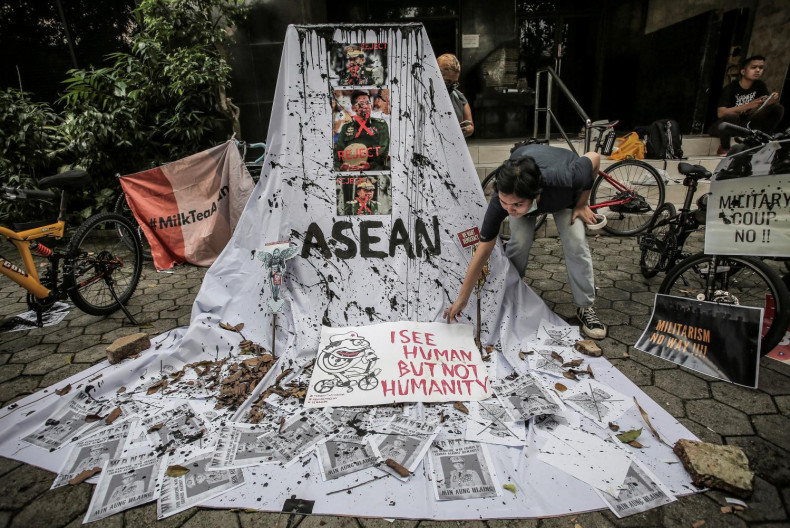
» At its recent "special" summit in Jakarta on Myanmar's crisis, Asean reached its diplomatic maximum by coming up with a "five-point consensus" that will likely prove too little and too slow. Constrained by consensus and its non-interference principle where any of its 10 members has a virtual veto, Asean's overdue response to Myanmar's fast-escalating violence on the ground is likely to prove ineffective. As Asean's diplomacy faces limitations, more of Myanmar's outcomes are likely to be decided by the use of force in an intensifying civil war.