



Showing 1 - 9 of 9

Asean's regroup requires deep reforms
Oped, Thitinan Pongsudhirak, Published on 17/10/2025
» If Asean's 58 years thus far have been about resilience and playing a central organising role in promoting regional security and stability, its next decade will determine whether the Southeast Asian bloc can adapt and remain relevant. After the crises in Myanmar and along the Thai-Cambodian border, Asean's credibility has never been more in doubt. To regain its effectiveness as Southeast Asia's one and only agency, Asean needs to move away from the ritualistic diplomacy of mundane meetings to far-reaching reforms that chart new ways of making things work.
The geopolitics of China's CPTPP move
Oped, Thitinan Pongsudhirak, Published on 03/12/2021
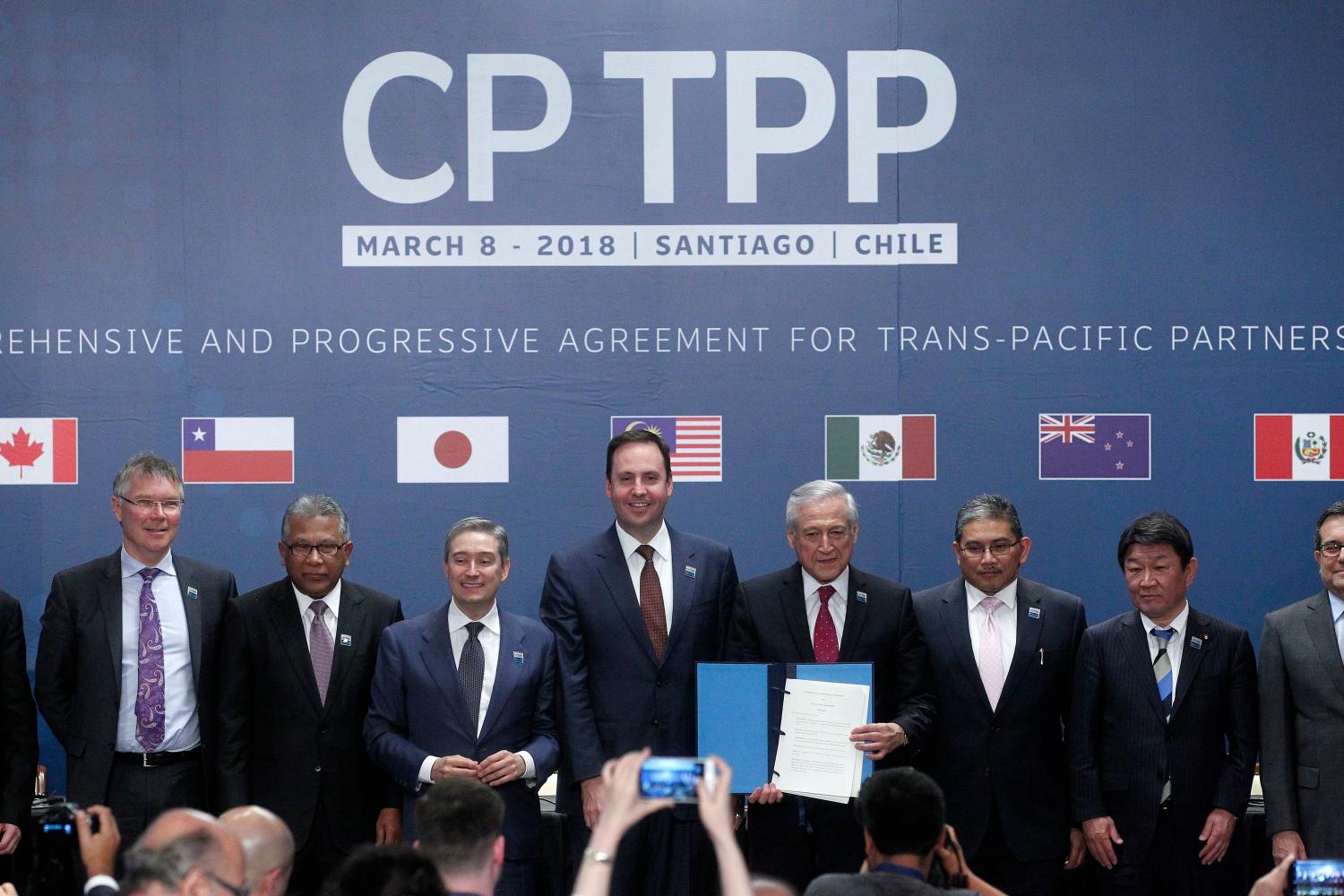
» Nowhere is the intersection between geopolitics and geoeconomics more evident than the accession negotiations under the 11-member Comprehensive and Progressive Agreement for Trans-Pacific Partnership (CPTPP). At issue are three new applications for accession by the United Kingdom, China, and Taiwan. While the UK's candidacy alters the geographic crux of what has been Asia-Pacific trade liberalisation, China's and Taiwan's entry efforts represent a proxy showdown between the United States-led global order and 75-year-old alliance system versus Beijing's geostrategic ambitions and objectives.

Abe legacy is Japan as 'normal' nation
Oped, Thitinan Pongsudhirak, Published on 04/09/2020
» Japan's outgoing Prime Minister Shinzo Abe will be missed throughout much of Asia, including China. His health-induced political departure attributable to a recurrence of ulcerative colitis brings to an end Japan's longest-serving prime minister in a consecutive tenure. While much will be recorded about his rich legacy, Mr Abe should be seen as a natural mover and shaker who reshaped Japan into a more "normal" country able to pursue its national interest like others by all available means.

RCEP without India poses new hurdles
News, Thitinan Pongsudhirak, Published on 08/11/2019
» On the face of it, the Regional Comprehensive Economic Partnership is an Indo-Pacific trade pact that would shore up the stalled world trade liberalisation and stem the rising tide of protectionism in the global economy. India's withdrawal from the RCEP -- whose other 15 members comprise the 10 Asean economies along with China, Japan, South Korea, Australia and New Zealand -- is a major setback, posing new challenges for the Asean-centred trade bloc. Asean should persuade India to return to the RCEP fold, while preparing for a much less promising RCEP15 as second-best outcome.

Thai chairmanship ends on upbeat note
News, Thitinan Pongsudhirak, Published on 01/11/2019
» Just as Thailand's chairmanship of Asean is about to end and a flurry of Asean-related summits are about to transpire, this year has been more eventful for Southeast Asia's 10-member grouping than anticipated. Despite its domestic constraints, Thailand has managed to steer the sometimes unwieldy ship of Asean with limited propulsion and direction. If Vietnam as the next chair can build on momentum from this year, Asean might just be able to regain and reboot its role in the near term as the de facto bridge, broker and buffer for the wider Indo-Pacific region, notwithstanding its usual warts and flaws.

Developing by managing demographics
News, Thitinan Pongsudhirak, Published on 27/09/2019
» Once upon a time, it was feared that the earth would become overcrowded and its inhabitants unable to find enough to eat. This fear has not only proved unfounded but it has gone in the opposite direction. What almost every nation fears now is a decline in inhabitants as the birth rate cannot keep up with the longevity of the aged and elderly, imposing unsustainable burdens on working-age segments of the population. Every region is afflicted with this demographic predicament, especially in affluent societies where the birth rate decline is acute, such as Japan.

Politics of regional trade liberalisation
News, Thitinan Pongsudhirak, Published on 20/09/2019
» As multilateral trade negotiations have become unworkable, regional and bilateral alternatives are on the rise. In Thailand's neighbourhood, the most consequential of these trade vehicles is the Regional Comprehensive Economic Partnership (RCEP). As it missed the boat on the Comprehensive and Progressive Trans-Pacific Partnership (CPTPP), Thailand as Asean chair this year should finalise the RCEP expeditiously and find a way to accede to the CPTPP in the near future. Although the Thai political situation remains murky and contentious, there is enough domestic policy consensus on low-hanging fruits, such as regional and bilateral trade liberalisation, that should be reaped without further delay.

Seeing Asean straight as Thailand chairs
News, Thitinan Pongsudhirak, Published on 21/06/2019
» When Asean organises big meetings, the tendency for the host is to talk up a brouhaha. So it goes with the 34th Asean summit under Thailand's rotating chairmanship this year. By year's end, several hundred Asean-related meetings will have taken place, highlighted by the final annual summitry in October-November that will include top leaders from China, India, Japan, Russia, the United States, among others.
The Indo-Pacific and Asean centrality
News, Thitinan Pongsudhirak, Published on 01/06/2018
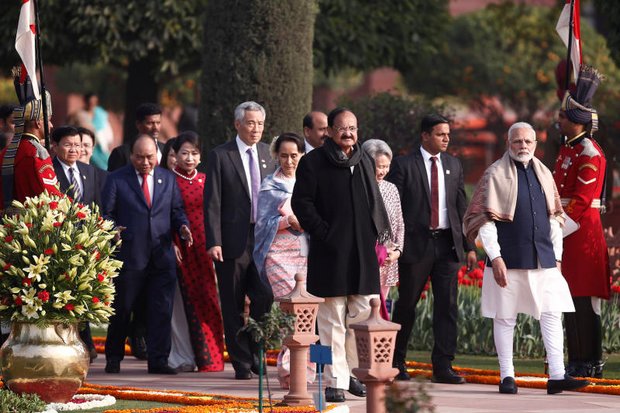
» Even though US President Donald Trump repeatedly alluded to it in his speeches at Asean-led summits in Danang and Manila late last year, and despite its reference in both the United States National Security Strategy and National Defence Strategy, the geographic notion of a "free and open Indo-Pacific" (FOIP) straddling both the vast Pacific and Indian oceans has been given short shrift in many capitals. Chinese Foreign Minister Wang Yi suggested last March that the Indo-Pacific was only an "attention-grabbing idea", akin to "the sea foam in the Pacific and Indian Ocean" that "may get some attention but will soon dissipate". Asean leaders have paid some attention but have not had a collective and cohesive reaction to it. But now everyone in Asian security circles and beyond will take notice.