



Showing 1 - 10 of 51
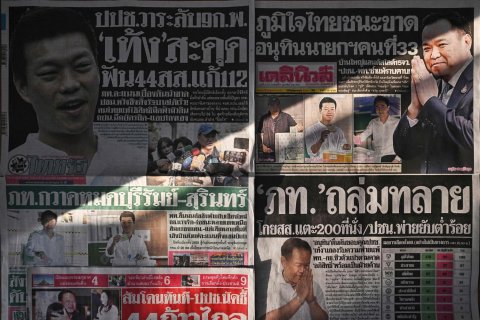
Implications of conservative triumph
Oped, Thitinan Pongsudhirak, Published on 13/02/2026
» The incumbent and conservative Bhumjaithai (BJT) Party has surprisingly swept Thailand's Feb 8 election with a commanding win. With the previously poll-leading and progressive People's Party (PP) coming in a distant second, Thailand appears headed for a conservative coalition government revolving around BJT and like-minded junior partners. Known for its conservative stance and being pro-status quo, it would not be surprising if the BJT-led coalition government, led by Prime Minister-elect Anutin Charnvirakul, were not challenged by the Constitutional Court, the Election Commission, and other supervisory agencies, which have derailed and dissolved reform-minded winning parties in the past.
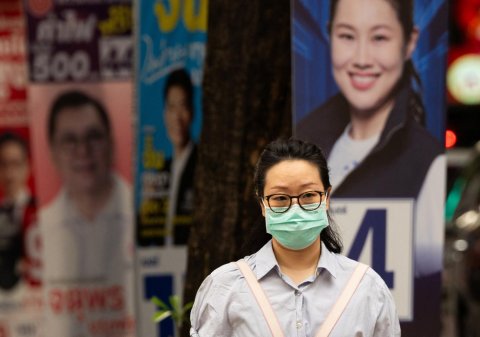
Will poll be breakout or more of same?
Oped, Thitinan Pongsudhirak, Published on 06/02/2026
» As Thais go to the polls this Sunday, the most consequential question is whether Thailand will finally break out of its debilitating cycle of political instability and economic underperformance that has marked the past two decades. The signs and signals suggest otherwise -- at least not yet.
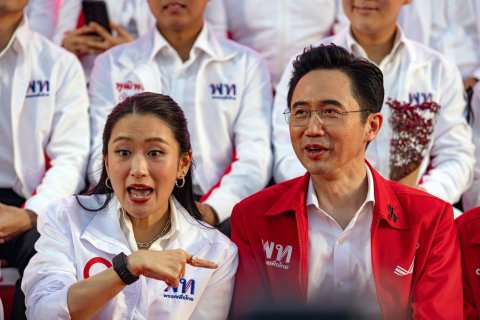
Three main parties and two directions
Oped, Thitinan Pongsudhirak, Published on 16/01/2026
» Although Thailand's election campaign is reaching fever pitch ahead of voting day on Feb 8, the dynamics and contours of its final outcome can be gleaned from past polls over the last 25 years. Only once in January 2001, as was indicated in this space last week, were voter results fully honoured and carried out. Other elections were either upended by military coups or manipulated by judicial interventions.
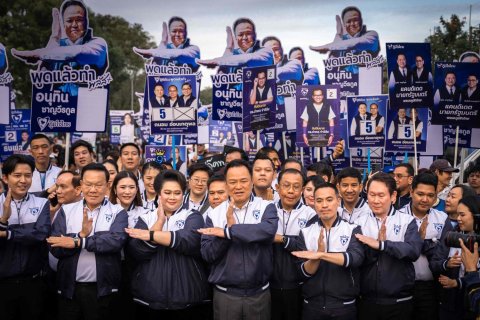
Thailand's political trajectory in 2026
Oped, Thitinan Pongsudhirak, Published on 09/01/2026
» What happens in Thai politics this year and the immediate horizon will be determined by the upcoming election on Feb 8. While contesting political parties are in full campaign mode, the contemporary history of Thai polls so far in the 21st century is not encouraging. Only once in the past 25 years have voting results went the way they were meant to, in accordance with the popular will. Whether the vote in four weeks will follow the same pattern will depend on whether the conservative establishment gets its preferred outcome.
New government is new wine in old bottle
Oped, Thitinan Pongsudhirak, Published on 13/09/2024
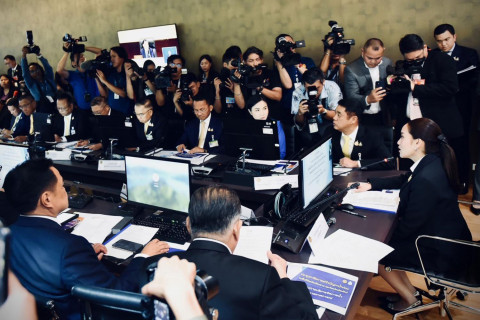
» On the face of it, the new government under Prime Minister Paetongtarn Shinawatra appears to be a generational shift and gender breakthrough. Ms Paetongtarn is the youngest prime minister ever at 38 and only the second female government leader after her aunt Yingluck Shinawatra in 2011-14. The Paetongtarn cabinet features a record eight women among 36 with more ministers in their 30s-50s and fewer above 60. Yet on closer scrutiny, the new and younger faces are largely family legacies and proxies, surrounded by old-style politicians, while the new government's policy directions sound dated not well-suited for the times ahead.

Thai politics has turned upside down
Oped, Thitinan Pongsudhirak, Published on 23/08/2024
» The rise of Prime Minister Paetongtarn Shinawatra and the return -- and re-entry, of her father, Thaksin Shinawatra, have turned Thai politics upside down. On the surface, Mr Thaksin still dominates Thai politics nearly 20 years after he was deposed by a military coup and exiled for most of that period. This time, his political power and influence are being exercised through his daughter Ms Paetongtarn. As the Shinawatra clan has been coopted by its former establishment adversaries, the past two decades of periodic elections, street protests, two military coups, two constitutions, and multiple judicial bans on political parties and elected politicians have entered a new chapter.
The Thaksin factor in Thai politics
Oped, Thitinan Pongsudhirak, Published on 15/03/2024
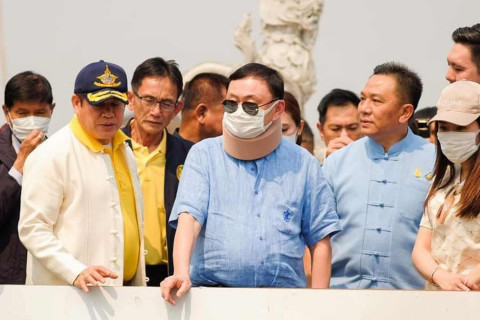
» Thai politics in the near term will likely be dominated by the fate of the two largest vote winners from the general election in May 2023, the Move Forward (MFP) and Pheu Thai parties. While the MFP is at risk of another dissolution, the same as its predecessor Future Forward Party suffered in 2020, Pheu Thai's political future appears to hinge on Thaksin Shinawatra and his return from exile in what is believed to be a deal that follows the assumption of the premiership under Srettha Thavisin, and for Thaksin, a royal pardon and early release on parole.

Thailand's semi-democracy returns
Oped, Thitinan Pongsudhirak, Published on 01/12/2023
» The appointment of Gen Prayut Chan-o-cha as privy councillor has neatly bookended Thai politics over the past decade. It coincides with the 10-year anniversary of the street demonstrations that were led by the People's Democratic Reform Committee, paving the way for Gen Prayut to stage a military coup in May 2014. While the interim was a period of hard and soft military-authoritarian rule in 2014-19 and 2019-23, the new moving balance in Thai politics is a semi-democracy of sorts under the Pheu Thai Party-led coalition government.

Srettha confronts myriad of challenges
News, Thitinan Pongsudhirak, Published on 22/09/2023
» As the coalition government of Prime Minister Srettha Thavisin gets going, it faces multiple daunting challenges, from public expectations and policy deliverables to the maintenance of political stability.

The continuing crisis of Thai democracy
Oped, Thitinan Pongsudhirak, Published on 11/08/2023
» The prolonged volatility and instability in Thai politics attest to a continuing crisis of democracy since the military coup in September 2006. It is characterised by the nature, direction and duration of government after an election. Unless the poll-topping political party is backed by the conservative military-authoritarian regime, it is either not allowed to take power or gets overthrown while in office before completing its term. This crisis of Thai democracy has now persisted since the May 14 poll, as the formation of the next government remains stuck in a stalemate.