



Showing 1 - 10 of 58
Thailand hit by a confluence of crises
Oped, Thitinan Pongsudhirak, Published on 05/12/2025
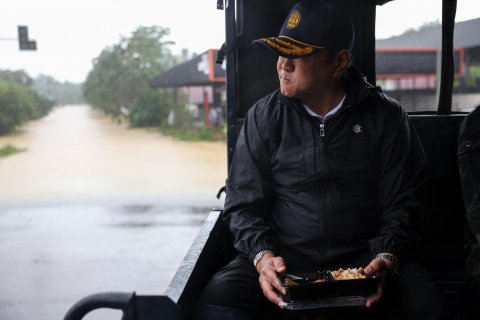
» Thailand is currently facing multiple crises of unprecedented proportions in the highest corridors of power that will pose adversity for the economy and political stability next year and beyond.
The tyranny of anarchy and what to do
Oped, Thitinan Pongsudhirak, Published on 21/03/2025
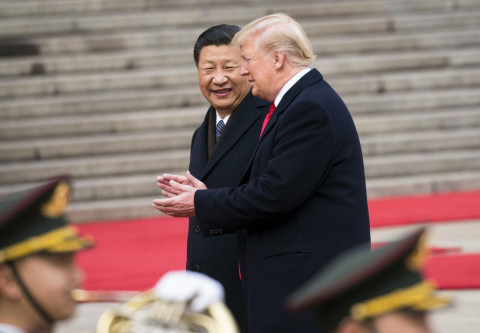
» It is both exciting and alarming to be a student of international affairs as the world is being turned upside down. In just two months, the second administration of President Donald J Trump has sent shockwaves rippling through the international system as the United States pulls back from its role as leader, underwriter, and guardian of the nearly 80-year-old international order that it instrumentally constructed after WWII. In view of the US's portentous withdrawal, relative anarchy in the international system is back with a vengeance, leaving Asean members and smaller states elsewhere to fend for themselves in a self-help geostrategic environment.

What's happened to the Asian Century?
Oped, Thitinan Pongsudhirak, Published on 14/02/2025
» Until recently, the "Asian Century" seemed a compelling narrative but now it is not what it used to be. It was supposed to herald a shift in global economic power from the West to the East, driven by China's rapid rise, India's economic dynamism, and the broader development of Asia. But a quarter of the way into the 21st century, the promise of Asian dominance appears less certain. The enduring technological and economic might of the United States, coupled with its geopolitical backlash against China, has lowered expectations. While Asia remains formidable, the trajectory of global power is open and fluid, with potential dominance shifting not necessarily to any nation or region but perhaps to a non-state entity.

A backdrop to Trump's stunning win
Oped, Thitinan Pongsudhirak, Published on 08/11/2024
» Analysts often face the tough task of assessing an outcome the way it is rather than how they would like it to be. Nowhere is this challenge more daunting than analysing the stunning election results in the United States this week. Against the odds, former President Donald J Trump of the Republican Party has resoundingly won a second term over Vice President Kamala D Harris of the Democratic Party both in the popular vote and the Electoral College. The Republican Party also captured the Senate and the House of Representatives. While the implications for Thailand and the rest of Southeast Asia are wide-ranging and far-reaching, it is first and foremost necessary to understand the nature of the Trump victory.
Thailand's central bank dependence
Oped, Thitinan Pongsudhirak, Published on 23/02/2024
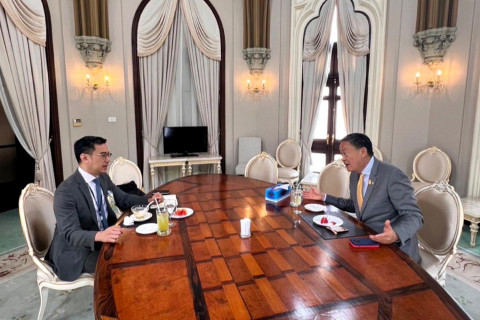
» To proponents of central bank independence, the ongoing friction between Prime Minister and Finance Minister Srettha Thavisin and Bank of Thailand Governor Sethaput Suthiwartnarueput appears straightforward. The prime minister is putting unwarranted and unfair pressure on the central bank governor to spur the economy by loosening monetary policy and cutting interest rates. Yet, on closer scrutiny, the entrenched politicisation of central banking in Thailand may suggest otherwise. There is more than meets the eye in the politics of interest rate cuts.

Digital wallet should be implemented
Oped, Thitinan Pongsudhirak, Published on 16/02/2024
» The big debate in Thailand's current economic policy planning is whether the economy is facing a crisis or not. The government of Prime Minister Srettha Thavisin, who doubles as finance minister, has contended that there is an economic crisis in dire need of both monetary policy loosening and fiscal stimulus, particularly the 500-billion-baht digital wallet scheme. The Bank of Thailand, supported by a clique of economists apparently critical of the government's "populist" policy measures, asserts otherwise that an economic recovery is in progress without the need to lower the benchmark repurchase rate.
Done and emerging battles in Thai poll
Oped, Thitinan Pongsudhirak, Published on 28/04/2023
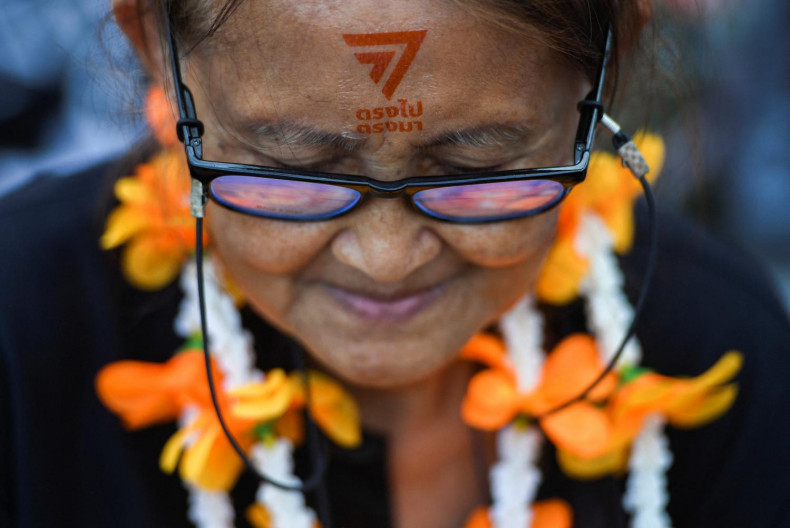
» Thailand's poll-leading Pheu Thai Party (PTP) is fighting a war it has already won. Consequently, its pledged freebie of 10,000 baht in a digital wallet for Thai people is superfluous and unnecessary. As the populism war has run its course, a new battleground revolving around the reform and adjustment of traditional centres of power is emerging. The fight in this new battle, being led by the Move Forward Party (MFP), is likely to last into the foreseeable future as the next stage in Thailand's modernisation imperative in the 21st century.
Global, regional, local trends for 2023
Oped, Thitinan Pongsudhirak, Published on 23/12/2022
» Although economic predictions are usually reserved for the foolhardy, as the future is always difficult to ascertain, there are certain trend lines and probabilities that can be discerned at the global and regional level as well as the local level here in Thailand. As a year-end exercise, we can tease out a few contours with a reasonably high degree of probability.

Geopolitical takeaways from SEA meets
Oped, Thitinan Pongsudhirak, Published on 25/11/2022
» Southeast Asia's summit season has come and gone with takeaways that concurrently eased geopolitical tensions and underlined risks that could lead to future global conflict. The three major summits -- the East Asia Summit (EAS) in Phnom Penh, the G20 in Bali, and the Asia-Pacific Economic Cooperation (Apec) in Bangkok -- also demonstrated that the Covid-19 pandemic over 2020-21 has been practically overcome as in-person meetings are back in full force. Overall, the three hosts came away with mixed highlights.
Apec's geopolitics and geoeconomics
Oped, Thitinan Pongsudhirak, Published on 11/11/2022
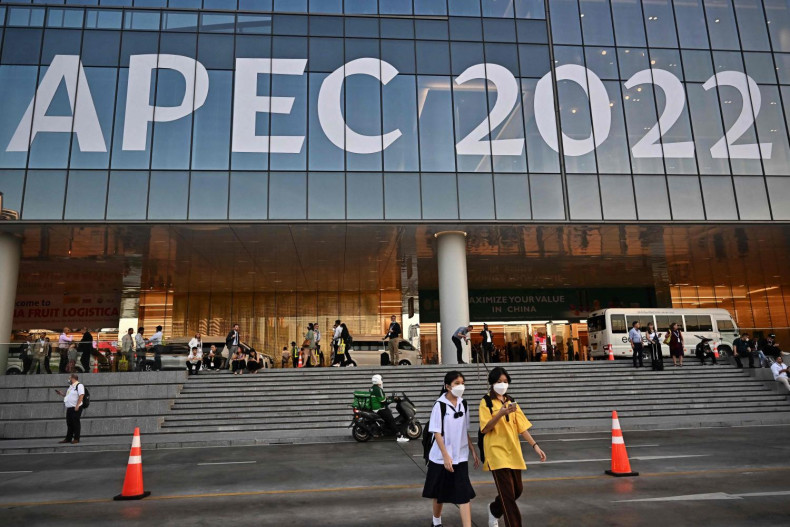
» The upcoming leaders' meeting in Bangkok among the 21 member economies of the Asia-Pacific Economic Cooperation (Apec) should be seen in conjunction with its preceding Asean-related summits in the Cambodian capital of Phnom Penh and the G20 summit in Bali, the Indonesian island resort. This one-two-three combination in three Southeast Asian countries over a ten-day period is supposed to showcase Asean's central role in the promotion of peace, security and prosperity in the region and the wider world. But as Asean's summit season gets underway in Cambodia, excitement and promise have given way to anxieties and apprehensions. While these summit talks are an extraordinary opportunity to tone down geopolitical temperatures and geoeconomic competition, they are likely to yield mixed results.