



Showing 1 - 10 of 14
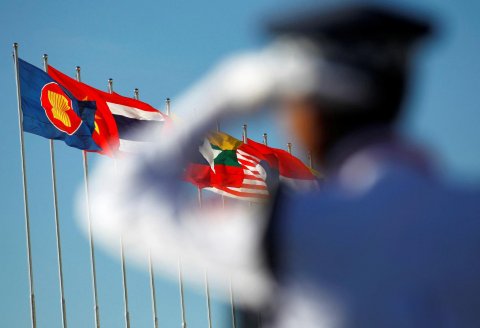
Flawed Asean needs to regain footing
Oped, Thitinan Pongsudhirak, Published on 10/10/2025
» Nearly six decades after its founding, the Association of Southeast Asian Nations (Asean) finds itself back where it began -- divided, uncertain, and vulnerable to the influence of major powers. Once hailed as a model for regional cooperation in the developing world, Asean now faces a crisis of purpose. Unless it can rediscover the unity and collective way forward that defined its early decades, Southeast Asia's flagship institution risks slipping into irrelevance.
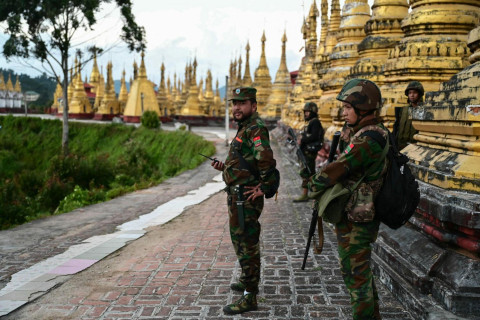
Myanmar's civil war after four years
Oped, Thitinan Pongsudhirak, Published on 31/01/2025
» Four years after its military coup and consequent civil war, Myanmar's spotlight in global headlines continues to dim as geostrategic reorientations and realignments among the major powers take centre stage. Dramatic and drastic foreign policy changes are afoot in the United States under the second administration of President Donald J Trump, while the European Union faces an existential threat from Russia's aggression in Ukraine, and Japan is mired in political sclerosis at home. Myanmar's fate and future will thus likely be determined by the course and outcome of its civil war, China's expanding influence in the country and Asean member states' manoeuvres to a lesser extent.

Myanmar as interim 'non-state' state
Oped, Thitinan Pongsudhirak, Published on 01/03/2024
» Myanmar, also known as Burma, has become a de facto state that is dominated by non-state entities. Contrary to facile claims, Myanmar is not a failed state like some that beset parts of Africa and the Middle East. The ethnically diverse country of 55 million still functions despite widespread violence in an ongoing civil war. Unless and until Myanmar is understood and re-conceptualised as an interim state comprising non-state entities, it will be difficult to move forward to remake and reconstitute a new country after the civil war and the passing of the military junta that seized power on Feb 1, 2021, led by Senior General Min Aung Hlaing.
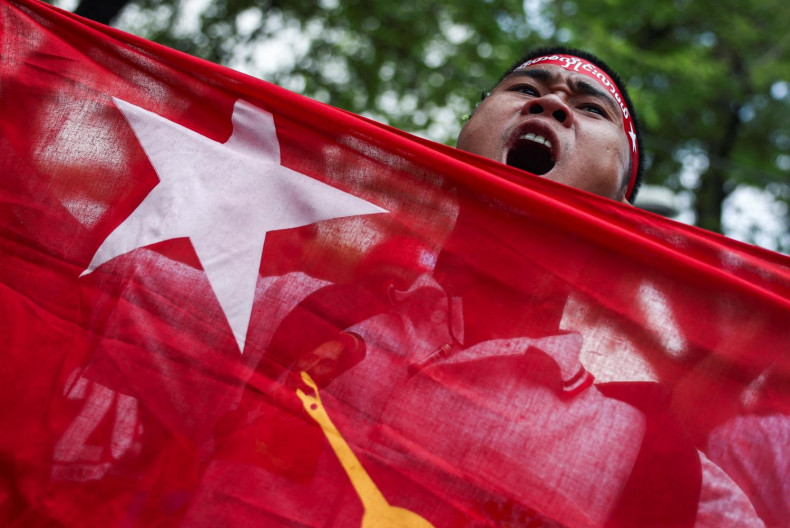
Myanmar revolts against dictatorship
Oped, Thitinan Pongsudhirak, Published on 02/02/2024
» When Myanmar's military coup took place three years ago, few thought it would turn out this way. Never has a military in Southeast Asia staged a successful coup and then failed to consolidate power afterwards. Yet this is precisely what's happening in Myanmar. A fierce and determined coalition of resistance forces is in the process of prevailing over Myanmar's battle-hardened army.

Asean role stuck on Myanmar coup
Oped, Thitinan Pongsudhirak, Published on 25/08/2023
» President Joe Biden's decision to skip Asean-related summits in the Indonesian capital Jakarta on Sept 5-7 in favour of the G-20 leaders' meeting in India just two days later has been greeted with howls of disappointment and criticism around Southeast Asian capitals and elsewhere that are concerned about America's role in the region.
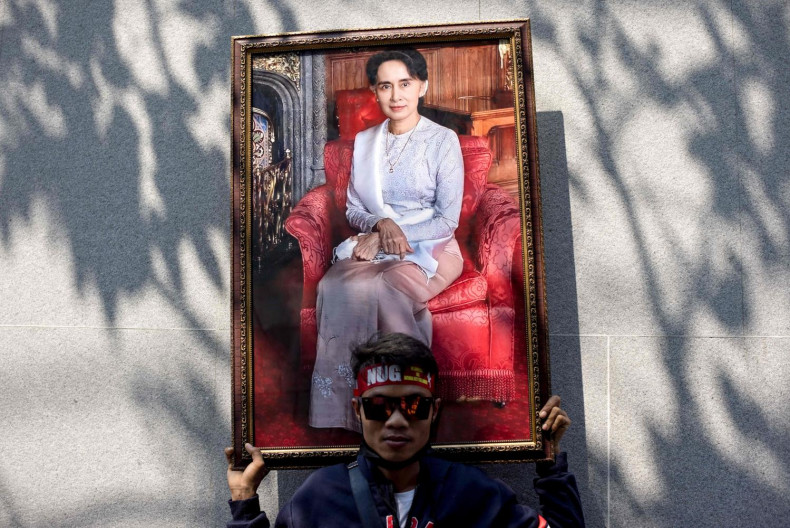
Reversing Myanmar's internal strife
Oped, Thitinan Pongsudhirak, Published on 10/02/2023
» This month marks two anniversaries of ongoing conflicts in Europe and Southeast Asia, namely 12 months after Russia invaded Ukraine and two years since Myanmar's military seized power by toppling a democratically elected and civilian-led government under Aung San Suu Kyi.
Myanmar's military takeover falters
Oped, Thitinan Pongsudhirak, Published on 03/02/2023
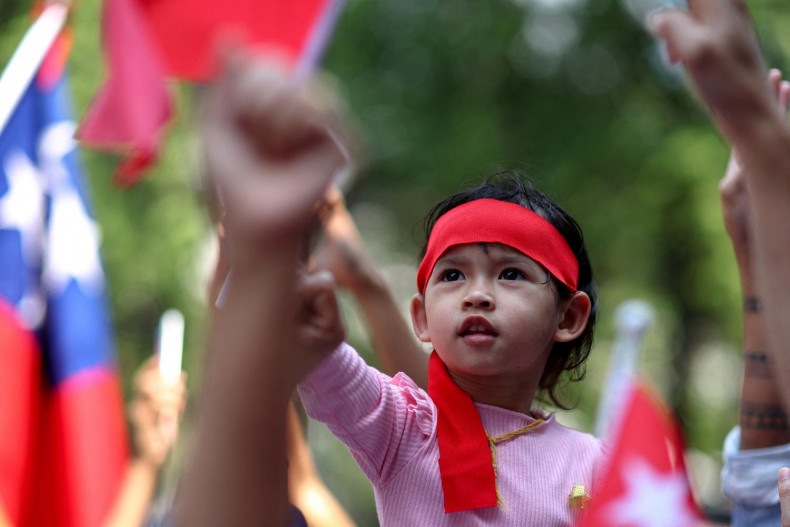
» Global news headlines this month will be focused on the one-year anniversary of Russia's invasion of Ukraine, which falls on Feb 24. This external aggression, where a bigger state unilaterally takes territory from a smaller neighbour by force, can be juxtaposed to an internal subjugation in Myanmar, where a military coup took place two years ago this week. Whether the aggression is externally between states, or internally within a state, the oppressors behave the same way and pursue similar objectives of conquest and dominance. Reversing an internal subjugation is as morally compelling as turning back an external aggression. What Myanmar's civilian-led resistance coalition needs is a fraction of the aid the Ukrainians have been receiving.
Thailand's bankrupt Myanmar policy
Oped, Thitinan Pongsudhirak, Published on 17/06/2022
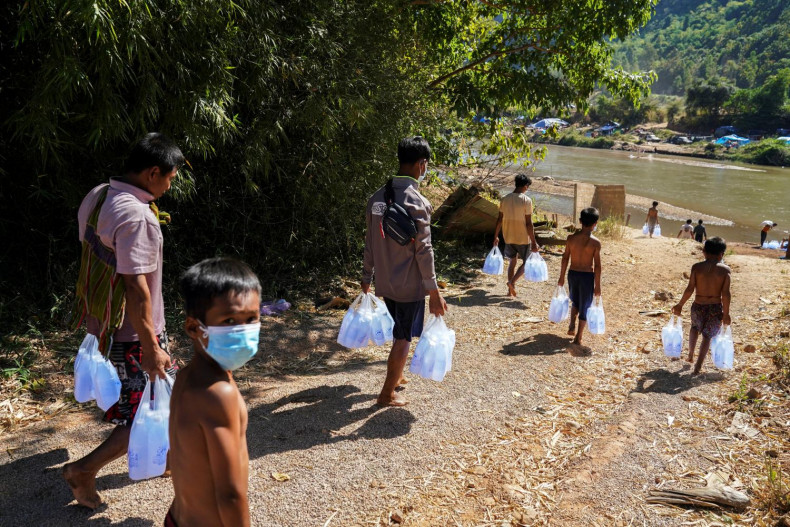
» Few signboards foretell the global issues of our time better than what is addressed at the annual meetings of the Shangri-La Dialogue (SLD) in Singapore. After a pandemic-induced two-year hiatus, the most recent SLD covered the gamut on the main stage, from the United States-China geostrategic competition and military modernisation to security cooperation and climate change. The only anomalous single- and small-country focus in a special session was Myanmar.
Myanmar military fails sovereignty test
Oped, Thitinan Pongsudhirak, Published on 04/02/2022
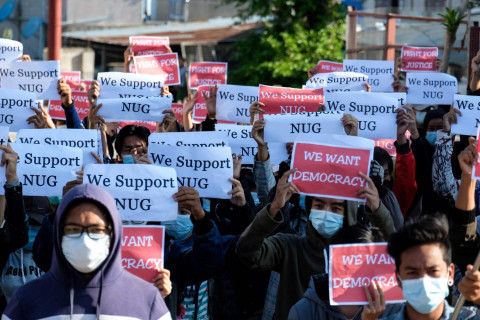
» After seizing power from an elected civilian government on Feb 1 last year, Myanmar's military junta under the State Administration Council (SAC) has fallen short of the four categories that constitute the definition of a sovereign state.
What happens if Asean shrinks to 9?
Oped, Thitinan Pongsudhirak, Published on 29/10/2021
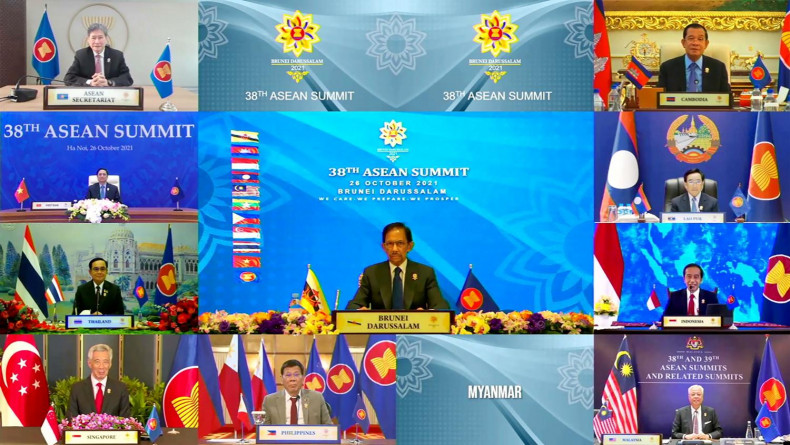
» It all came down to a choice between marginalisation and irrelevance on the one hand and pragmatism and resilience on the other. At its 38th and 39th leaders' meetings and related summits with dialogue partners, Asean chose to remain relevant. In an unprecedented move with far-reaching ramifications, Asean reduced itself to nine participating members from the normal 10, excluding Myanmar. While this bold manoeuvre derived from necessity rather than initiative, it provides Southeast Asia's bloc of smaller states a small window of opportunity to regain its footing and revitalise its central role in promoting regional peace and stability in Asia.