



Showing 1 - 10 of 20
Three main parties and two directions
Oped, Thitinan Pongsudhirak, Published on 16/01/2026
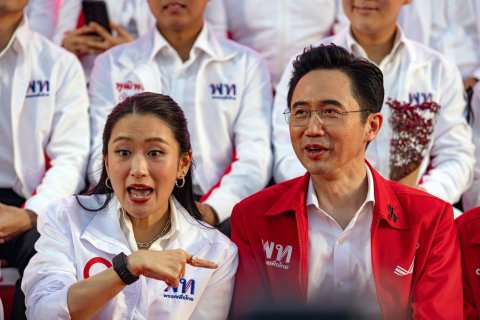
» Although Thailand's election campaign is reaching fever pitch ahead of voting day on Feb 8, the dynamics and contours of its final outcome can be gleaned from past polls over the last 25 years. Only once in January 2001, as was indicated in this space last week, were voter results fully honoured and carried out. Other elections were either upended by military coups or manipulated by judicial interventions.

Another wasted year in Thai politics
Oped, Thitinan Pongsudhirak, Published on 26/12/2025
» As Thailand winds down 2025 with an early election looming on Feb 8, the most consequential issue to watch in the coming year will be whether recent topsy-turvy political patterns of polls, protests, and military and judicial interventions give way to a compromise between the old guard clinging on to vested interests and the new generation clamouring for reform and change.

Domestic drivers of bilateral conflict
News, Thitinan Pongsudhirak, Published on 19/12/2025
» The latest flare-up and intensification of the armed conflict between Thailand and Cambodia should be understood less as a new crisis and more as a resumption of a bilateral clash that erupted in late July.
No-confidence and poll date in flux
Oped, Thitinan Pongsudhirak, Published on 14/11/2025
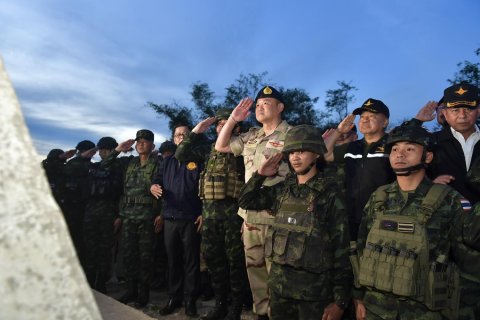
» Amid the drumbeats of military conflict with Cambodia, Thailand's political environment is evidently unruly and unsettled. The minority government of Anutin Charnvirakul, the third prime minister from the third largest-winning party since the latest national election in May 2023, is hard-pressed to stay in office beyond the four-month "Memorandum of Agreement" between his Bhumjaithai Party (BJT) and the People's Party (PP), the largest camp in the national assembly.
Digesting Trump's trip through Asia
Oped, Thitinan Pongsudhirak, Published on 07/11/2025
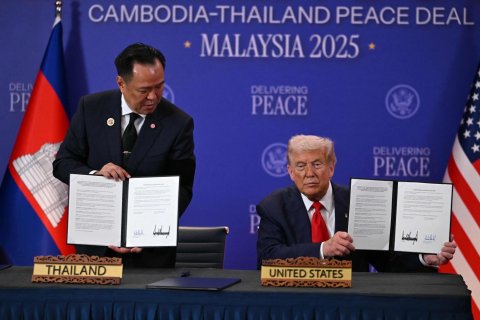
» Storming through Asia last week, US President Donald Trump's first stop in Kuala Lumpur on Oct 26, before moving on to Japan and South Korea over the next four days, capped by his meeting with Chinese President Xi Jinping before returning to Washington, was the most consequential for Southeast Asian economies.
Anutin's new cabinet is a mixed bag
Oped, Thitinan Pongsudhirak, Published on 26/09/2025
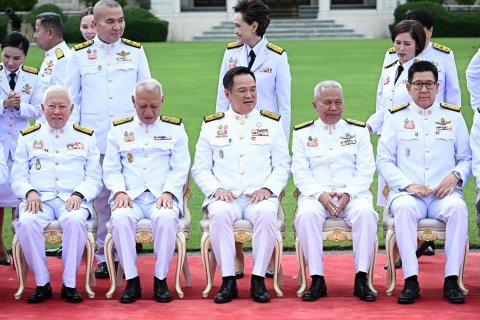
» The composition and size of Prime Minister Anutin Charnvirakul's 36-member cabinet suggest that he intends to stay in office for as long as possible, clinging to the terms of the government-enabling Memorandum of Agreement (MOA) and calling an early election only if circumstances make it unavoidable.
New govt may last longer than pledged
Oped, Thitinan Pongsudhirak, Published on 12/09/2025
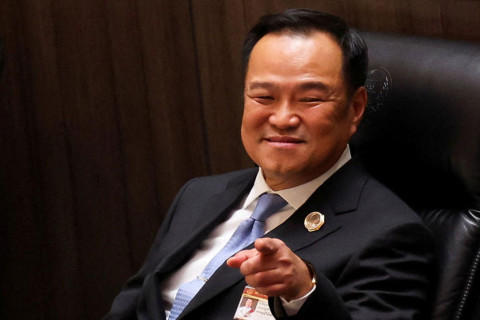
» Thailand's latest round of political tumult reached a culmination when the Constitutional Court removed Paetongtarn Shinawatra of the hitherto ruling Pheu Thai (PT) Party from office on Aug 29, paving the way for Bhumjaithai Party (BJT) leader Anutin Charnvirakul to succeed her as prime minister with the Lower House's majority support a week later.

Trump II's intellectual foundations
Oped, Thitinan Pongsudhirak, Published on 22/11/2024
» It seems counterintuitive and contradictory to think of an intellectual foundation behind United States President-elect Donald J Trump when he is professedly unintellectual, even anti-intellectual. But make no mistake. Mr Trump is merely a phenomenon. Understanding it reveals his worldview and consequent policy prospects. But doing so requires seeing the Trump phenomenon as it is rather than why and how it is detested by countless millions of us. Indeed, the biggest difficulty when analysing Mr Trump and his second administration is the global disdain he elicits.

Geopolitical takeaways from SEA meets
Oped, Thitinan Pongsudhirak, Published on 25/11/2022
» Southeast Asia's summit season has come and gone with takeaways that concurrently eased geopolitical tensions and underlined risks that could lead to future global conflict. The three major summits -- the East Asia Summit (EAS) in Phnom Penh, the G20 in Bali, and the Asia-Pacific Economic Cooperation (Apec) in Bangkok -- also demonstrated that the Covid-19 pandemic over 2020-21 has been practically overcome as in-person meetings are back in full force. Overall, the three hosts came away with mixed highlights.
Apec's geopolitics and geoeconomics
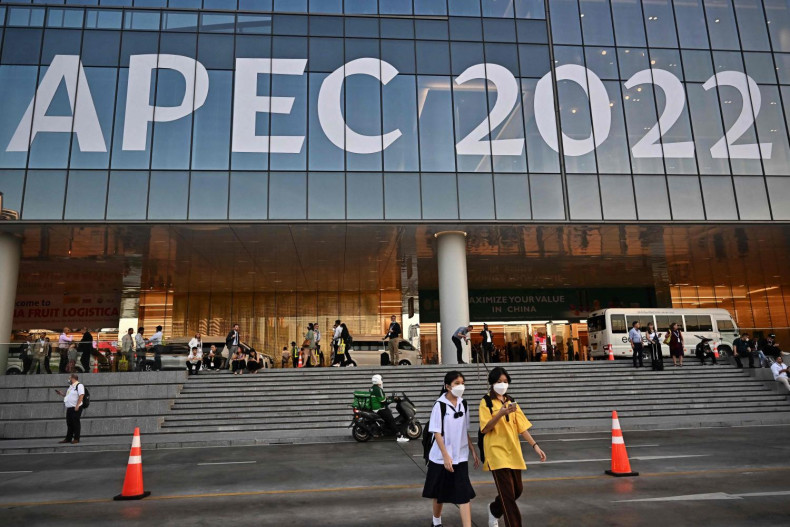
Oped, Thitinan Pongsudhirak, Published on 11/11/2022
» The upcoming leaders' meeting in Bangkok among the 21 member economies of the Asia-Pacific Economic Cooperation (Apec) should be seen in conjunction with its preceding Asean-related summits in the Cambodian capital of Phnom Penh and the G20 summit in Bali, the Indonesian island resort. This one-two-three combination in three Southeast Asian countries over a ten-day period is supposed to showcase Asean's central role in the promotion of peace, security and prosperity in the region and the wider world. But as Asean's summit season gets underway in Cambodia, excitement and promise have given way to anxieties and apprehensions. While these summit talks are an extraordinary opportunity to tone down geopolitical temperatures and geoeconomic competition, they are likely to yield mixed results.