



Showing 1 - 10 of 15
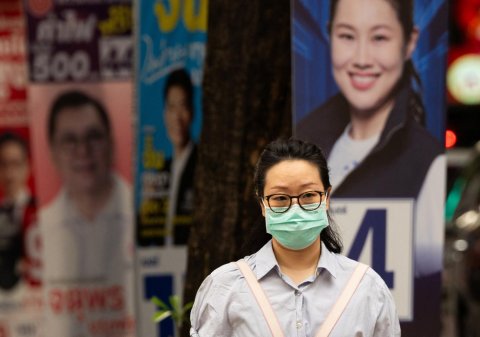
Will poll be breakout or more of same?
Oped, Thitinan Pongsudhirak, Published on 06/02/2026
» As Thais go to the polls this Sunday, the most consequential question is whether Thailand will finally break out of its debilitating cycle of political instability and economic underperformance that has marked the past two decades. The signs and signals suggest otherwise -- at least not yet.
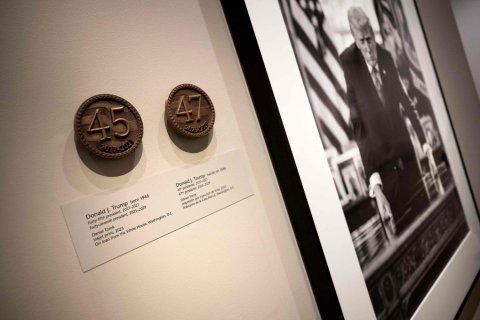
Trump's 'America First' in overdrive
News, Thitinan Pongsudhirak, Published on 23/01/2026
» President Donald Trump's extraterritorial capture of Venezuelan President Nicolas Maduro and his wife on cocaine-trafficking and terrorism-related charges earlier this month and repeated demand to take over Greenland at the World Economic Forum this week are part and parcel of a belligerent and transformative "America First" paradigm that dates back at least four decades.
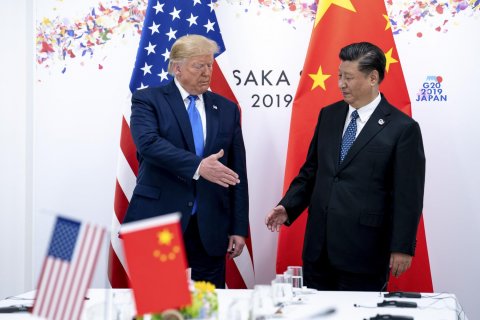
Southeast Asia amid the US-China rift
Oped, Thitinan Pongsudhirak, Published on 03/10/2025
» The rivalry between the United States and China has become the defining contest of the 21st century. Barely two decades ago, Washington and Beijing were partners in prosperity. America's support for China's entry into the World Trade Organization in 2001 epitomised the high-water mark of engagement, reflecting the belief that economic integration would lead to greater political cooperation. Today, that partnership has morphed into suspicion and confrontation. Relations between the United States and China have deteriorated so swiftly that many observers now describe them as locked in a "new Cold War". The more pressing question, however, is not whether this analogy holds, but whether confrontation can be managed short of outright conflict.
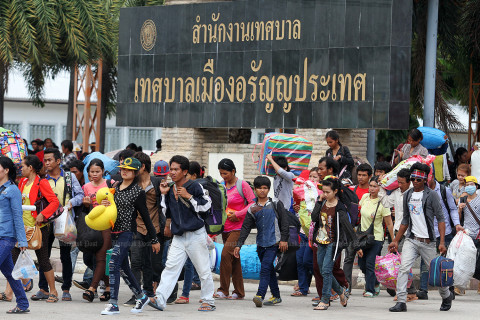
Thailand needs a geostrategic rebalance
Oped, Thitinan Pongsudhirak, Published on 06/06/2025
» With two military coups and multiple judicial interventions that combined to subvert election results and weaken democratic institutions over the past two decades, it is unsurprising that Thailand's geostrategic position has leaned increasingly towards China. Naturally, the more Thailand becomes autocratic, the more it will be estranged from established democracies in Europe and North America, as well as Japan and South Korea, with nowhere to turn but to Beijing. But this China orientation is a geostrategic mistake at this time. Thailand should correct its course until clearer signs emerge as to which side of the superpower struggle will come out on top.

Remembering a Southeast Asianist
Oped, Thitinan Pongsudhirak, Published on 26/07/2024
» It is not often these days to find scholars of Southeast Asia with exceptional breadth and depth, prescience, and commitment who stick to their creed until the end. In the pantheon of such rare scholars, Benedict O'Gorman Anderson, who died in 2015, would have led the way. James C Scott would be right beside him in a distinctly different fashion.

The tide of history shifts in Thai politics
Oped, Thitinan Pongsudhirak, Published on 02/06/2023
» Notwithstanding the ongoing political shenanigans by appointed agencies to shape final outcomes after the May 14 poll, Thailand already will never be the same again. The Move Forward Party's (MFP) victory as the largest winning side, with 151 out of 500 parliamentary seats, is profound but not unprecedented. Together with the Pheu Thai Party's 141 MPs, these two opposition parties are unwittingly sending a message to each other and to the broader political establishment that the curve of Thai history is shifting tectonically. Failing to grasp and adjust to this evolving tide of history could marginalise Pheu Thai and challenge the establishment to its core foundations.
Asean/SE Asia and the cycles of history
Oped, Thitinan Pongsudhirak, Published on 10/06/2022
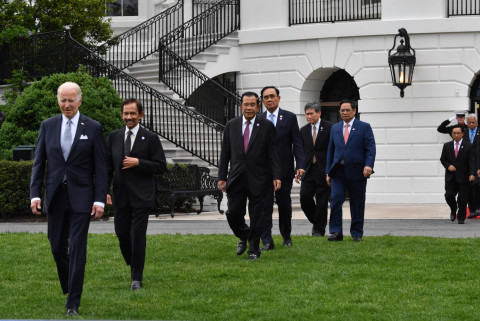
» The simmering geopolitical tensions between the United States and China and Russia's ongoing invasion of Ukraine have turned the tide of history back to its historical norm. It is easy to see the global stage today as full of tension, confrontation, and conflict in a recurrent fashion. But it is worth recalling that merely 30 years ago, the world was in a different phase where a lasting peace seemed viable.
The UK moves into a tougher new world
Oped, Thitinan Pongsudhirak, Published on 24/09/2021
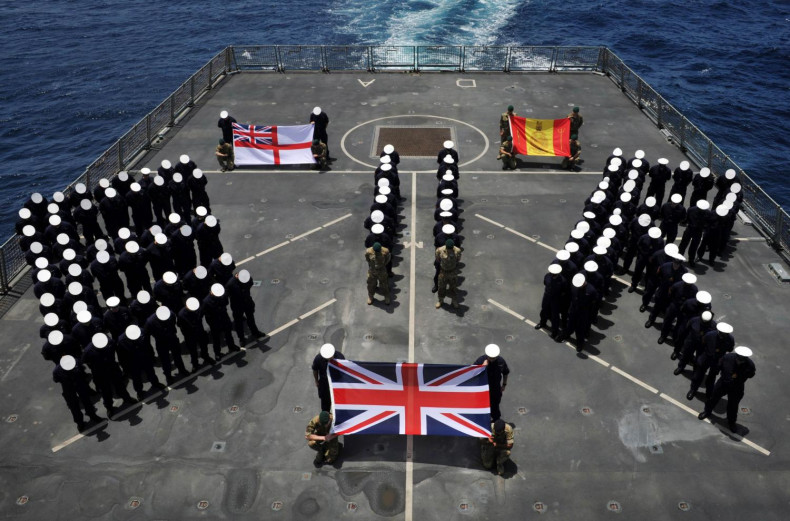
» The United Kingdom is on the move. From the "Brexit" referendum result more than five years ago to the recent launch of the Australia-United Kingdom-United States (Aukus) trilateral security partnership, it is unmistakeable that the post-World War II rules-based liberal international order is coming under increasing strain. As the global order unravels, the UK is facing a brave new world that requires calling up its inner strength in ways not seen since its finest battle against tyranny and aggression some 80 years ago. And there are reasons to think the UK will do better than its critics and detractors suggest.

Thailand's holding pattern till next poll
Oped, Thitinan Pongsudhirak, Published on 10/09/2021
» Thailand's recent no-confidence debate in parliament started with a bang and ended with a whimper. Prime Minister Prayut Chan-o-cha and five other cabinet members who were grilled by opposition MPs for pandemic mishandling, budget irregularities and overall mismanagement and incompetence sailed through the parliamentary vote based on the coalition government's strength in MP numbers rather than the merits of its governance.
Thailand's prospects and risks in 2020s
News, Thitinan Pongsudhirak, Published on 31/01/2020
» Notwithstanding recent worldwide celebrations to mark the arrival of 2020, Thailand should be seen as having entered not just a new year but a new decade. Since World War II, Thailand's journey over the ensuing decades meandered through ebbs and flows, overcoming critical bumps and barriers along the way. When 2030 arrives, this country of 70 million predominantly happy-go-lucky people will have faced a prolonged reckoning. While its near-term prospects are likely to worsen, Thailand's long-term future will be either better compared to the past two decades or bad for the long term.