



Showing 1 - 10 of 11
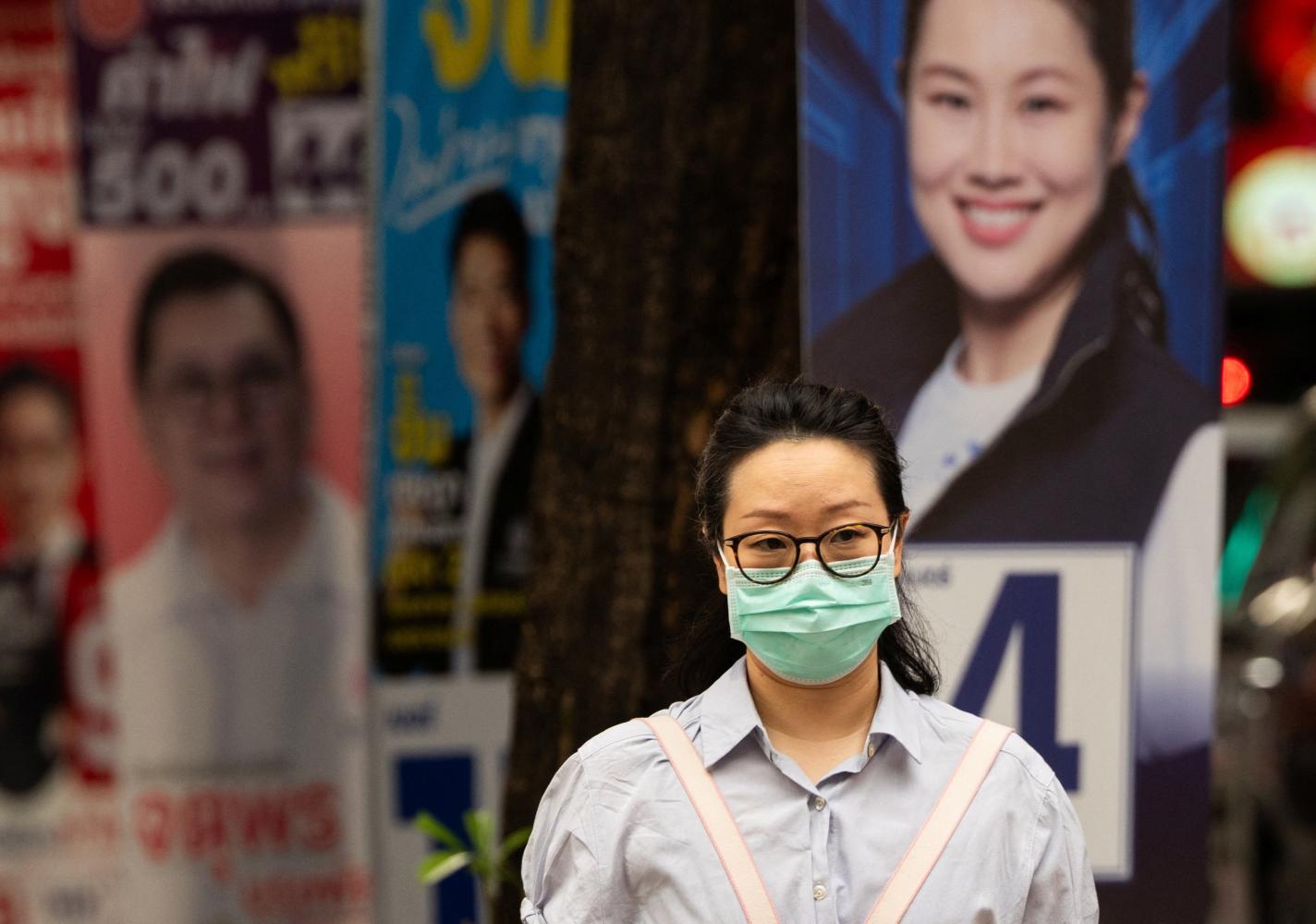
Will poll be breakout or more of same?
Oped, Thitinan Pongsudhirak, Published on 06/02/2026
» As Thais go to the polls this Sunday, the most consequential question is whether Thailand will finally break out of its debilitating cycle of political instability and economic underperformance that has marked the past two decades. The signs and signals suggest otherwise -- at least not yet.

Thai foreign policy needs new rudder
Oped, Thitinan Pongsudhirak, Published on 27/09/2024
» Thailand's foreign policy posture and projection under Foreign Minister Maris Sangiampongsa and the new government of Prime Minister Paetongtarn Shinawatra is off to a good start under severe structural constraints. Given the widespread consensus both at home and abroad that Thailand has fallen behind its peers over the past two decades, the imperative of regaining its international standing is undisputed. But doing so under what the foreign minister has outlined as a "neutral stance" under "non-alignment" among the great powers is moot and misguided. What Thai foreign policy needs is multi-alignments and omni-directionality under a new rudder.

Thai politics has turned upside down
Oped, Thitinan Pongsudhirak, Published on 23/08/2024
» The rise of Prime Minister Paetongtarn Shinawatra and the return -- and re-entry, of her father, Thaksin Shinawatra, have turned Thai politics upside down. On the surface, Mr Thaksin still dominates Thai politics nearly 20 years after he was deposed by a military coup and exiled for most of that period. This time, his political power and influence are being exercised through his daughter Ms Paetongtarn. As the Shinawatra clan has been coopted by its former establishment adversaries, the past two decades of periodic elections, street protests, two military coups, two constitutions, and multiple judicial bans on political parties and elected politicians have entered a new chapter.

The Thaksin factor in Thai politics
Oped, Thitinan Pongsudhirak, Published on 15/03/2024
» Thai politics in the near term will likely be dominated by the fate of the two largest vote winners from the general election in May 2023, the Move Forward (MFP) and Pheu Thai parties. While the MFP is at risk of another dissolution, the same as its predecessor Future Forward Party suffered in 2020, Pheu Thai's political future appears to hinge on Thaksin Shinawatra and his return from exile in what is believed to be a deal that follows the assumption of the premiership under Srettha Thavisin, and for Thaksin, a royal pardon and early release on parole.

Rail deals must have accountability
News, Thitinan Pongsudhirak, Published on 03/05/2019
» Prime Minister Prayut Chan-o-cha's recent participation in the second Belt and Road Forum (BRF) in Beijing was problematic on many levels. On what basis did Gen Prayut negotiate a rail deal between Thailand and China? What are the details and cost-benefit considerations of this deal? The lack of transparency and public accountability surrounding the Thailand and China rail plan is likely to pose future questions and problems for a huge infrastructure project Thailand can use, but according to whose terms its people must be the main beneficiary.

An ex-cop who has no fear of the generals
News, Thitinan Pongsudhirak, Published on 14/12/2018
» Over the past four and a half years of military government, the Thai people have been physically cowed. Sure, there are many, possibly a silent majority, who may be waiting for the poll to have their say in opposition to the military junta that seized power in May 2014, led by then-army chief Gen Prayut Chan-o-cha, the incumbent prime minister. But few have been able and willing to stand up and stare down the ruling generals who routinely resort to intimidation and coercion, armed with guns and the law, which they sometimes interpret as they see fit. Just about everyone in Thailand is physically afraid of the junta in one way or another. Otherwise, there would have been more anti-junta demonstrations in public view.
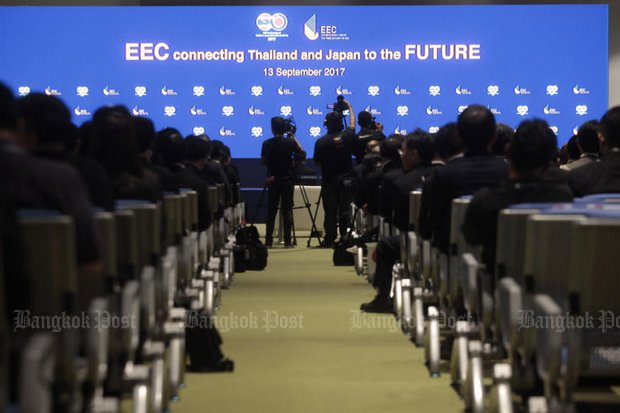
Eastern Economic Corridor must continue
News, Thitinan Pongsudhirak, Published on 07/12/2018
» As the election looms, the government of Prime Minister Prayut Chan-o-cha will likely leave behind a very mixed legacy. Far from being a clean-up crew against graft and a technocratic team for effective policy performance when it seized power more than four years ago, this outgoing government has had its fair share of unaccountable corruption allegations and policy directions that merely served its own vested interests of staying in power after the polls.

China's Belt & Road needs to listen more
News, Thitinan Pongsudhirak, Published on 30/11/2018
» In the aftermath of a tense Asean-led summit season, it is clear now that the United States and China are engaged in a great-power competition not seen since the Cold War. The US-China trade war, irrespective of negotiated talks in Buenos Aires between President Donald Trump and President Xi Jinping, is set to deteriorate over the next two years and probably longer. The two superpowers may have fundamental and structural differences that cannot be resolved without a sweeping deal that realigns their geopolitical status and geoeconomic interests in a way that is acceptable to both, an unlikely prospect. So the confrontation will likely intensify.

China's Belt & Road impact on Thailand
News, Thitinan Pongsudhirak, Published on 28/09/2018
» As China's ambitious Silk Road Economic Belt (SREB) and Maritime Silk Road (MSR) -- popularly known as the Belt and Road Initiative, or BRI -- continues to make ripples and waves in international affairs, its likely impact on mainland Southeast Asia warrants attention. Unlike many of the countries on the Eurasian landmass and along waterways from the South China Sea through the Indian Ocean to eastern Africa, Thailand and its immediate neighbours are not directly on the BRI path.

Can technology transform patronage politics?
News, Thitinan Pongsudhirak, Published on 30/03/2018
» By the time it takes place after evident foot-dragging by relevant authorities, the next election in Thailand will be unlike its precursors. There will be new parties with new policy ideas, new vote-gathering technologies and first-time voters who came of age during Thailand's political tension and polarisation more or less over the past two decades. At issue during the next poll is whether and to what extent Thailand's entrenched and endemic patronage-driven and vote-buying political system has really changed. The evidence is mixed but it is plausible that a new kind of politics will emerge not directly in the next poll but in the 2020s.