



Showing 1 - 9 of 9
Trump's 'America First' in overdrive
News, Thitinan Pongsudhirak, Published on 23/01/2026
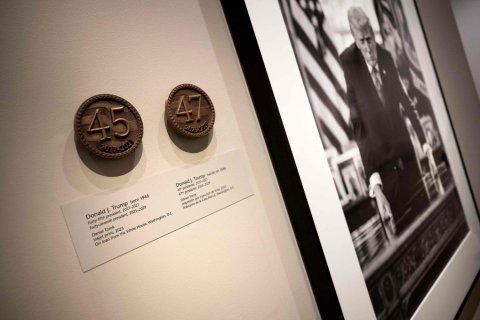
» President Donald Trump's extraterritorial capture of Venezuelan President Nicolas Maduro and his wife on cocaine-trafficking and terrorism-related charges earlier this month and repeated demand to take over Greenland at the World Economic Forum this week are part and parcel of a belligerent and transformative "America First" paradigm that dates back at least four decades.
Two wasted decades in Thai politics
Oped, Thitinan Pongsudhirak, Published on 20/12/2024
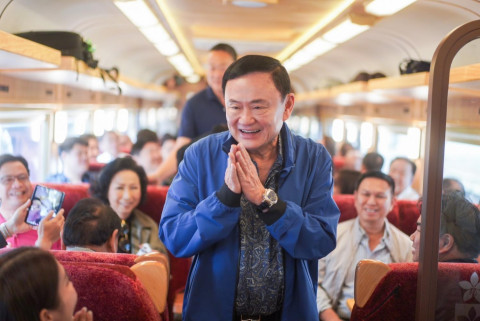
» Now that Thaksin Shinawatra appears actively back in Thai politics, it is demoralising to look back at Thailand's wasted time and opportunities. Once a promising country on the way from democratic transition to consolidation in the late 1990s, Thailand has become semi-autocratic, and its rocky political trajectory over the past two decades is now structural. The traditional institutions of power that grew out of the Cold War have been calling the shots in earlier decades and are just unwilling to let the country move forward in the immediate years ahead.

Srettha Thavisin fell to hidden forces
News, Thitinan Pongsudhirak, Published on 30/08/2024
» Hindsight is likely to place Srettha Thavisin in Thai political annals as a prime minister who tried his best but ultimately succumbed to forces way beyond his control. While his nearly 12-month tenure in office came up short on policy deliverables, it nevertheless reset Thailand's foreign policy projection on Myanmar amid more omnidirectional relations with the major powers.

Thai politics has turned upside down
Oped, Thitinan Pongsudhirak, Published on 23/08/2024
» The rise of Prime Minister Paetongtarn Shinawatra and the return -- and re-entry, of her father, Thaksin Shinawatra, have turned Thai politics upside down. On the surface, Mr Thaksin still dominates Thai politics nearly 20 years after he was deposed by a military coup and exiled for most of that period. This time, his political power and influence are being exercised through his daughter Ms Paetongtarn. As the Shinawatra clan has been coopted by its former establishment adversaries, the past two decades of periodic elections, street protests, two military coups, two constitutions, and multiple judicial bans on political parties and elected politicians have entered a new chapter.
The Thaksin factor in Thai politics
Oped, Thitinan Pongsudhirak, Published on 15/03/2024
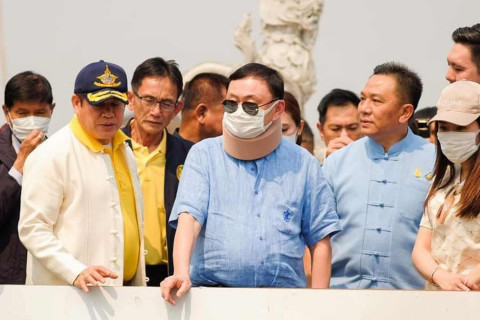
» Thai politics in the near term will likely be dominated by the fate of the two largest vote winners from the general election in May 2023, the Move Forward (MFP) and Pheu Thai parties. While the MFP is at risk of another dissolution, the same as its predecessor Future Forward Party suffered in 2020, Pheu Thai's political future appears to hinge on Thaksin Shinawatra and his return from exile in what is believed to be a deal that follows the assumption of the premiership under Srettha Thavisin, and for Thaksin, a royal pardon and early release on parole.

Digital wallet should be implemented
Oped, Thitinan Pongsudhirak, Published on 16/02/2024
» The big debate in Thailand's current economic policy planning is whether the economy is facing a crisis or not. The government of Prime Minister Srettha Thavisin, who doubles as finance minister, has contended that there is an economic crisis in dire need of both monetary policy loosening and fiscal stimulus, particularly the 500-billion-baht digital wallet scheme. The Bank of Thailand, supported by a clique of economists apparently critical of the government's "populist" policy measures, asserts otherwise that an economic recovery is in progress without the need to lower the benchmark repurchase rate.
What the 'Pimrypie' sensation foretells
Oped, Thitinan Pongsudhirak, Published on 22/01/2021
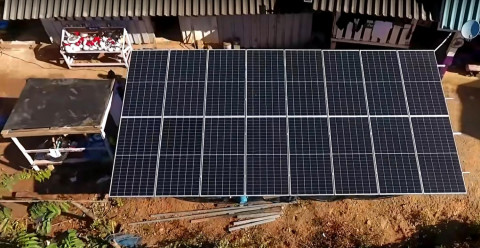
» While it became a storm in a teacup, the recent phenomenon involving YouTuber and online retailer Pimradaporn "Pimrypie" Benjawattanapat yields longer-term implications and meanings. Pimrypie's charity drive for Children's Day that provided solar panels and electricity to underprivileged kids in a far-flung village of Omkoi district 300 kilometres from Chiang Mai spoke volumes about the structure and shortcomings of Thailand's paternalist state and what needs to be done to tackle it.
China's Belt & Road needs to listen more
News, Thitinan Pongsudhirak, Published on 30/11/2018
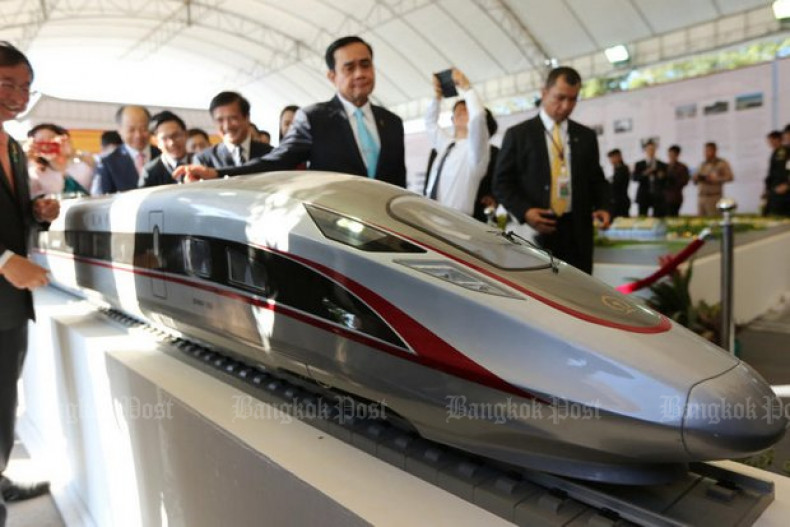
» In the aftermath of a tense Asean-led summit season, it is clear now that the United States and China are engaged in a great-power competition not seen since the Cold War. The US-China trade war, irrespective of negotiated talks in Buenos Aires between President Donald Trump and President Xi Jinping, is set to deteriorate over the next two years and probably longer. The two superpowers may have fundamental and structural differences that cannot be resolved without a sweeping deal that realigns their geopolitical status and geoeconomic interests in a way that is acceptable to both, an unlikely prospect. So the confrontation will likely intensify.
China's Belt & Road impact on Thailand
News, Thitinan Pongsudhirak, Published on 28/09/2018
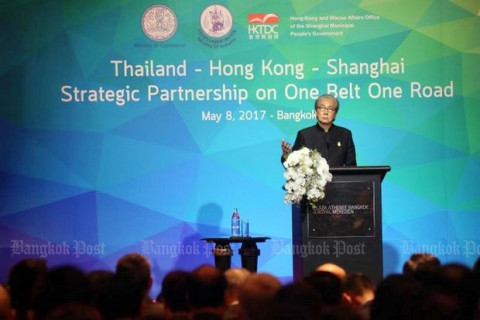
» As China's ambitious Silk Road Economic Belt (SREB) and Maritime Silk Road (MSR) -- popularly known as the Belt and Road Initiative, or BRI -- continues to make ripples and waves in international affairs, its likely impact on mainland Southeast Asia warrants attention. Unlike many of the countries on the Eurasian landmass and along waterways from the South China Sea through the Indian Ocean to eastern Africa, Thailand and its immediate neighbours are not directly on the BRI path.