



Showing 1 - 10 of 52
Thailand's political trajectory in 2026
Oped, Thitinan Pongsudhirak, Published on 09/01/2026
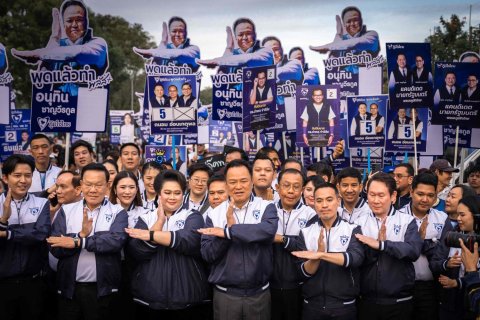
» What happens in Thai politics this year and the immediate horizon will be determined by the upcoming election on Feb 8. While contesting political parties are in full campaign mode, the contemporary history of Thai polls so far in the 21st century is not encouraging. Only once in the past 25 years have voting results went the way they were meant to, in accordance with the popular will. Whether the vote in four weeks will follow the same pattern will depend on whether the conservative establishment gets its preferred outcome.

What's happened to the Asian Century?
Oped, Thitinan Pongsudhirak, Published on 14/02/2025
» Until recently, the "Asian Century" seemed a compelling narrative but now it is not what it used to be. It was supposed to herald a shift in global economic power from the West to the East, driven by China's rapid rise, India's economic dynamism, and the broader development of Asia. But a quarter of the way into the 21st century, the promise of Asian dominance appears less certain. The enduring technological and economic might of the United States, coupled with its geopolitical backlash against China, has lowered expectations. While Asia remains formidable, the trajectory of global power is open and fluid, with potential dominance shifting not necessarily to any nation or region but perhaps to a non-state entity.
Two wasted decades in Thai politics
Oped, Thitinan Pongsudhirak, Published on 20/12/2024
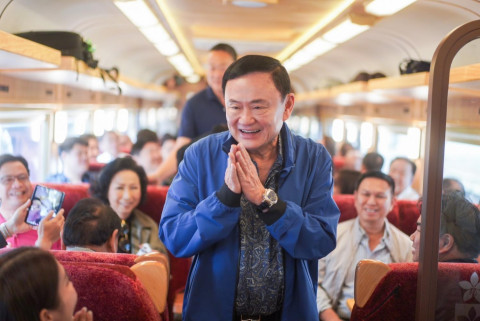
» Now that Thaksin Shinawatra appears actively back in Thai politics, it is demoralising to look back at Thailand's wasted time and opportunities. Once a promising country on the way from democratic transition to consolidation in the late 1990s, Thailand has become semi-autocratic, and its rocky political trajectory over the past two decades is now structural. The traditional institutions of power that grew out of the Cold War have been calling the shots in earlier decades and are just unwilling to let the country move forward in the immediate years ahead.

A backdrop to Trump's stunning win
Oped, Thitinan Pongsudhirak, Published on 08/11/2024
» Analysts often face the tough task of assessing an outcome the way it is rather than how they would like it to be. Nowhere is this challenge more daunting than analysing the stunning election results in the United States this week. Against the odds, former President Donald J Trump of the Republican Party has resoundingly won a second term over Vice President Kamala D Harris of the Democratic Party both in the popular vote and the Electoral College. The Republican Party also captured the Senate and the House of Representatives. While the implications for Thailand and the rest of Southeast Asia are wide-ranging and far-reaching, it is first and foremost necessary to understand the nature of the Trump victory.

Thailand needs middle power ambition
Oped, Thitinan Pongsudhirak, Published on 18/10/2024
» Having participated in the recent Asean-related summit meetings in Vientiane, Prime Minister Paetongtarn Shinawatra and her team must now work out Thailand's foreign policy priorities and posture. Foreign policy projection peaked around 20 years ago when Thailand was recognised as an emerging regional leader with the potential of a middle power. Since then, foreign policy has been patchy and hostage to polarisation and domestic political volatility. It is time to chart a way forward for Thailand's international standing and role despite ongoing political conflict at home.

Thai politics has turned upside down
Oped, Thitinan Pongsudhirak, Published on 23/08/2024
» The rise of Prime Minister Paetongtarn Shinawatra and the return -- and re-entry, of her father, Thaksin Shinawatra, have turned Thai politics upside down. On the surface, Mr Thaksin still dominates Thai politics nearly 20 years after he was deposed by a military coup and exiled for most of that period. This time, his political power and influence are being exercised through his daughter Ms Paetongtarn. As the Shinawatra clan has been coopted by its former establishment adversaries, the past two decades of periodic elections, street protests, two military coups, two constitutions, and multiple judicial bans on political parties and elected politicians have entered a new chapter.

Move Forward case reveals autocracy
Oped, Thitinan Pongsudhirak, Published on 07/06/2024
» The Constitutional Court's announcement that it will consider the Move Forward Party's (MFP) written defence in its dissolution case on June 12 appears ominous. After several attempts to make its argument that a campaign pledge to amend the lese majeste law against royal insult is not tantamount to "overthrowing Thailand's democratic regime with the King as head of state", the party's time is up. As the biggest election winner in May 2023, the MFP's dissolution is perceived as a foregone conclusion. Such a revelation might risk Thailand being perceived as an autocratic regime based on legal manoeuvres, and power plays that do not derive from voter preferences.

Thailand between the US and China
Oped, Thitinan Pongsudhirak, Published on 29/03/2024
» Amid what now has to be acknowledged as a direct non-military conflict and a geoeconomic war of sorts between the United States and China, Thailand is in a quandary. While characterising Thailand's geostrategic dilemma as a US-China binary can be exaggerated and misleading, it does have a point. As with many other developing countries in the region, Thailand will come under increasing pressure to choose between the two competing superpowers. The ability not to choose thus becomes an overarching geostrategic objective.
The Thaksin factor in Thai politics
Oped, Thitinan Pongsudhirak, Published on 15/03/2024
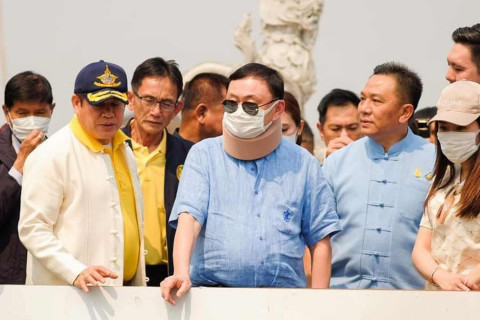
» Thai politics in the near term will likely be dominated by the fate of the two largest vote winners from the general election in May 2023, the Move Forward (MFP) and Pheu Thai parties. While the MFP is at risk of another dissolution, the same as its predecessor Future Forward Party suffered in 2020, Pheu Thai's political future appears to hinge on Thaksin Shinawatra and his return from exile in what is believed to be a deal that follows the assumption of the premiership under Srettha Thavisin, and for Thaksin, a royal pardon and early release on parole.
Thailand's central bank dependence
Oped, Thitinan Pongsudhirak, Published on 23/02/2024
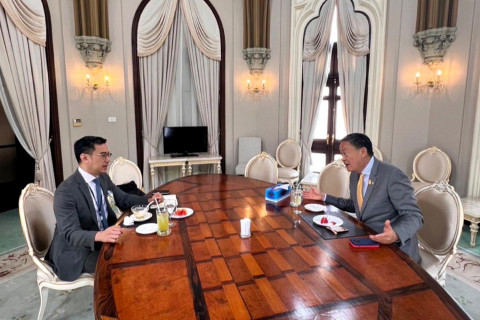
» To proponents of central bank independence, the ongoing friction between Prime Minister and Finance Minister Srettha Thavisin and Bank of Thailand Governor Sethaput Suthiwartnarueput appears straightforward. The prime minister is putting unwarranted and unfair pressure on the central bank governor to spur the economy by loosening monetary policy and cutting interest rates. Yet, on closer scrutiny, the entrenched politicisation of central banking in Thailand may suggest otherwise. There is more than meets the eye in the politics of interest rate cuts.