



Showing 1 - 10 of 47
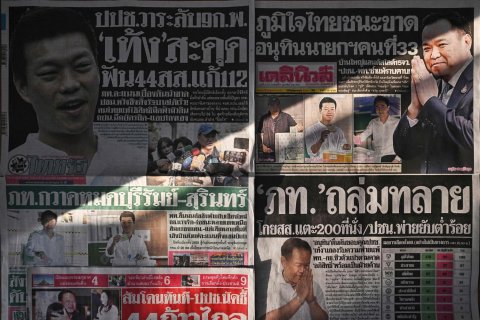
Implications of conservative triumph
Oped, Thitinan Pongsudhirak, Published on 13/02/2026
» The incumbent and conservative Bhumjaithai (BJT) Party has surprisingly swept Thailand's Feb 8 election with a commanding win. With the previously poll-leading and progressive People's Party (PP) coming in a distant second, Thailand appears headed for a conservative coalition government revolving around BJT and like-minded junior partners. Known for its conservative stance and being pro-status quo, it would not be surprising if the BJT-led coalition government, led by Prime Minister-elect Anutin Charnvirakul, were not challenged by the Constitutional Court, the Election Commission, and other supervisory agencies, which have derailed and dissolved reform-minded winning parties in the past.
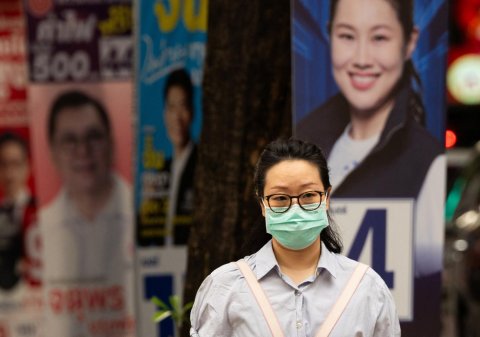
Will poll be breakout or more of same?
Oped, Thitinan Pongsudhirak, Published on 06/02/2026
» As Thais go to the polls this Sunday, the most consequential question is whether Thailand will finally break out of its debilitating cycle of political instability and economic underperformance that has marked the past two decades. The signs and signals suggest otherwise -- at least not yet.
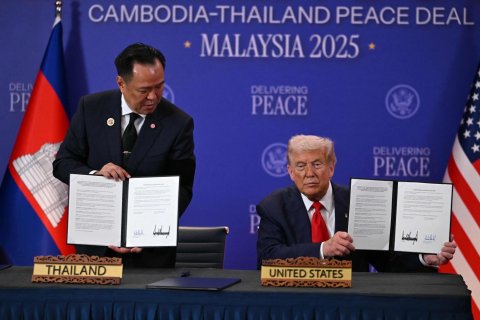
Digesting Trump's trip through Asia
Oped, Thitinan Pongsudhirak, Published on 07/11/2025
» Storming through Asia last week, US President Donald Trump's first stop in Kuala Lumpur on Oct 26, before moving on to Japan and South Korea over the next four days, capped by his meeting with Chinese President Xi Jinping before returning to Washington, was the most consequential for Southeast Asian economies.
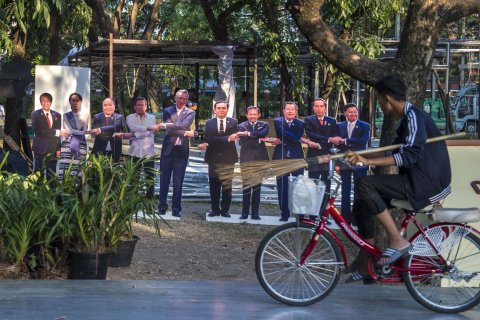
Asean's regroup requires deep reforms
Oped, Thitinan Pongsudhirak, Published on 17/10/2025
» If Asean's 58 years thus far have been about resilience and playing a central organising role in promoting regional security and stability, its next decade will determine whether the Southeast Asian bloc can adapt and remain relevant. After the crises in Myanmar and along the Thai-Cambodian border, Asean's credibility has never been more in doubt. To regain its effectiveness as Southeast Asia's one and only agency, Asean needs to move away from the ritualistic diplomacy of mundane meetings to far-reaching reforms that chart new ways of making things work.

Singapore turns 60 with much to show
Oped, Thitinan Pongsudhirak, Published on 08/08/2025
» No country turns 60 like Singapore. In a neighbourhood of political dynasties and varying shades of autocracies and flawed democracies, the little island state of six million got lucky with its strongman rule. When he died in 2015, Singapore's patriarchal founder Lee Kuan Yew left a great country behind. This weekend, Singaporeans can take stock of what's gone by and rightly celebrate its milestone with much to show for.

Srettha Thavisin fell to hidden forces
News, Thitinan Pongsudhirak, Published on 30/08/2024
» Hindsight is likely to place Srettha Thavisin in Thai political annals as a prime minister who tried his best but ultimately succumbed to forces way beyond his control. While his nearly 12-month tenure in office came up short on policy deliverables, it nevertheless reset Thailand's foreign policy projection on Myanmar amid more omnidirectional relations with the major powers.
Thailand's spreading rot of irregularity
Oped, Thitinan Pongsudhirak, Published on 19/07/2024
» The rot in Thailand's institutional makeup has become so deep, dense and widespread that it can be found nearly everywhere there is controversy. Newly elected Senator Keskamol Pleansamai is the latest case in point. Just about everything that comes with her meteoric rise to the Senate spurs accusations of irregularity and impropriety.
Thailand's judiciary faces challenges
Oped, Thitinan Pongsudhirak, Published on 24/05/2024
» Thailand appears to be a country of 70 million, ultimately ruled by an unelected few. This sobering reality was on display when two connected groups of top generals seized power from democratically elected governments in September 2006 and May 2014. Unlike these blatant military coups over the past two decades, at issue now is the power and role of the judiciary. While Thailand has another democratically elected civilian government under Prime Minister Srettha Thavisin, the question that needs to be asked is whether the country is effectively under judicial rule.
Tolerating populism for democracy
Oped, Thitinan Pongsudhirak, Published on 13/10/2023
» The so-called “super deal” in August that resulted in the return of Thaksin Shinawatra and the formation of the Pheu Thai Party-led coalition government under Srettha Thavisin evidently has its limitations. It appears to be rejected by sections of the conservative old guard who still wants to resort to extra-parliamentary ways and means to undermine Thailand’s delicate parliamentary democracy. Reminiscent of past protests against Mr Thaksin’s brand of populism, a new round of extra-parliamentary political movement has begun in earnest with the petition launched by 99 prominent economists, including former central bank governors, against the Srettha government’s 10,000-baht digital wallet policy.

Thai elections without democracy
Oped, Thitinan Pongsudhirak, Published on 14/07/2023
» Although it may come across as dramatic and unprecedented, Move Forward Party (MFP) leader Pita Limjaroenrat’s ordeal in trying to take office as prime minister after winning the May 14 election is par for the course in Thai politics over the past two decades.