



Showing 1 - 8 of 8
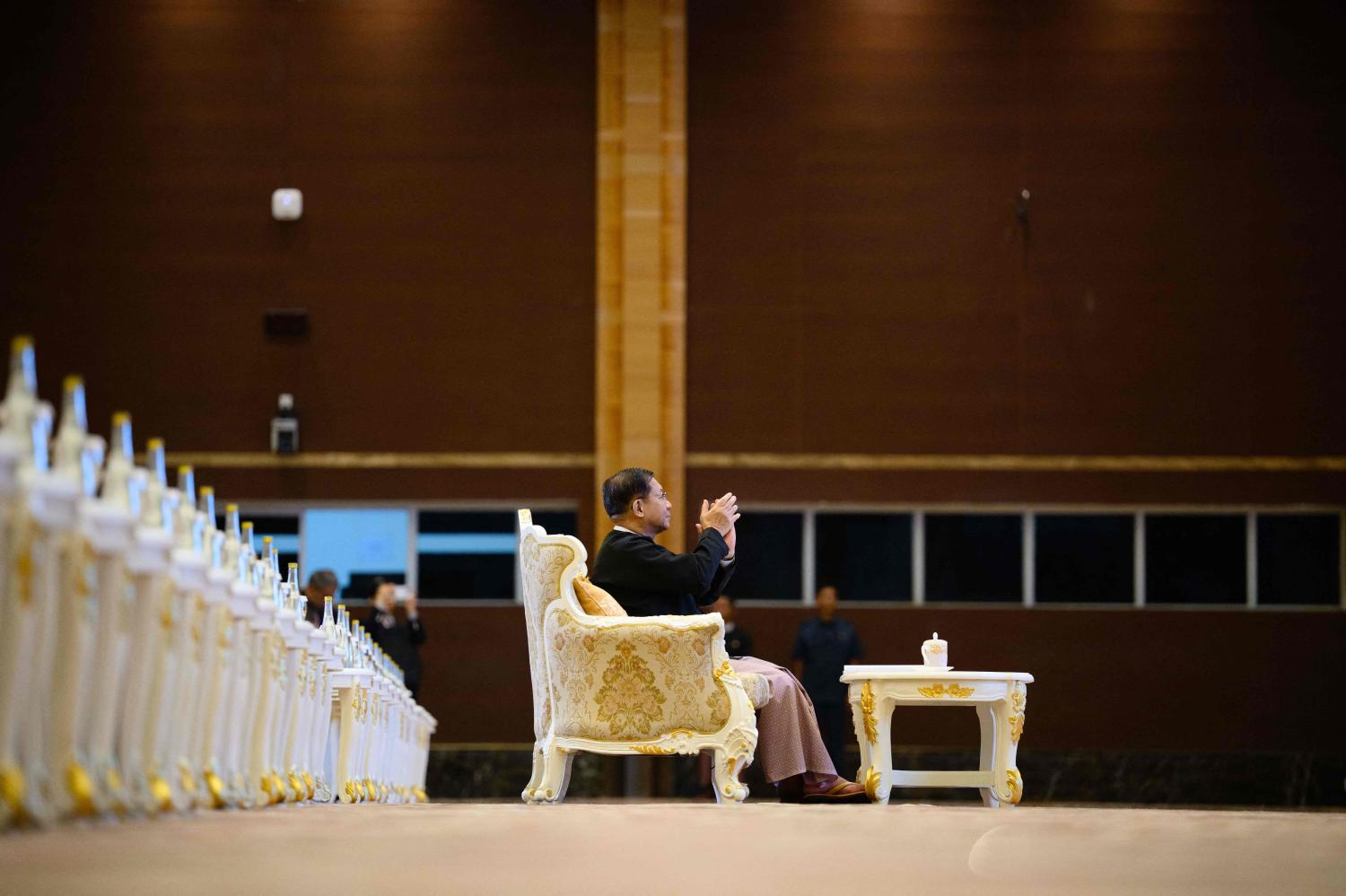
Myanmar's robbery of a democracy
Oped, Thitinan Pongsudhirak, Published on 24/04/2026
» Five long years after Myanmar's military seized power on 1 Feb 2021, what has taken place in recent weeks amounts to a delayed fait accompli. Led by Senior General Min Aung Hlaing, then commander-in-chief of the armed forces, the coup diverged from its traditional playbook seen in 1962 and 1988, when tanks rolled and the military ruled by brute force. This time, the takeover nearly unravelled amid a nationwide uprising that evolved into a civil war, waged by an armed and determined resistance comprising the civilian-led National Unity Government (NUG), the People's Defence Forces (PDFs), and a constellation of Ethnic Armed Organisations (EAOs).

Thai politics back at the brink (again)
Oped, Thitinan Pongsudhirak, Published on 04/07/2025
» The Constitutional Court's suspension of Paetongtarn Shinawatra from the premiership is déjà vu, exposing a pattern of systematic manipulation and concoction of political outcomes. After so many dissolutions of leading political parties and repeated bans of elected representatives over two decades, it is time to call a spade a spade. Thailand is a faux democracy. Its core foundations constitute an autocratic regime that does not really care about the country's future and the collective will of its people.
Thai politics' murky tunnel to nowhere
Oped, Thitinan Pongsudhirak, Published on 07/01/2022
» Starting out a new year should engender a sense of hope and optimism that tomorrow can be better than yesterday. But the reality in Thailand suggests otherwise. A sense of prolonged malaise and discontent pervades the scene, where politics will likely prove murky with an economy persistently in the doldrums, underpinned by continuing societal divisions and broad-based unhappiness. Unless drastic changes and reforms take place very soon, this year is likely to further solidify the onset of a decade of decay and stagnation.

Give Asean seat to Myanmar opposition
Oped, Thitinan Pongsudhirak, Published on 22/10/2021
» Nearly nine months after its forceful takeover of the country from a legitimately elected civilian government, Myanmar's military has shown that it is one thing to seize power but an entirely different reality to consolidate and impose control.

Who's culpable for Myanmar's coup?
Oped, Thitinan Pongsudhirak, Published on 12/02/2021
» When Myanmar's armed forces, known as the Tatmadaw, staged a military coup on Feb 1, reactions inside the country and outside were noticeably different. As the coup effectively disenfranchised millions of voters who chose hitherto State Counsellor Aung San Suu Kyi and her National League for Democracy (NLD) party in a landslide victory on Nov 8, public anger inside the country was immediate and conspicuous just as Myanmar's newly elected parliament was about to convene. Many outside observers, however, were more guarded and hedged, portraying the cause of the coup as more qualified and nuanced. How the coup came about has become a bone of contention that will have much to say about the post-coup dynamics and outcomes.

New cabinet puts power grab on display
News, Thitinan Pongsudhirak, Published on 12/07/2019
» As if to remind the Thai public of what the past five years of military-authoritarian rule has been all about, the first post-election cabinet under Prime Minister Prayut Chan-o-cha now represents the full manifestation of what was no less than a power grab.

Asean summit season ends with more risks
News, Thitinan Pongsudhirak, Published on 23/11/2018
» The prominence and utility of Asean as a regional platform for peace and prosperity is demonstrated most vividly in a series of top-level meetings among its leaders and counterparts from other major powers, particularly the United States, China and Japan, among others. That Asean's summit season this year has ended with a whimper and acrimony bodes ill for what lies ahead. As the Asean Chair in 2019, Thailand should feel more pressed and incentivised to get its house in order with an elected government that can function effectively before major Asean meetings get under way next year.

The annals of Thailand's military dictators
News, Thitinan Pongsudhirak, Published on 12/10/2018
» As Gen Prayut Chan-o-cha eyes longer-term power beyond the next election, his eventual legacy will be compared to other military leaders who have come and gone as heads of past Thai governments. Had he left office or stepped down to run for it earlier, Gen Prayut might be in a better place. As things stand, his tenure and subsequent exit from the political scene does not appear promising for how he will be seen in hindsight.