



Showing 1 - 10 of 16

Eating the way it used to be
B Magazine, Suthon Sukphisit, Published on 14/07/2019
» Bangkok is full of places where you can go to eat. There are food streets where diners can select dishes and varieties to suit their preferences. People can have meals at food centres in supermarkets or at restaurants in department stores or shopping malls. Besides that, they can dine at stand-alone food shops and eateries located on every corner of the city. There are no limitations at all when it comes to food and dining in Bangkok.
An acquired taste
B Magazine, Suthon Sukphisit, Published on 09/06/2019
» Pla ra (fermented fish) is a big part of Thai cuisine. Thais, like Mon, Cambodians and Vietnamese, have a long tradition of eating fermented fish. In Isan, people traditionally make their own pla ra. And when children there are old enough to eat solid food, the first thing their parents usually feed them is freshly-steamed glutinous rice dipped in pla ra.

Chilli's complicated history
B Magazine, Suthon Sukphisit, Published on 05/05/2019
» Thai food without chilli is not Thai food. Despite its significance in Thai cuisine, there are many questions that remain unanswered about chilli. How did chilli first arrive in Thailand? What kind of chilli was it? How many chilli species do we have now? Which one is most popular? Do Thai people consume the highest amount of chilli in the world? These are questions many people want to explore.

Let's hear it for glass noodles
B Magazine, Suthon Sukphisit, Published on 17/02/2019
» Glass noodles may be among the smaller varieties of noodle, but they have long been a big part of Thailand's culinary scene.
Taking 'Thai' out of Thai food
Suthon Sukphisit, Published on 13/01/2019
» Whenever you come across a Thai restaurant serving food that is not up to standard, chances are that you will never set foot there again. And that can happen. But the government cannot stand such a scenario because they believe it sabotages the country’s reputation.
Local wisdom
B Magazine, Suthon Sukphisit, Published on 23/12/2018
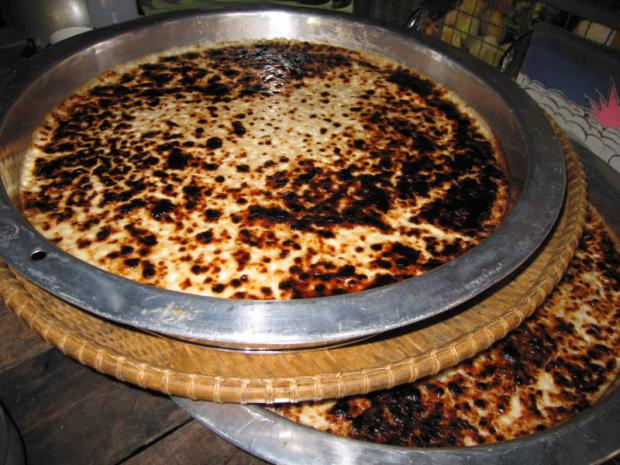
» Let's have a look at some regional food that is representative of different regions. Nasi dagang is a speciality in the three southernmost provinces of Pattani, Narathiwat and Yala. It consists of rice cooked in coconut milk, with salt, sugar, cumin, fenugreek, ginger and shallots. This type of rice is suitable for fish curry and chicken curry. In the past, it was typically reserved for important occasions, but now it's considered part of the regular cuisine.

The robe offering
B Magazine, Suthon Sukphisit, Published on 02/12/2018
» A combined festival of merit-making and dining takes place once a year. It's a festival most Buddhists wouldn't miss, the kathina ceremony.

Gone, but not yet forgotten
B Magazine, Suthon Sukphisit, Published on 14/10/2018
» Many aspects of the Central Region's cuisine have been lost over the years. Reasons include the death of older generations, a lack of "cultural handover" between old and young, and, for some dishes, complicated cooking methods that require a lot of effort put into grilling or stewing and for which many people nowadays simply lack time or motivation.

Old versus new
Life, Suthon Sukphisit, Published on 21/09/2018
» Culinary art keeps evolving. Nothing is the same when looking back 50 years, when the same kind of food was completely different from today. It is quite difficult to predict future food style. It would be possible that shrimp with spicy soup might add vermicelli or black bean. Or pad Thai might add red tilapia fish. Or soybean milk might replace coconut milk in green curry.

Get your spicy clogs on, dears
B Magazine, Suthon Sukphisit, Published on 05/08/2018
» Last week I wrote the story of one of the 12 boys and their coach from the Wild Boars football team who said he just wanted to eat some pad kaprao, the Thai basil stir-fried dish, after their Tham Luang cave ordeal between June 23 and July 10 in Chiang Rai's Mae Sai district.