



Showing 1 - 10 of 51
It's the economic history, stupid
Oped, Published on 14/01/2026
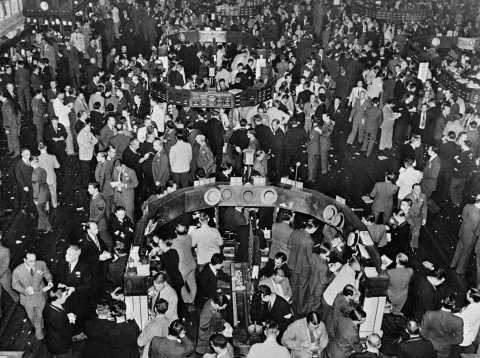
» Every year, I walk into a first-year lecture hall in Bilbao at the University of the Basque Country (EHU) and watch shoulders slump. The title of the course I'm teaching -- "Economic History" -- draws a similarly dejected reaction from my students: "Meh." "Boooring." "What's this even for?" Some call it "the history class", as if it belonged to another century.

Institutional redesign in order for economic change
News, Published on 30/12/2025
» The Nobel Prize in economics was awarded both this year and last year to scholars who, in different ways, emphasised the importance of institutions to economic growth.

The effects of unfinished momentum
News, Peerasit Kamnuansilpa, Published on 08/11/2025
» Why do some nations surge confidently into the future while others advance only in half-steps, not declining but not accelerating either? In their influential book Why Nations Fail (first published in 2012), Daron Acemoglu -- now a Nobel Prize economist -- and James Robinson, both economists and political scientists at the University of Chicago, offer a helpful lens for understanding Thailand's development path without casting blame or provoking division.

When societies rise, fall, and face catastrophe
News, Published on 11/10/2025
» When the United Nations emerged from the rubble of two world wars 80 years ago, it represented humanity's most ambitious attempt ever to turn catastrophe into cooperation. But while the scarred world of 1945 had hope following the Allied victory, that optimism has since curdled. The UN today is underfunded, risk-averse, and paralysed.

What's to blame for inequality?
Oped, Published on 01/09/2025
» Over a decade ago, Nobel laureates Daron Acemoglu and James A Robinson, together with their co-author Thierry Verdier, contrasted America's "cutthroat" brand of capitalism with Western Europe's "cuddly" version. The qualities that make cutthroat capitalism more conducive to innovation, they argued, also lead to higher levels of inequality, while cuddly reward structures tend to lead to lower growth and higher welfare. Today, inequality is soaring, notably in the United States. Do policies aimed at boosting innovation risk making a bad situation worse?
Two models for future autonomous agentic AIs
News, Published on 10/04/2025
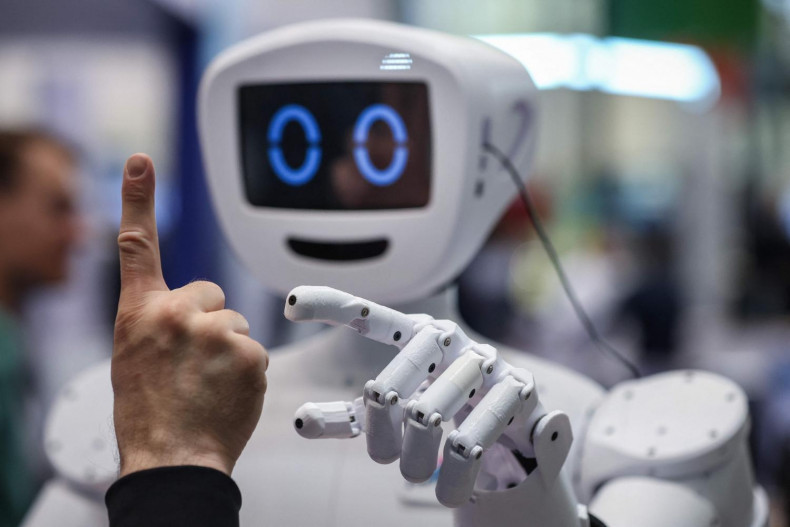
» AI "agents" are coming, whether we are ready or not. While there is much uncertainty about when AI models will be able to interact autonomously with digital platforms, other AI tools, and even humans, there can be little doubt that this development will be transformative -- for better or worse. Yet, despite all the commentary (and hype) around agentic AI, many big questions remain unaddressed, the biggest being which type of AI agent the tech industry is seeking to develop.
Building the next generation of public institutions
Oped, Geoff Mulgan, Published on 28/02/2025
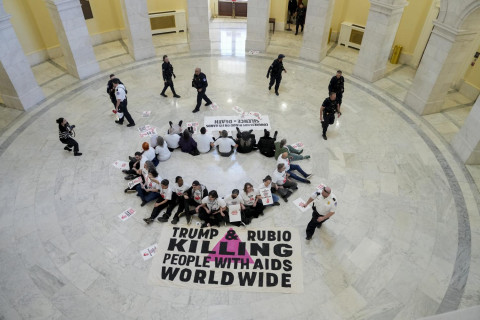
» Public institutions worldwide are in crisis. Trust in them is declining, and US President Donald Trump's administration, working hand in glove with the world's richest man, Elon Musk, view them as enemies that need to be dismantled. In the face of funding cuts and geopolitical fragmentation, multilateral organisations look weaker than ever.

Will we waste the AI opportunity?
Oped, Published on 25/02/2025
» I was fortunate to participate in the recent AI Action Summit in Paris, where many discussions emphasised the need to steer AI in a more socially beneficial direction.

Was DeepSeek-R1 release a Sputnik moment for AI?
News, Published on 07/02/2025
» After the release of DeepSeek-R1 on Jan 20 triggered a massive drop in chipmaker Nvidia's share price and sharp declines in various other tech companies' valuations, some declared this a "Sputnik moment" in the Sino-American race for supremacy in artificial intelligence. While America's AI industry arguably needed shaking up, the episode raises some difficult questions.
Are high-skill immigrants a problem?
News, Published on 13/01/2025
» Fissures within US president-elect Donald Trump's "Make America Great Again" (Maga) coalition have appeared sooner than expected. By the end of December, the tech-billionaire wing was in open warfare with Maga's nativist wing over America's H-1B visa programme, which enables US businesses to employ some 600,000 skilled foreigners per year on a temporary basis.