



Showing 1 - 10 of 10,000

Birding in Buri Ram
Life, Karnjana Karnjanatawe, Published on 18/03/2021
» A series of short high-pitched calls broke the silence and a pair of adult sarus cranes seemed to respond to the calls of other birds.

Storm pounds Buri Ram
Surachai Piragsa, Published on 06/05/2021
» BURI RAM: A fierce storm with gusting winds battered much of Buri Ram province on Wednesday night, damaging houses and other buildings and bringing down many power poles and trees.
Surin and Buri Ram
Published on 20/11/2018
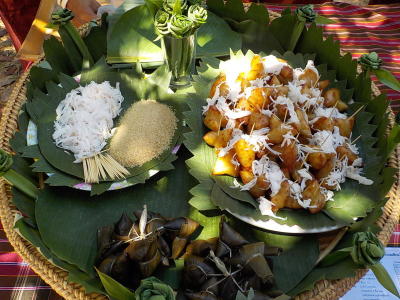
» At Wat Pa Achiang in Ban Ta Klang, visitors can observe the making ofelephant dung paper and the weaving of silk, and taste local desserts.
Surin and Buri Ram
Published on 20/11/2018
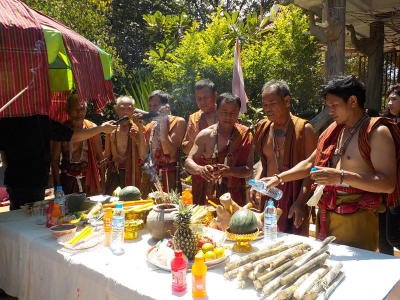
» Published captionAt Ban Ta Klang in Surin, visitors canobserve the demonstration of pre-elephant capturing rituals, feed and ride pachyderms, and visit the elephant cemetery, where the bodies of more than 200 elephants are buried. Silk woven by local villagers is also available for sale.
Surin and Buri Ram
Published on 20/11/2018
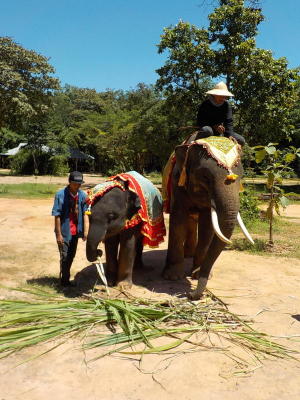
» Published captionAt Ban Ta Klang in Surin, visitors canobserve the demonstration of pre-elephant capturing rituals, feed and ride pachyderms, and visit the elephant cemetery, where the bodies of more than 200 elephants are buried. Silk woven by local villagers is also available for sale.
Surin and Buri Ram
Published on 20/11/2018
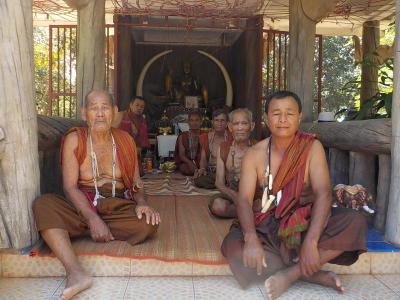
» Published captionThe Kui people who used to capture andtrain wild elephants as an occupation have been dwelling in Ban Ta Klang and nearby villages in tambon Kra Pho, Tha Tum district of Surin, on the Mun River basin. They are the descendants of mahouts who served Siamese armies in many wars, and retired after war onelephantback became obsolete following the end of the Siamese-Lao war in 1826.Before 1957, when catching wild elephants became illegal, the Kui people mainly caught and trained wild elephants for domestic use and for sale, and farmed seasonally. In the past,every two or three months they went to forests, mostly in Cambodia, to capture wild elephants.The Kui would capture wild elephants under the saek pone method by riding their trained elephants to chase and catch wild elephants.They would throw a loop of pakam leather rope around one of each wild elephant’s legs.elephant-catching team would consist of kamluangphued (khrubayai), mor sadam, mor sadiang, mor ja and ma,terms which categorise elephant catchers by their experience. Kamluangphued were the most experienced in everything about elephants and had caught 10-15 wild elephants, followed by mor sadam at 6-10 wild elephants, mor sadiang with1-5 wild elephants, and last but not least, mor ja, who had yet to catch a single wild elephant. Ma (mahouts) would just assist and sit behind elephant catchers on elephantback. Ma have never taken part in the pachi ritual, a rite of passage for morchang, or elephant catchers. Men aged 14 and up can become morchang after rites of passage and training.
Surin and Buri Ram
Published on 20/11/2018
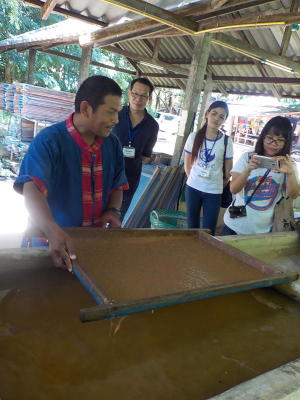
» At Wat Pa Achiang in Ban Ta Klang, visitors can observe the making ofelephant dung paper and the weaving of silk, and taste local desserts.
Surin and Buri Ram
Published on 20/11/2018
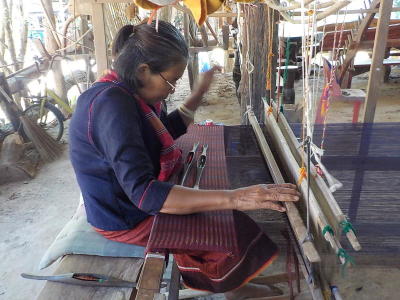
» At Wat Pa Achiang in Ban Ta Klang, visitors can observe the making ofelephant dung paper and the weaving of silk, and taste local desserts.
Surin and Buri Ram
Published on 20/11/2018
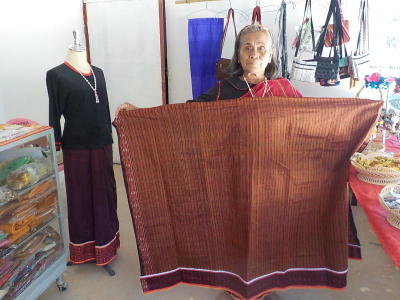
» Published captionAt Ban Ta Klang in Surin, visitors canobserve the demonstration of pre-elephant capturing rituals, feed and ride pachyderms, and visit the elephant cemetery, where the bodies of more than 200 elephants are buried. Silk woven by local villagers is also available for sale.
Surin and Buri Ram
Published on 20/11/2018
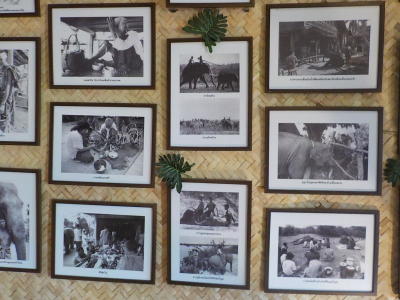
» Also in Ban Ta Klang is the newly renovated Elephant World, a centre of learning about elephants, elephant keeping and human-elephant culture.